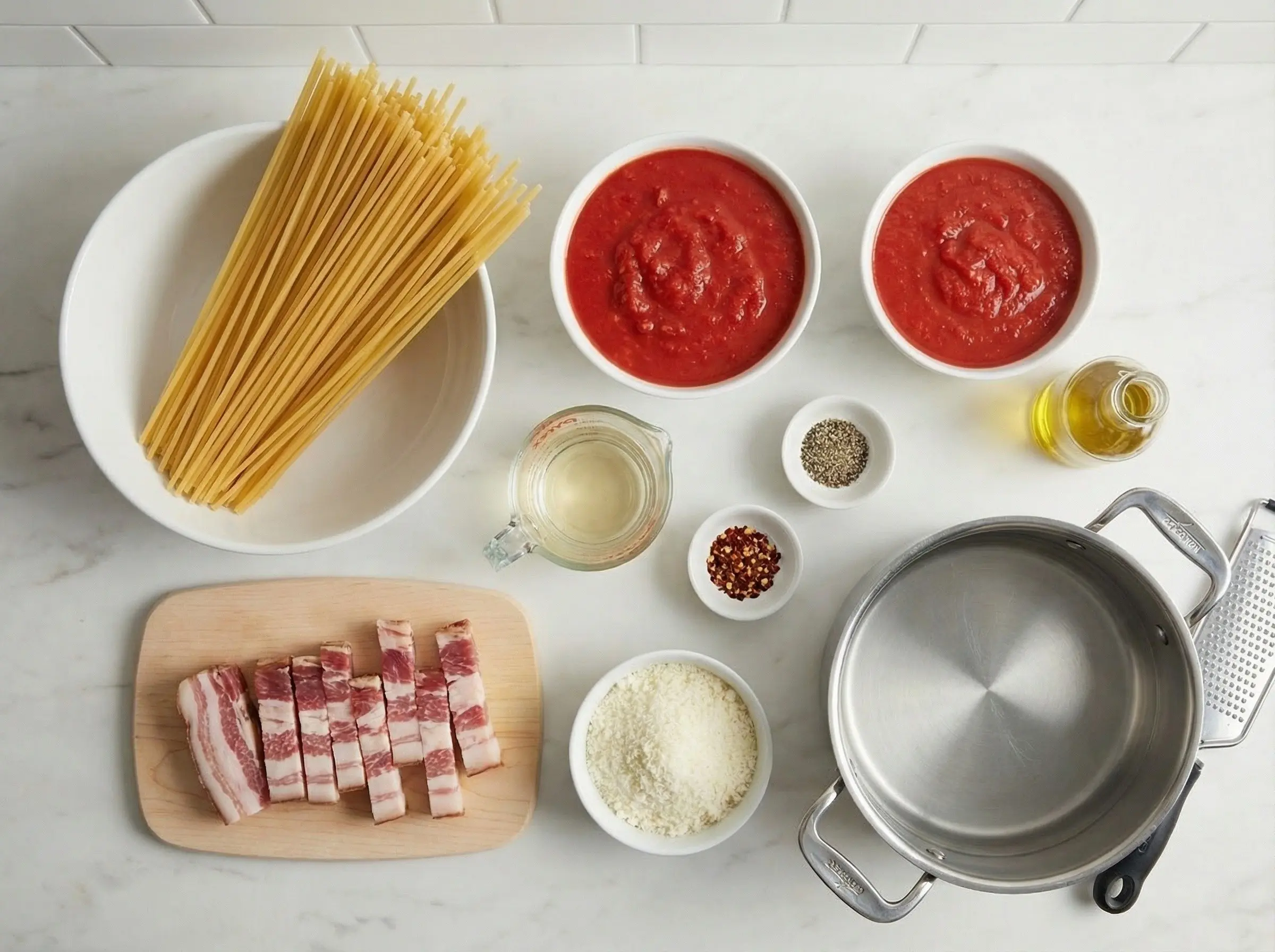
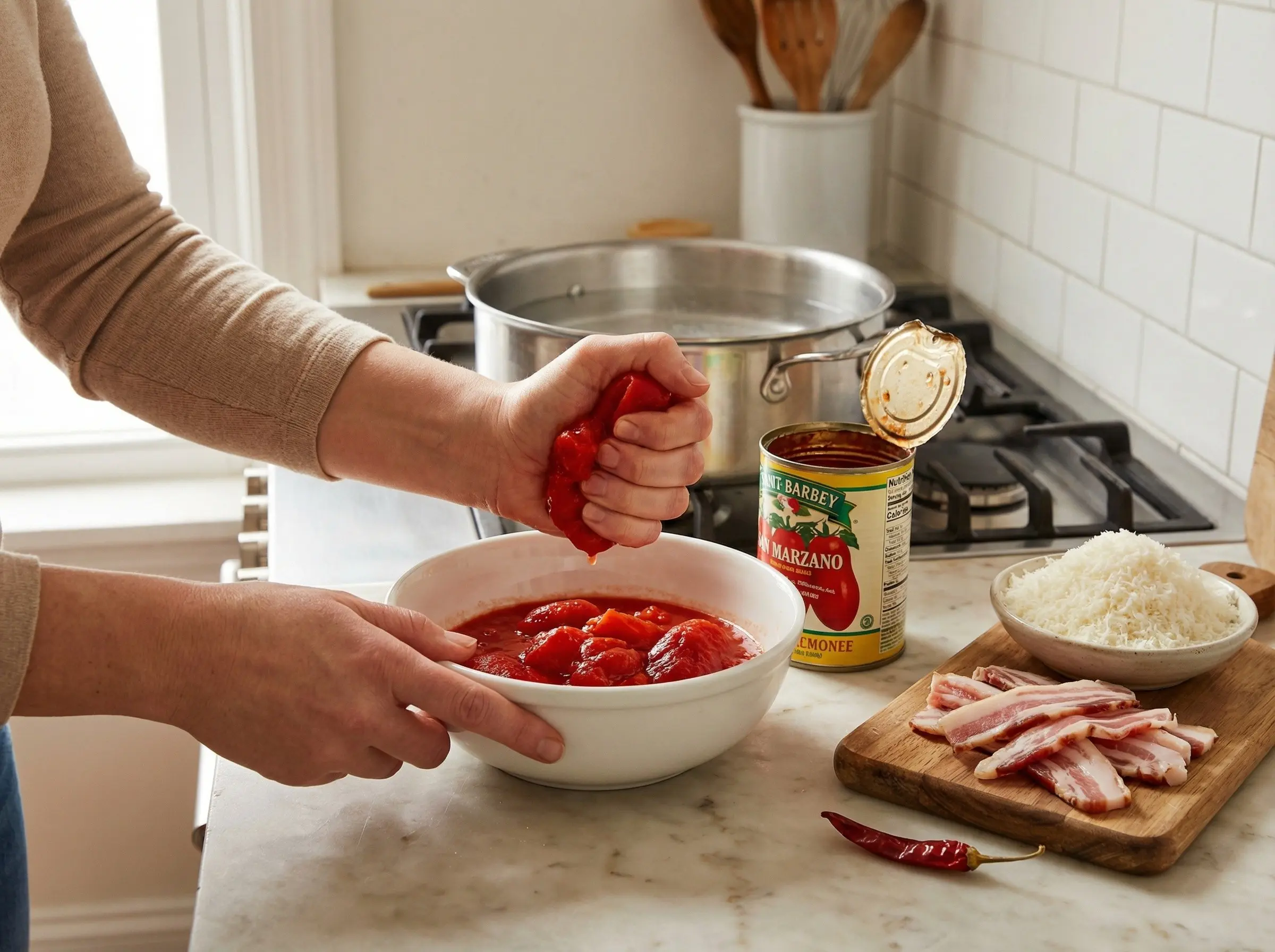
1Prepare the ingredients. Cut the guanciale into strips about 1/4-inch thick and 1 inch long, or into small cubes - the shape is a matter of preference, but even sizing ensures even cooking. Pour the canned tomatoes into a bowl and crush them by hand into chunky pieces, discarding the tough core from each tomato. Some cooks prefer to puree the tomatoes; others like them very chunky. Hand-crushed provides the traditional rustic texture. Finely grate the pecorino Romano - it should be almost fluffy for the smoothest sauce. Bring a large pot of water to a boil and season generously with salt - it should taste like the sea.
2Render the guanciale. Place the guanciale in a cold, large skillet or saute pan along with the olive oil. Starting in a cold pan allows the fat to render slowly without burning the meat. Turn the heat to medium-low and cook, stirring occasionally, for 8-12 minutes until the guanciale has rendered most of its fat and the meat is golden and crispy at the edges but still slightly chewy - not completely crunchy like bacon. The rendered fat should be clear and abundant. This step cannot be rushed; low and slow is essential.
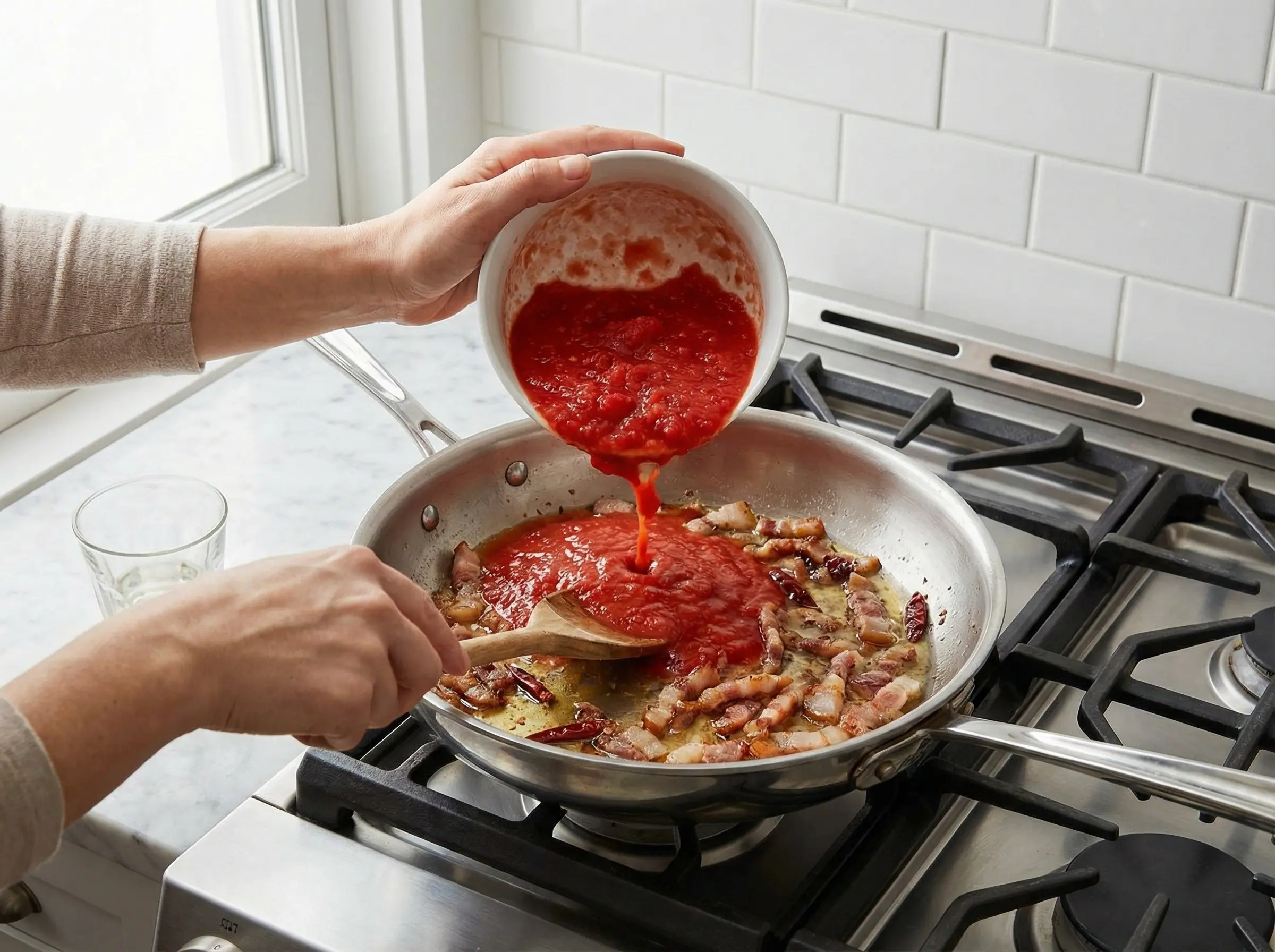
3Build the sauce. Add the dried chili (whole or crumbled) or red pepper flakes to the pan with the guanciale. Stir for 30 seconds until fragrant. Carefully pour in the white wine - it will sizzle and steam. Let the wine simmer and reduce by about half, scraping up any browned bits from the bottom of the pan, about 2 minutes. Add the crushed tomatoes and stir to combine. Bring to a simmer, then reduce heat to low. Let the sauce cook gently for 15-20 minutes, stirring occasionally, until slightly thickened and the tomatoes have lost their raw edge. The sauce should not be too thick - it needs to remain fluid enough to coat the pasta.
4Cook the pasta. About halfway through the sauce cooking time, add the bucatini to the boiling salted water. Cook until just shy of al dente - about 1 minute less than package directions. The pasta will finish cooking in the sauce. Reserve at least 1 cup of starchy pasta water before draining. This starchy water is crucial for creating a smooth, emulsified sauce that clings to the pasta.
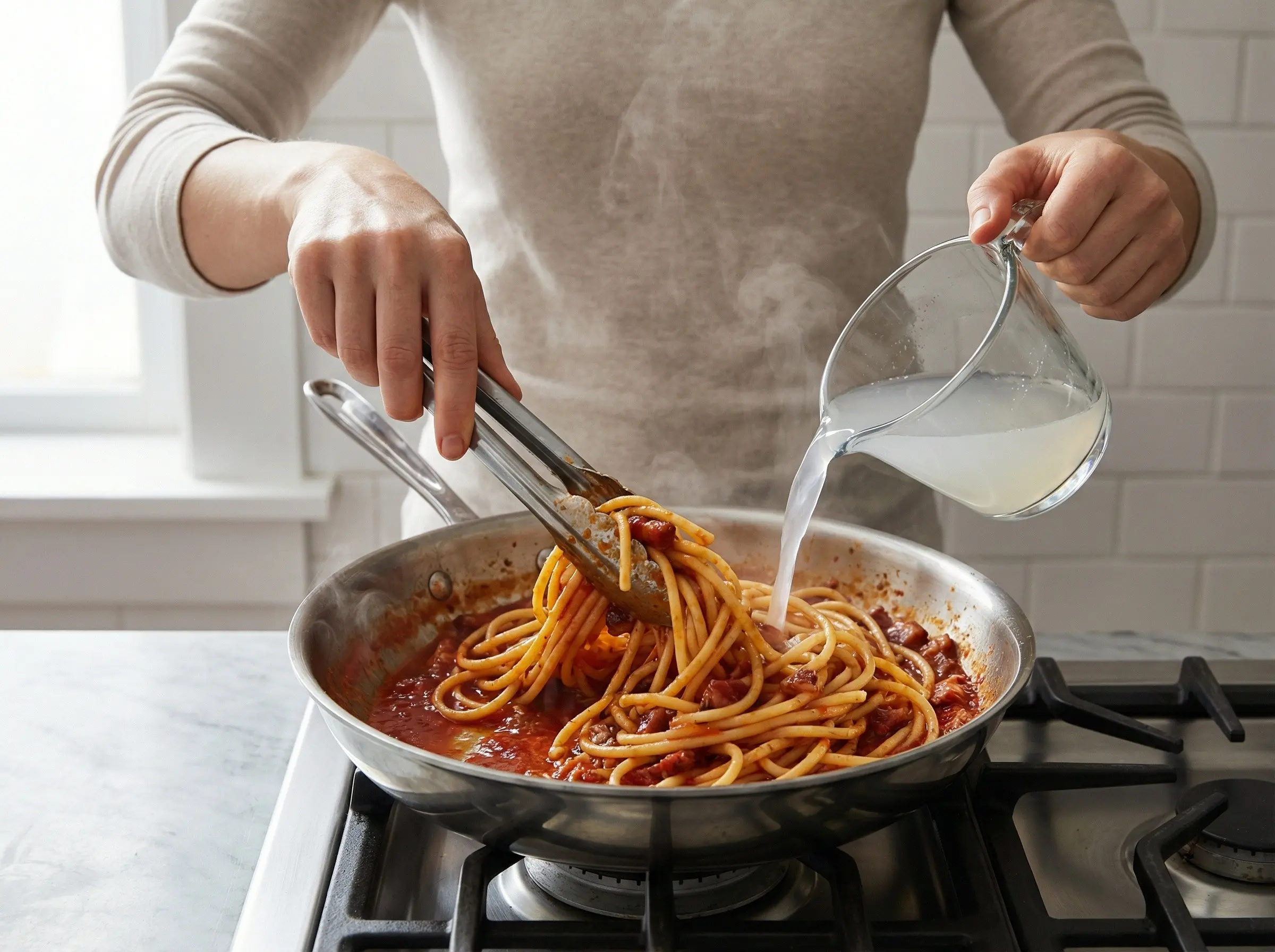
5Combine pasta and sauce. Using tongs, transfer the drained pasta directly into the pan with the sauce. Do not rinse the pasta - you want that starchy coating. Toss vigorously over medium heat for 1-2 minutes, adding splashes of pasta water as needed to keep the sauce fluid and glossy. The pasta should absorb some sauce while remaining well-coated. The constant motion helps emulsify the rendered guanciale fat with the tomato sauce, creating a silky, cohesive coating. Remove the pan from heat.
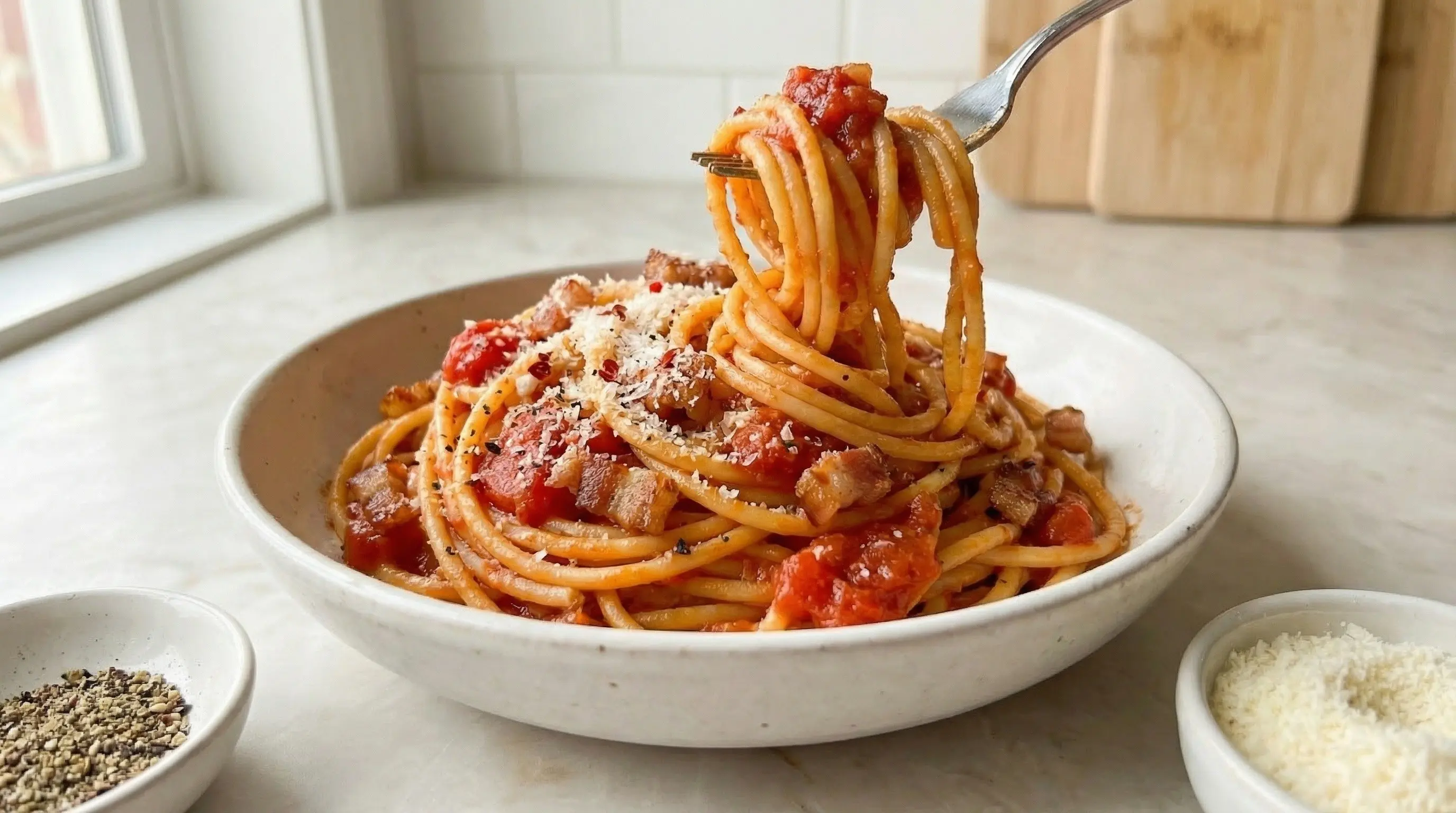
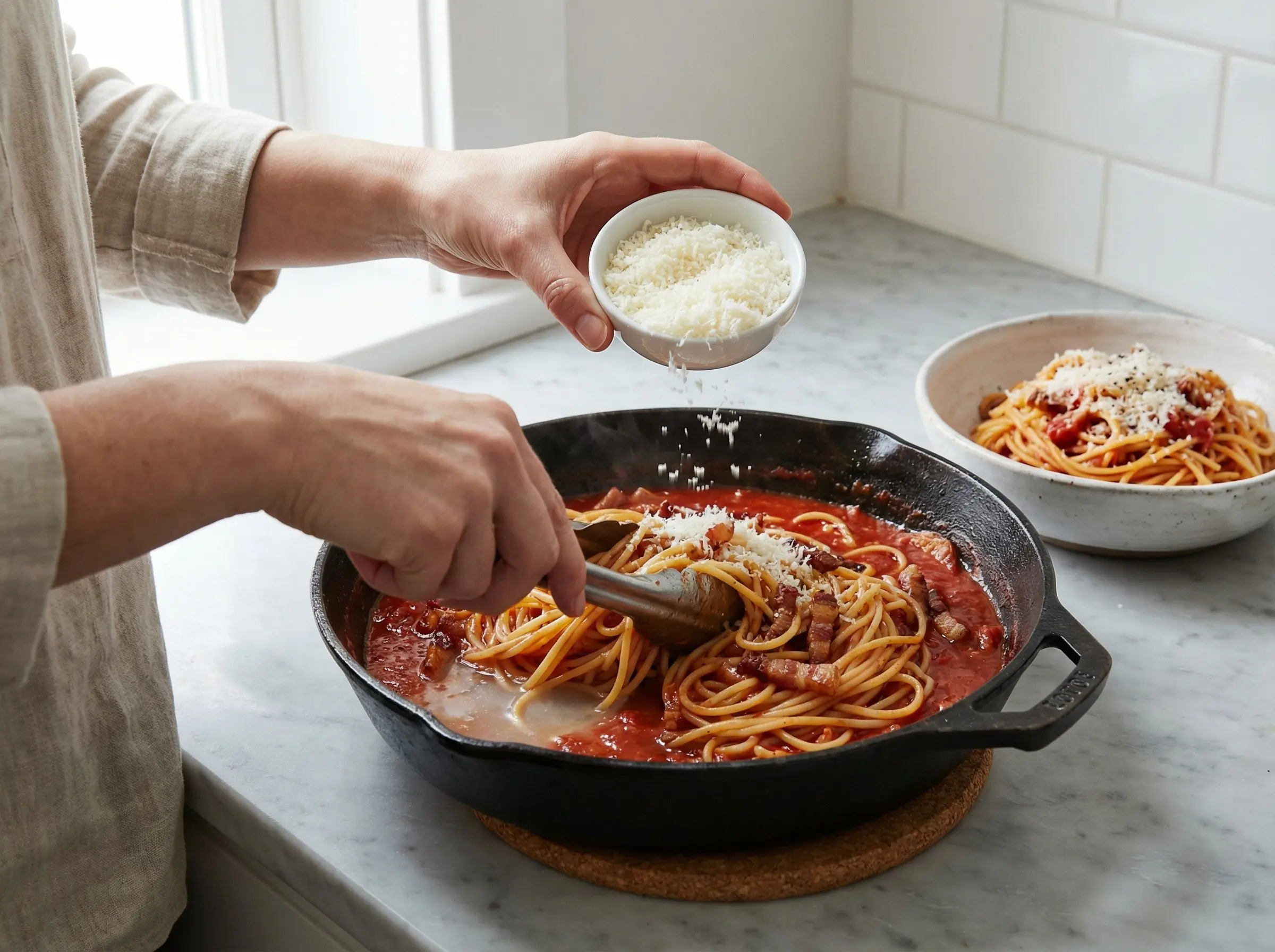
6Finish with pecorino. With the pan off the heat (this is crucial - too much heat will cause the cheese to clump), add about three-quarters of the grated pecorino Romano. Toss vigorously, adding another splash of pasta water if needed, until the cheese melts into the sauce and creates a creamy, emulsified coating. The sauce should be glossy and cling to each strand of pasta. Taste and adjust seasoning - you likely will not need additional salt due to the pecorino and guanciale, but black pepper is welcome. Serve immediately in warm bowls, topped with the remaining pecorino and an additional grinding of black pepper. Remove the whole chili before serving if you used one. Amatriciana should be eaten right away while the sauce is fluid and the guanciale is still slightly crispy at the edges.


 Download