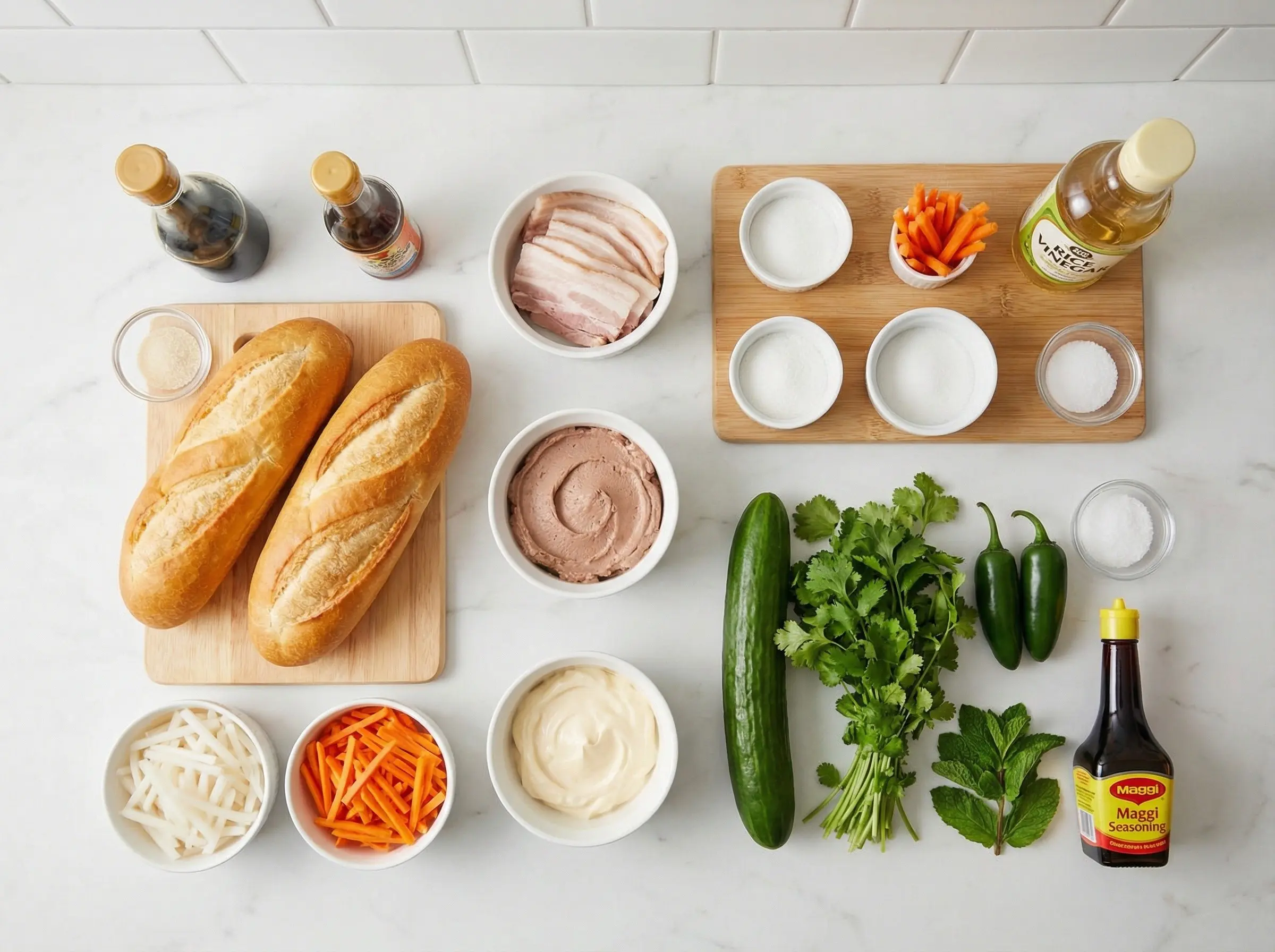
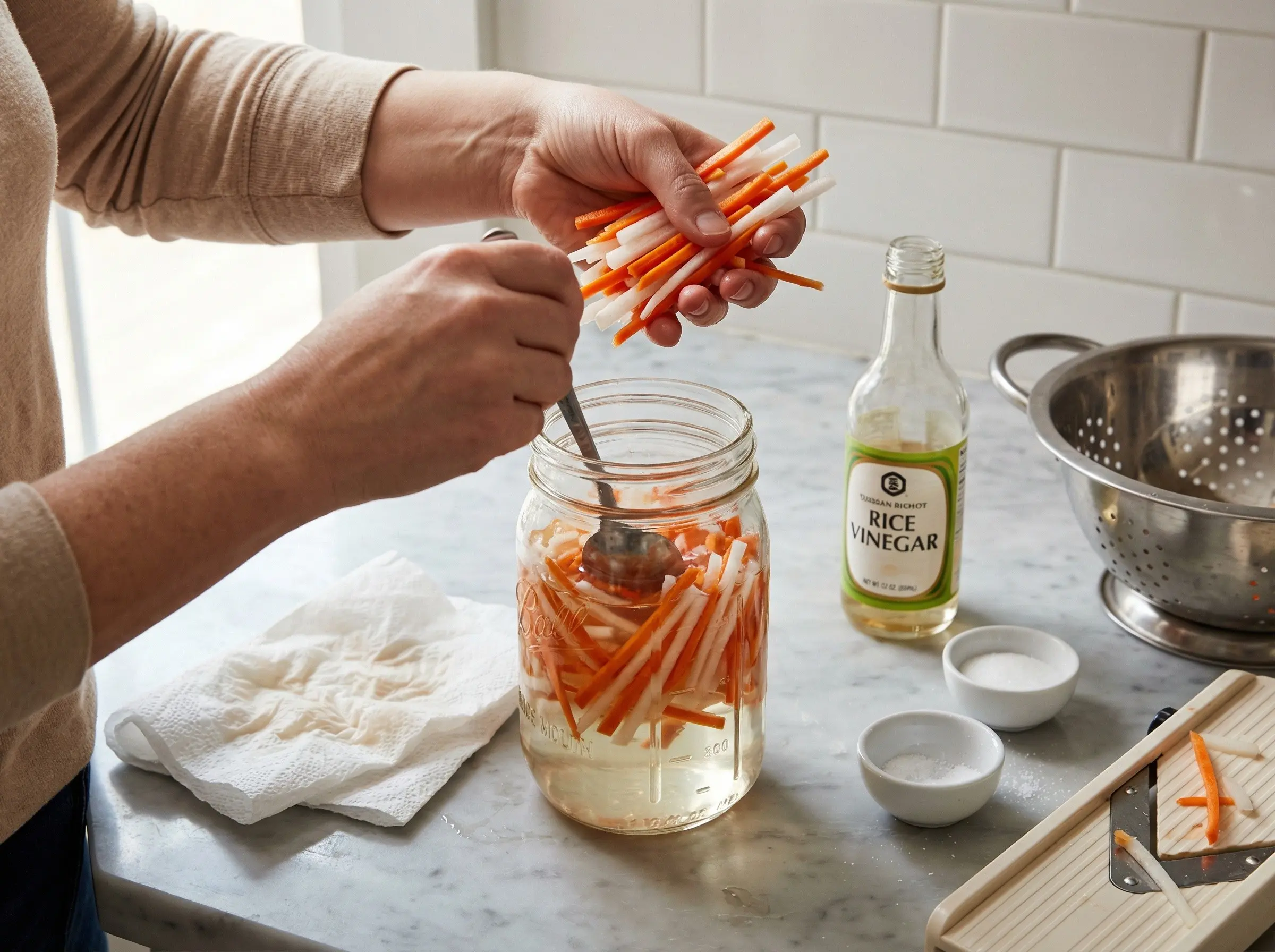
1Make the do chua (pickled vegetables) first - they need time to pickle and are essential to authentic banh mi. Julienne the daikon radish and carrots into thin matchsticks about 2-3 inches long. Place them in a colander, sprinkle with the salt, and let sit for 15 minutes to draw out excess moisture. Gently squeeze out the liquid - this helps the vegetables stay crunchy and absorb the pickling brine better. In a bowl or jar, dissolve the sugar in the rice vinegar, stirring until completely dissolved. Add the squeezed vegetables and toss to coat. Let pickle for at least 30 minutes, or refrigerate for up to 2 weeks. The longer they pickle, the more flavorful they become.
2Prepare the protein. For classic pork belly banh mi, slice the pork belly into thin pieces about 1/4 inch thick. Season with soy sauce, fish sauce, and sugar. Cook in a hot skillet over medium-high heat for 2-3 minutes per side until caramelized and cooked through. The edges should be slightly crispy and glazed. Alternatively, use pre-cooked Vietnamese cold cuts (cha lua/pork roll, gio thu/head cheese) sliced thin, grilled lemongrass pork, or grilled chicken. For a traditional combination, use both pate and cold cuts or pork together. Set the cooked protein aside.
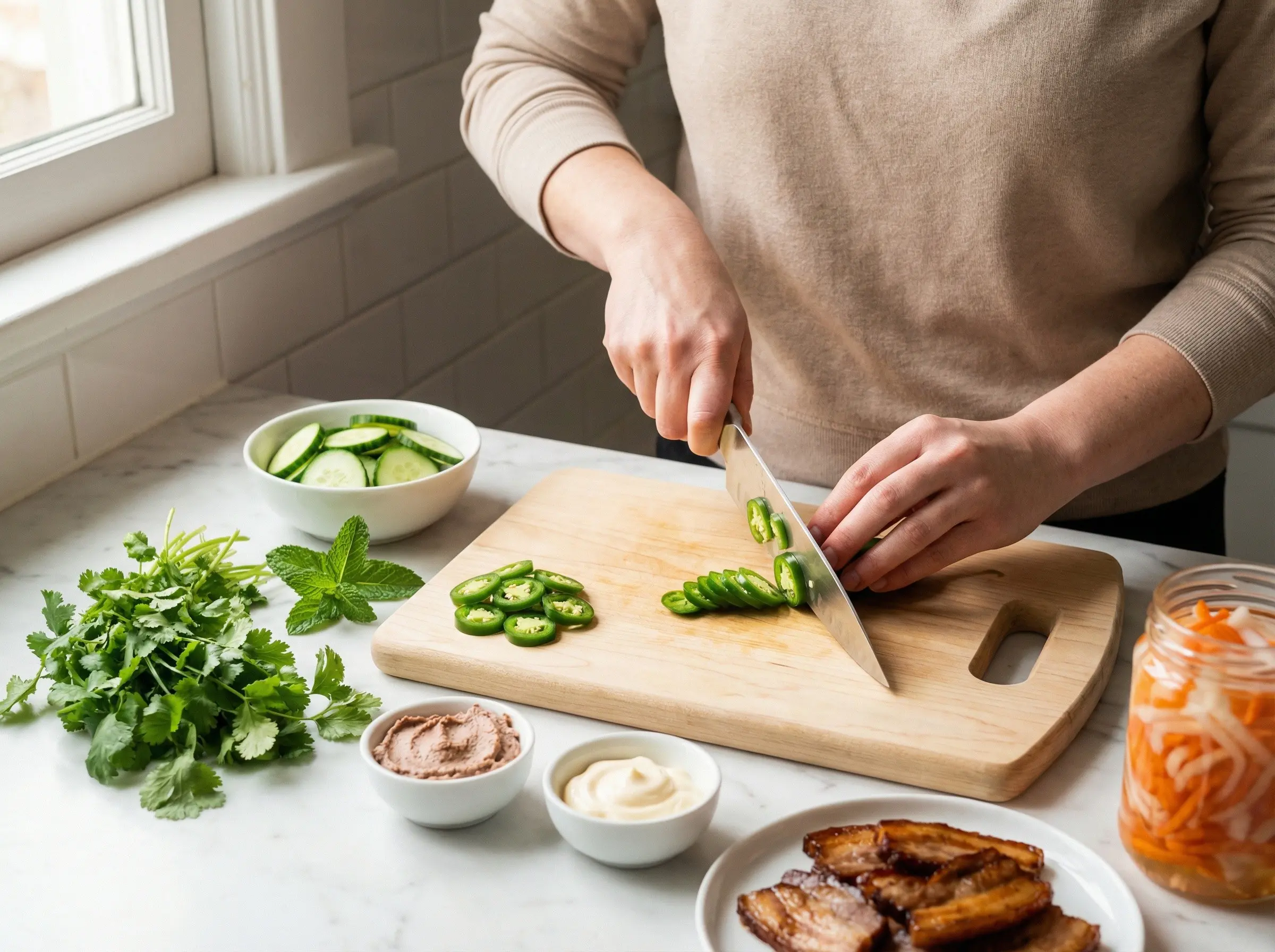
3Prepare the remaining fresh components. Wash and dry the cilantro, keeping the stems attached - both leaves and tender stems are used in banh mi. Slice the cucumber into thin rounds or lengthwise into spears. Slice the jalapenos into thin rounds. If you prefer less heat, remove the seeds and membranes from the jalapenos. Have the pate and mayonnaise at room temperature for easy spreading. Some people mix a few drops of Maggi seasoning into the mayonnaise for extra umami depth.
4Prepare the bread. If your baguettes are not fresh from the oven, crisp them up by placing them in a 375 degrees F oven for 3-5 minutes until the crust is shatteringly crispy but the interior is still soft and airy. This step is crucial - the bread makes or breaks a banh mi. Cut each baguette in half crosswise for individual sandwiches, or leave whole for larger portions. Slice each piece horizontally, cutting about three-quarters of the way through so the bread opens like a book but remains hinged on one side. Remove a small amount of the interior soft bread to create more room for fillings.
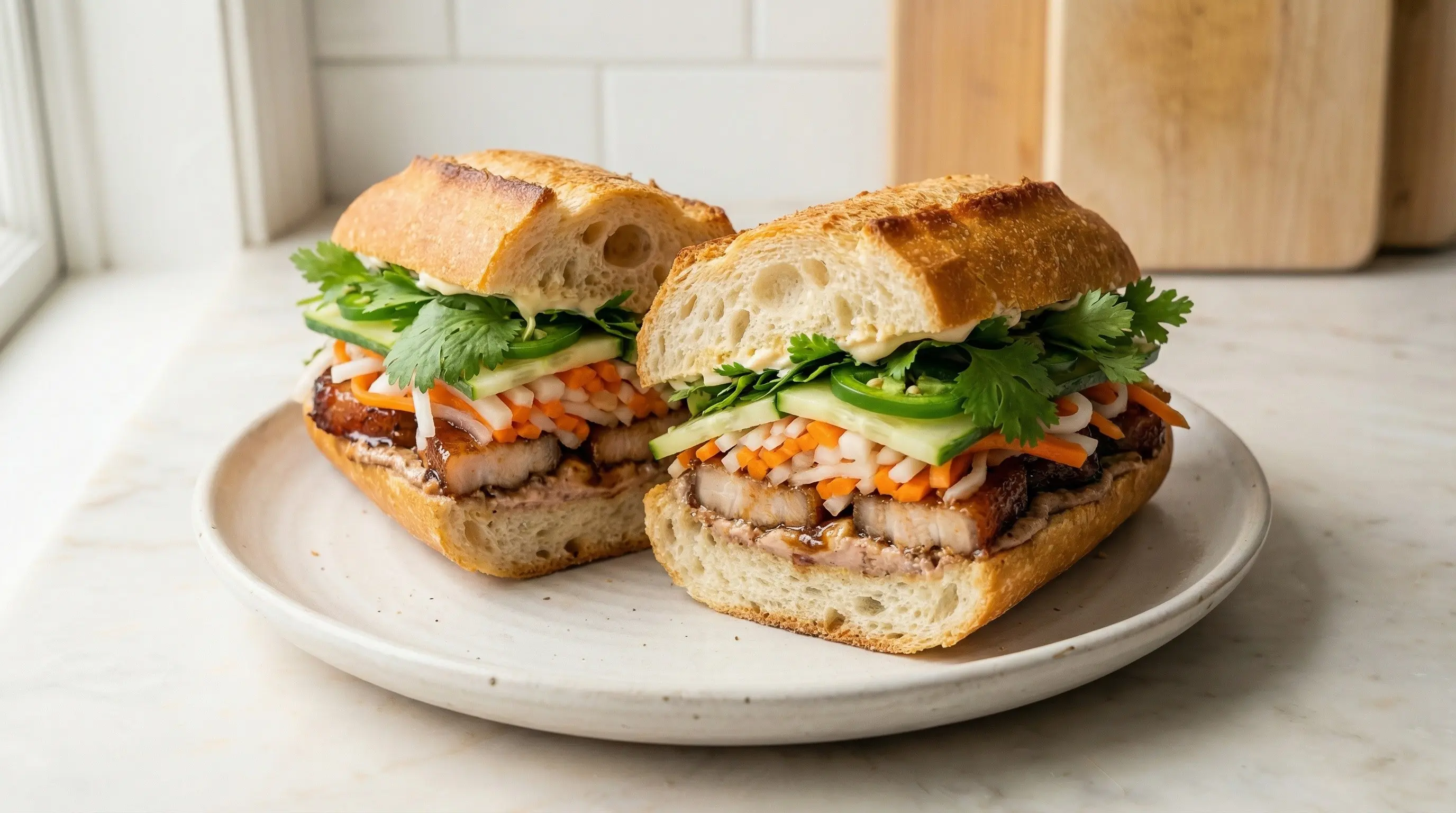
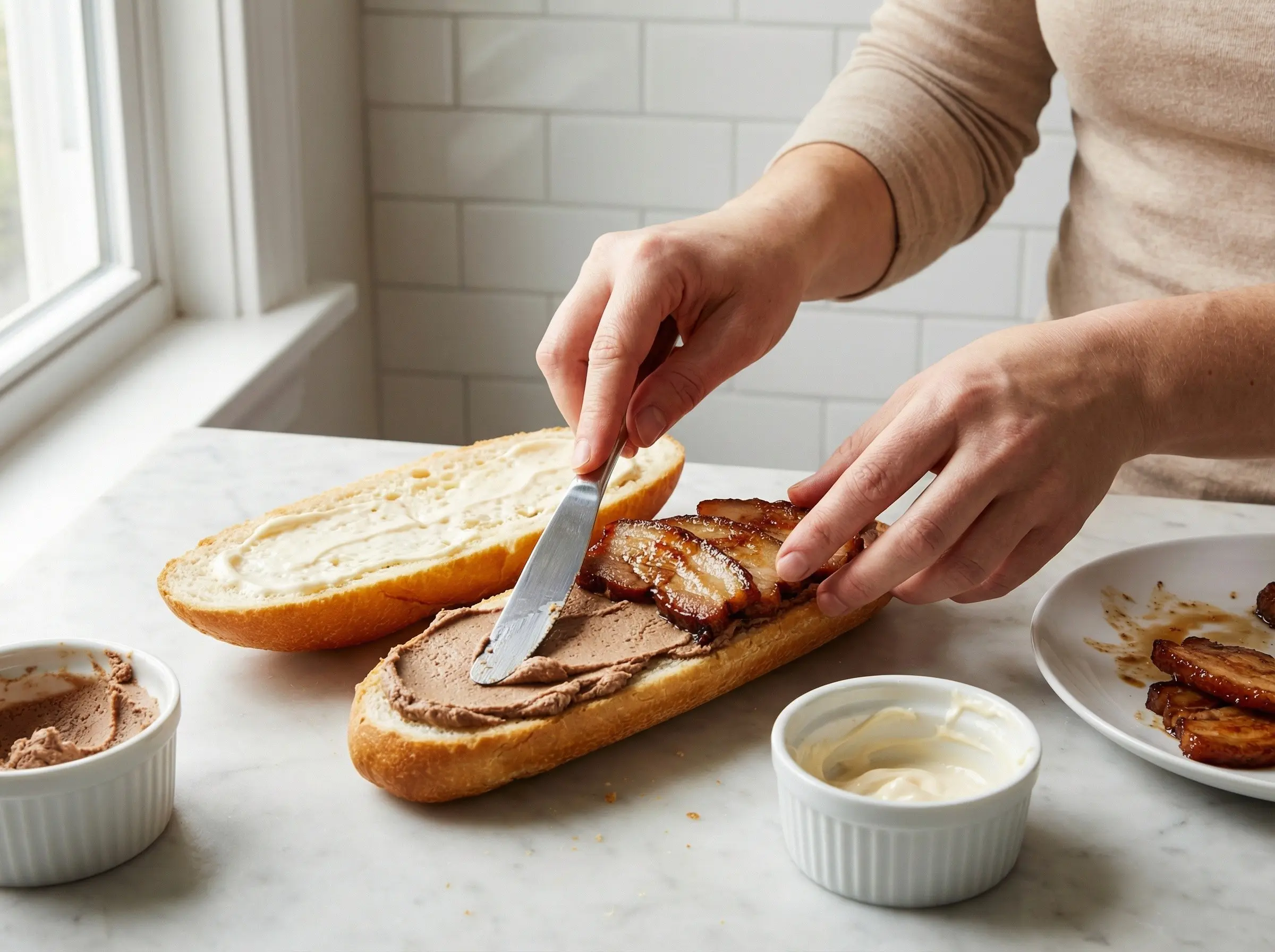
5Assemble the banh mi in the proper order for the best experience. Open the baguette and spread a generous layer of pate on the bottom half - about 1 tablespoon per sandwich. Spread mayonnaise on the top half. Layer the protein (pork belly, cold cuts, or your choice) over the pate. The pate and meat form the rich, savory foundation of the sandwich.
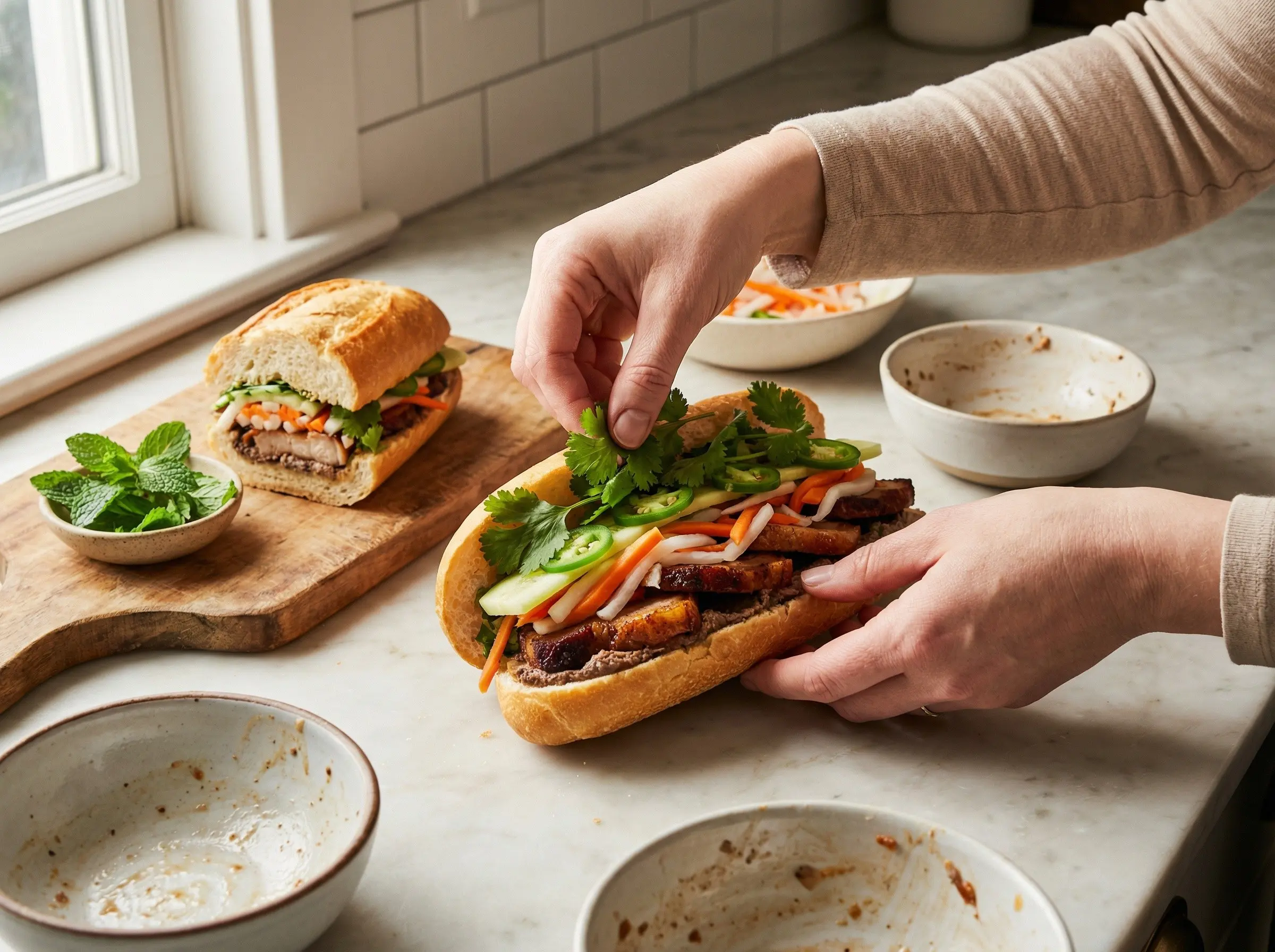
6Add the fresh vegetables and herbs. Drain the do chua well and pile a generous amount of the pickled daikon and carrot over the meat - do not be shy, the pickled vegetables are essential for balance. Add cucumber slices, a generous handful of fresh cilantro sprigs, and sliced jalapenos to taste. Add fresh mint leaves if using. The sandwich should be stuffed full but still able to close. Press the top half down gently to compact the fillings slightly. Serve immediately while the bread is still crispy. Banh mi are meant to be eaten right away - the contrast between the crispy bread and the moist fillings is fleeting. Cut in half on the diagonal for easier eating if desired. A properly made banh mi should shatter when you bite through the crust, giving way to the complex layers of rich, tangy, fresh, and spicy flavors within.


 Download