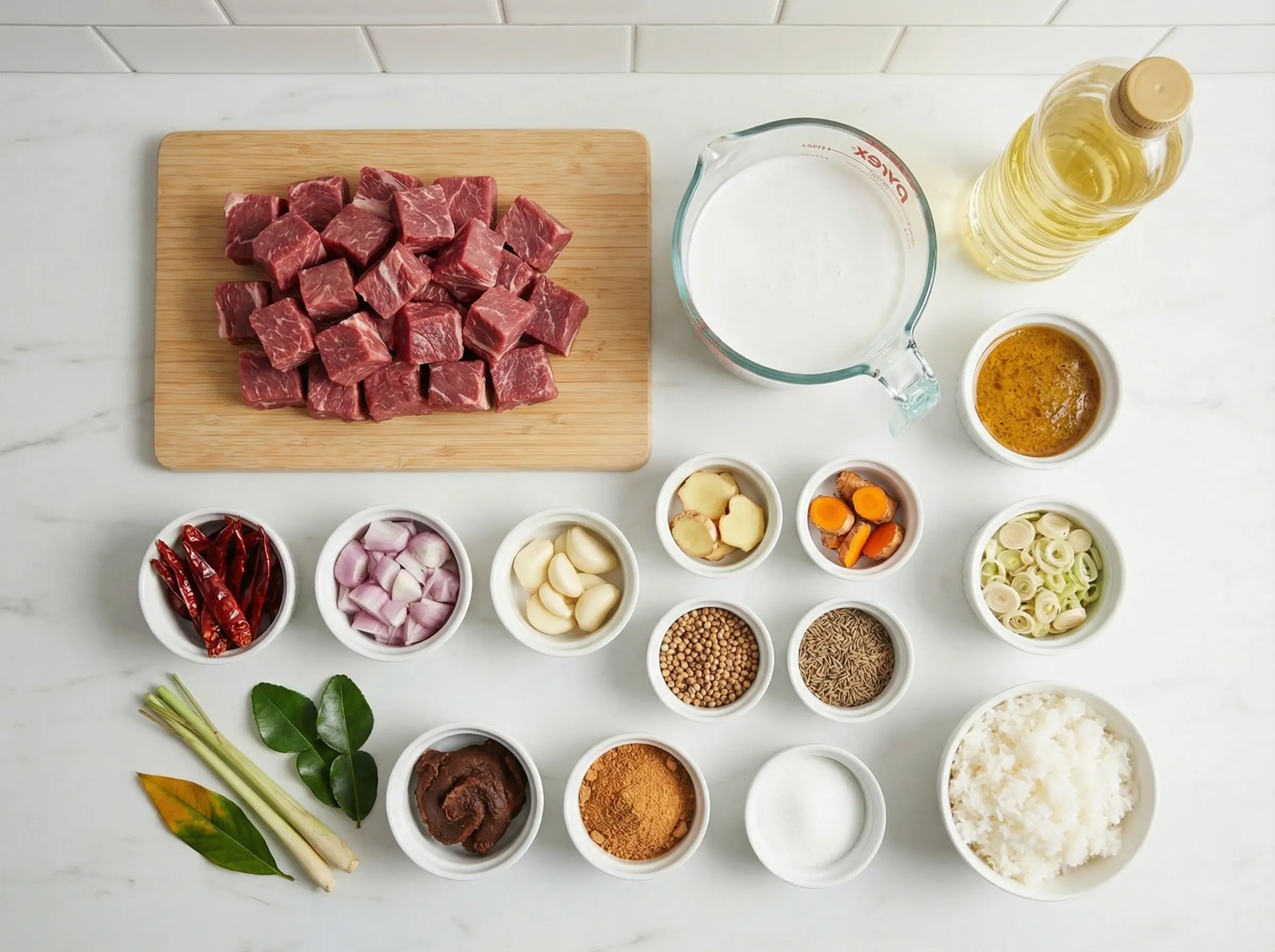
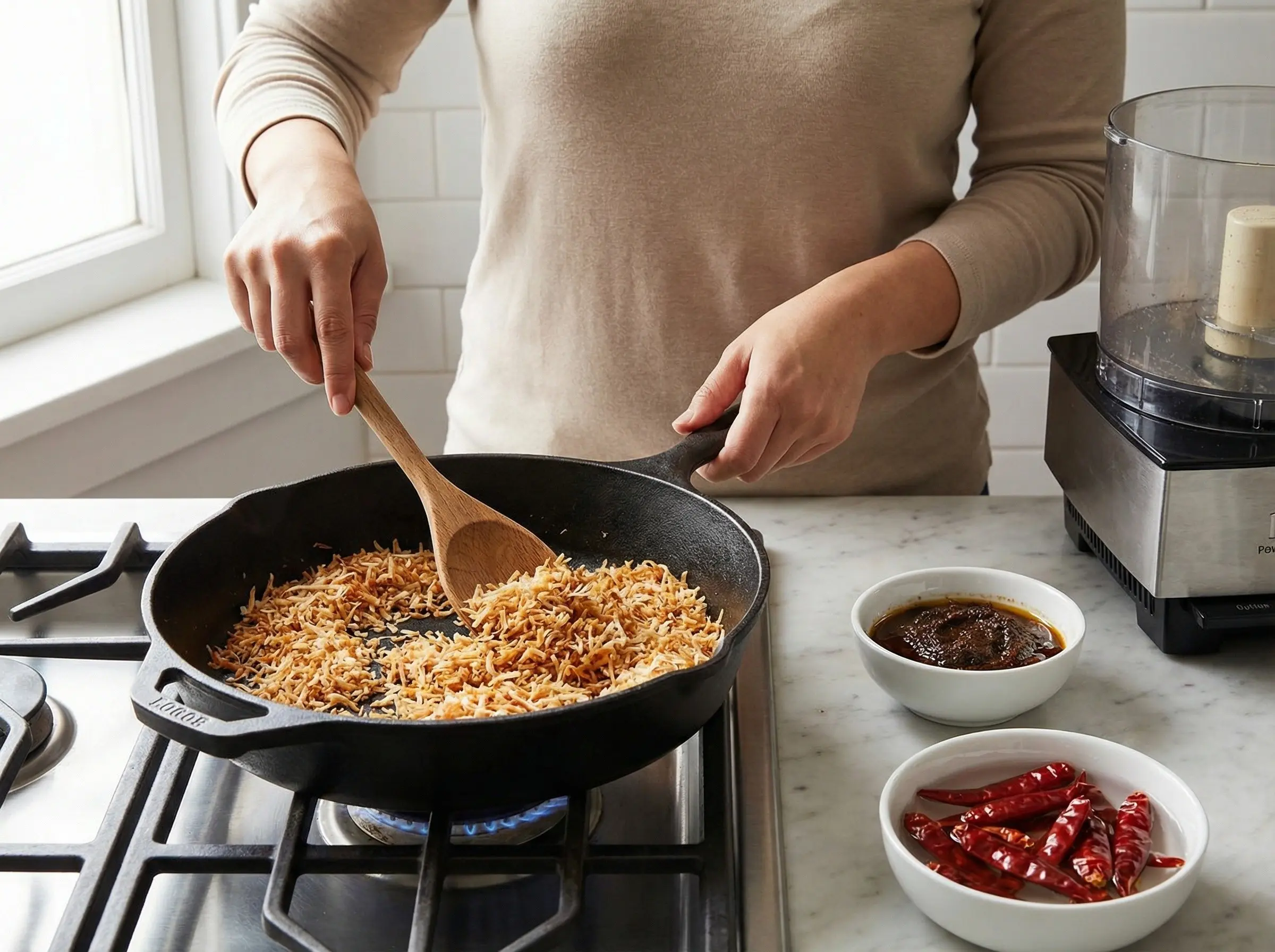
1Prepare the kerisik (toasted coconut paste) if not using store-bought. Toast 1 cup of unsweetened desiccated coconut in a dry skillet over medium-low heat, stirring constantly for 15-20 minutes until deep golden brown and very fragrant. Transfer to a food processor and blend until it becomes an oily paste - this takes several minutes of processing. The kerisik is essential for authentic rendang flavor and helps thicken the sauce. Set aside. Soak the dried red chilies in hot water for 20-30 minutes until softened, then drain well.
2Make the spice paste (rempah). In a food processor or blender, combine the soaked chilies, shallots, garlic, galangal, ginger, fresh turmeric (or powder), sliced lemongrass, toasted coriander seeds, and toasted cumin seeds. Blend until you have a smooth paste, scraping down the sides as needed. Add a splash of water if necessary to help the blending, but keep it as dry as possible. This paste is the flavor foundation of the rendang - take your time to make it very smooth.
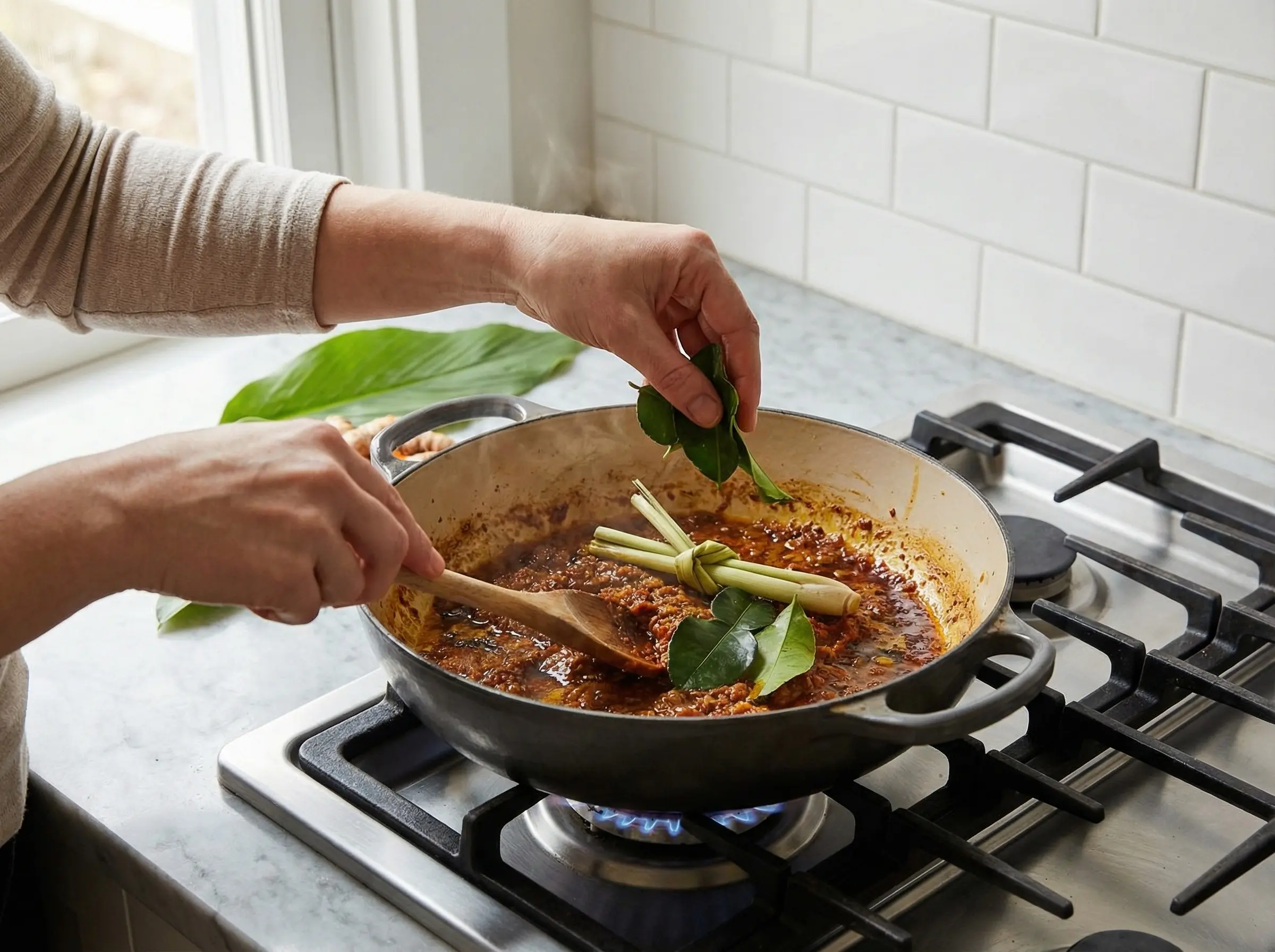
3Heat the vegetable oil in a large, heavy-bottomed pot or Dutch oven over medium heat. Add the spice paste and fry, stirring frequently, for 8-10 minutes until very fragrant, darkened in color, and the oil begins to separate from the paste. This step is crucial - properly frying the paste removes the raw taste and develops deep, complex flavors. Add the bruised lemongrass stalks, kaffir lime leaves, and turmeric leaf if using. Stir to combine.
4Add the beef cubes to the pot and stir to coat thoroughly with the spice paste. Cook for 3-4 minutes, stirring occasionally, until the beef is well coated and lightly seared on all sides. Pour in the coconut milk, tamarind paste, palm sugar, and salt. Stir well to combine. Bring to a boil, then immediately reduce heat to low. The liquid should barely simmer - vigorous boiling will toughen the meat. Cook uncovered, stirring occasionally, for about 2 hours. The sauce will gradually reduce and thicken.
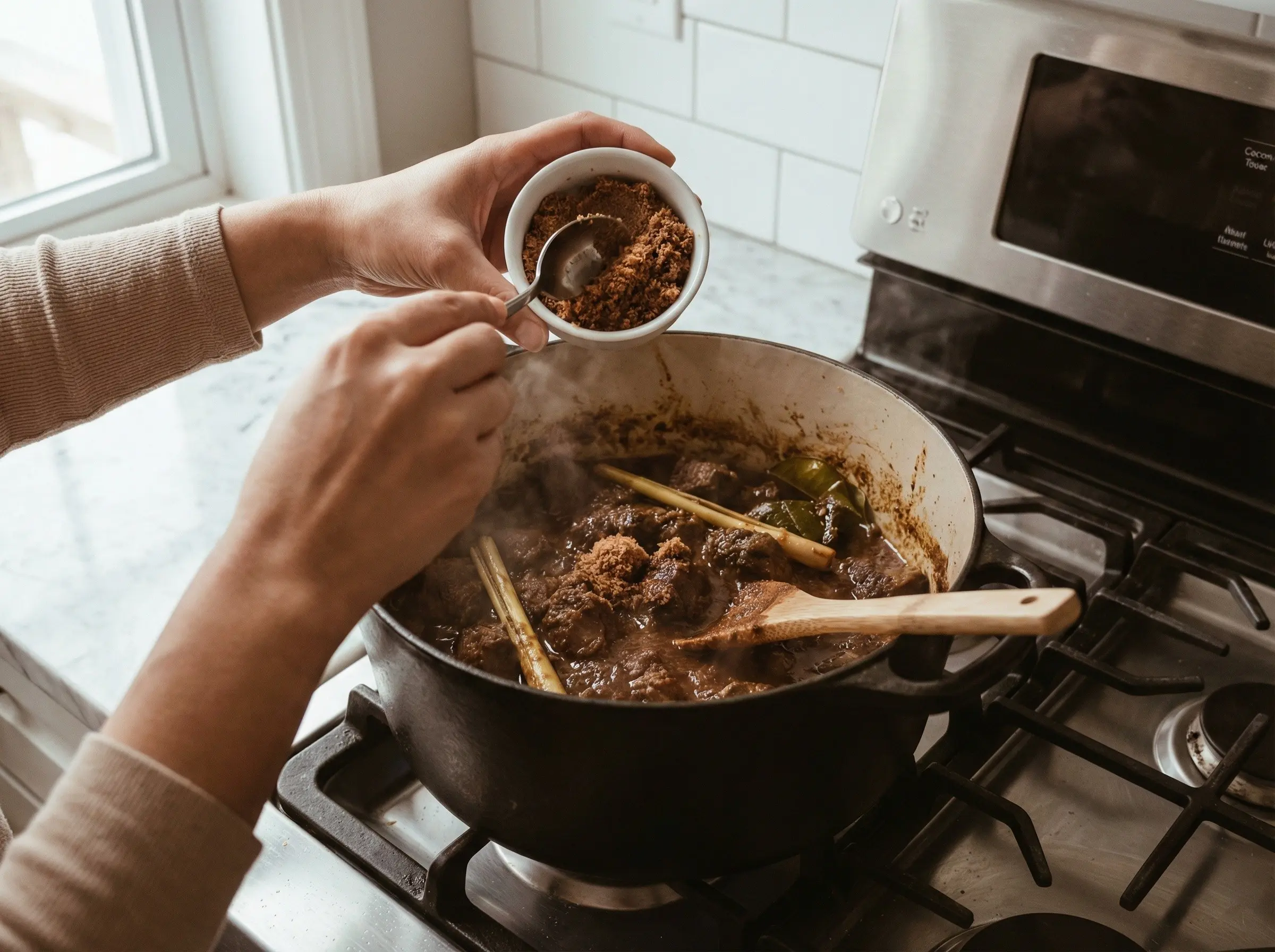
5After about 2 hours, the liquid will have reduced significantly and the beef will be tender. Add the kerisik (toasted coconut paste) and stir well to incorporate. Continue cooking, stirring more frequently now to prevent sticking, for another 1-1.5 hours. This is the critical stage where rendang transforms from a curry (kalio) to true rendang. The sauce will continue to reduce until the coconut milk has almost completely evaporated and the meat is coated in a thick, dark, oily paste. The oil from the coconut will separate and the rendang will begin to fry in this oil.
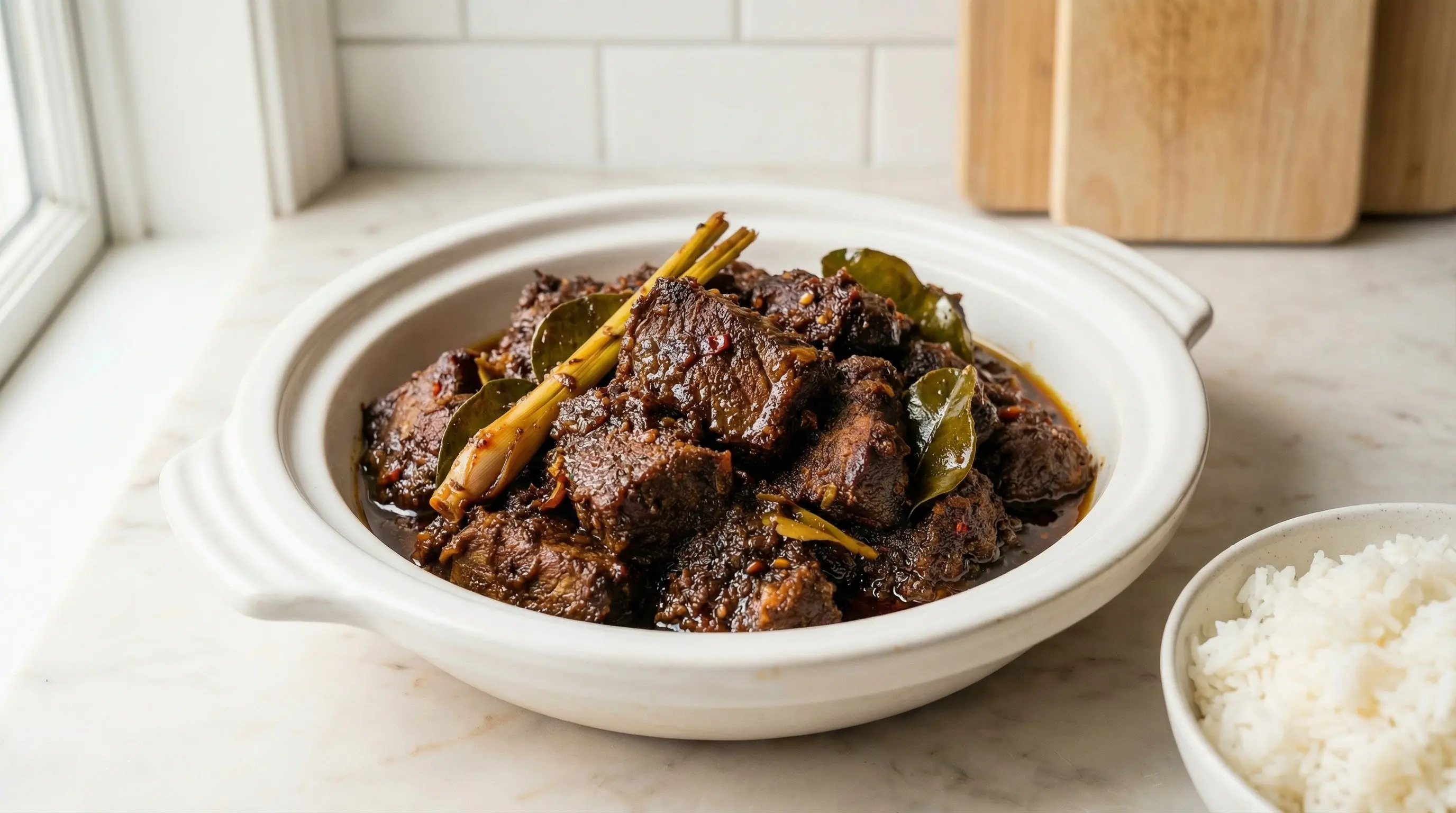
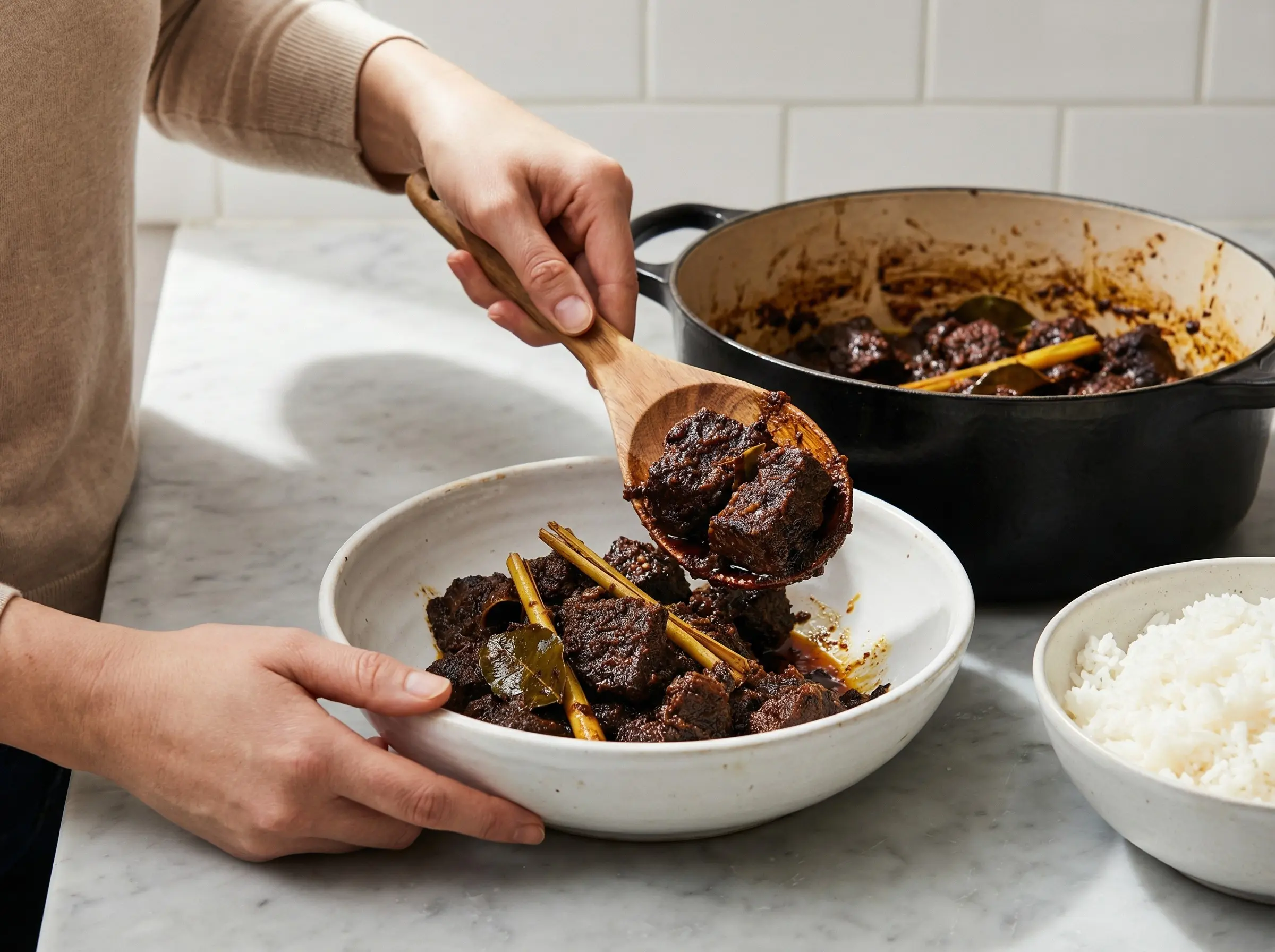
6The rendang is ready when the meat is very tender (almost falling apart), coated in a thick, dark brown paste, and glistening with caramelized coconut oil. The sauce should be almost completely dry - not soupy or saucy. This entire process takes 3-4 hours and cannot be rushed. Taste and adjust seasoning - you may need more salt or a squeeze of tamarind for brightness. Remove the lemongrass stalks and kaffir lime leaves if desired (some people like to leave them for presentation). Transfer to a serving dish. Rendang is traditionally served at room temperature alongside steamed rice, though it is also delicious warm. It tastes even better the next day after the flavors have melded further, and keeps refrigerated for up to a week or frozen for months. In fact, traditional rendang was prized for its keeping qualities - it improves over several days as the flavors continue to develop.


 Download