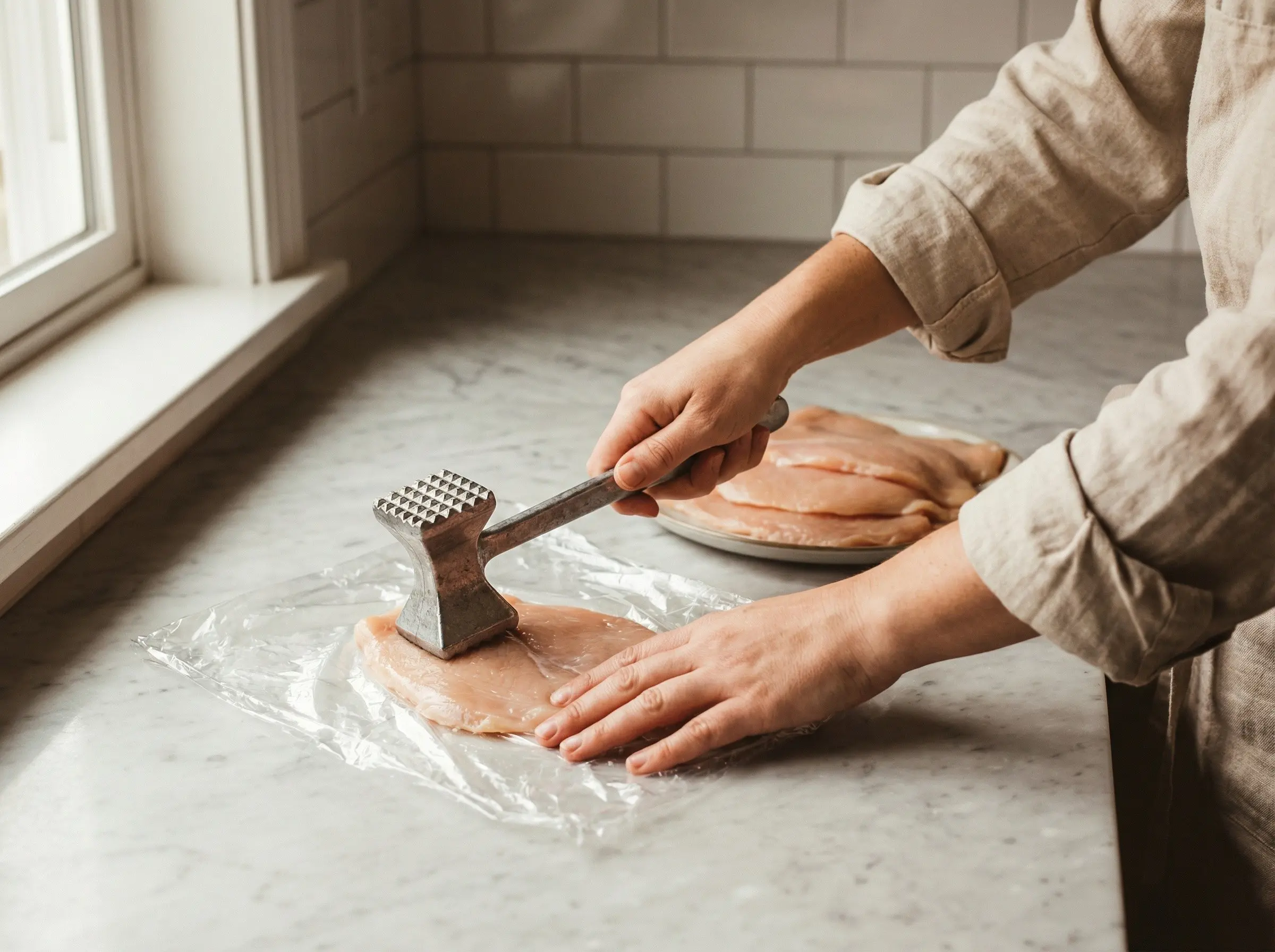
1Prepare the chicken breasts for stuffing. Place one chicken breast between two sheets of plastic wrap on a cutting board. Using a meat mallet or rolling pin, pound the chicken to an even thickness of about 1/4 inch - this is crucial for even cooking and easy rolling. The chicken should be thin enough to roll but not so thin that it tears. Repeat with the remaining chicken breasts. Season both sides of each pounded chicken breast lightly with salt and pepper. Pounding also tenderizes the meat and ensures the chicken cooks at the same rate as the filling heats through.
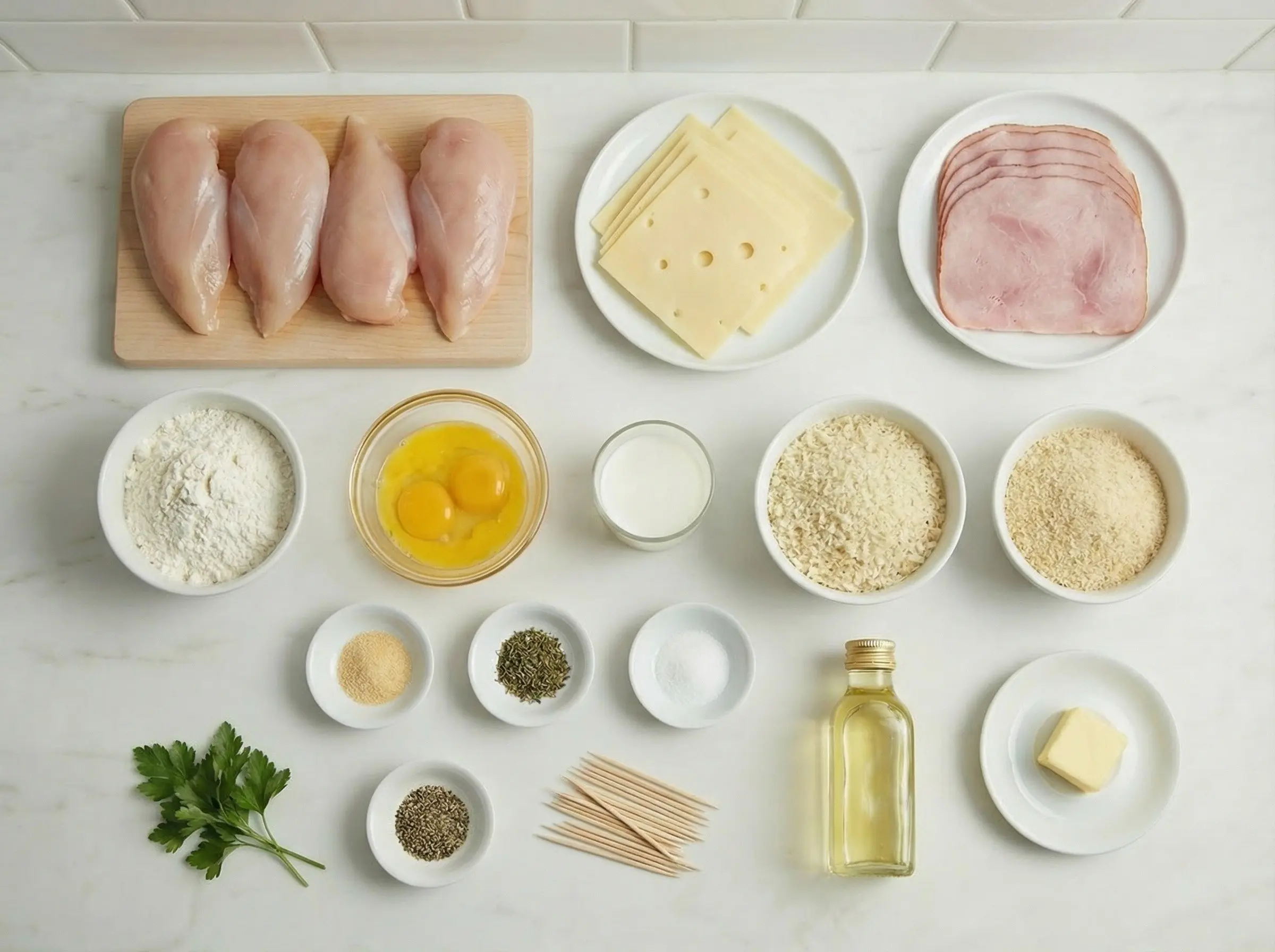
2Layer the filling on each chicken breast. Place 2 slices of Swiss cheese on each pounded chicken breast, leaving about a 1/2 inch border around the edges. Layer 2 slices of ham on top of the cheese. Fold or trim the ham and cheese if they extend beyond the edges of the chicken - any filling that sticks out will leak during cooking. Starting from one short end, roll the chicken up tightly, tucking in the sides as you go to enclose the filling completely. Secure each roll with 2-3 toothpicks or tie with kitchen twine at intervals. The rolls should be tight with no visible filling exposed.
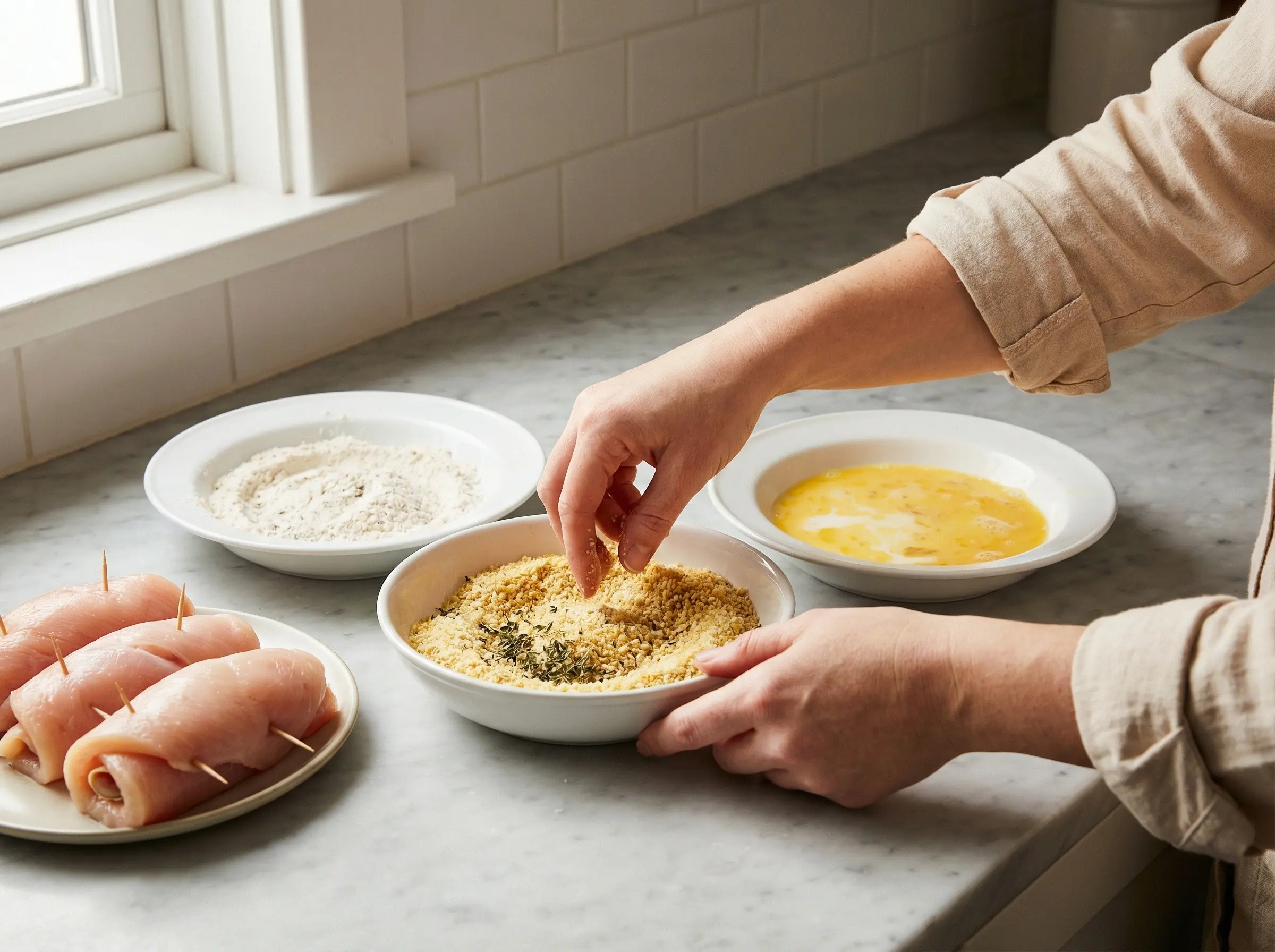
3Set up a breading station with three shallow dishes. In the first dish, combine the flour with half the salt, pepper, and garlic powder. In the second dish, whisk together the eggs and milk until smooth. In the third dish, mix the panko breadcrumbs, regular breadcrumbs, dried thyme, and remaining seasonings. The combination of panko and regular breadcrumbs creates the ideal texture - panko provides crunch while regular breadcrumbs help create an even, golden coating. Have a clean plate or baking sheet ready for the breaded chicken.
4Bread each chicken roll using the standard three-step method. First, dredge a chicken roll in the seasoned flour, coating all surfaces and shaking off excess. Next, dip it in the egg mixture, letting excess drip off. Finally, roll it in the breadcrumb mixture, pressing gently to adhere the crumbs on all sides. Make sure the ends are well coated to seal in the filling. Place the breaded roll on the clean plate. Repeat with remaining chicken rolls. For an extra-crispy coating, you can double-bread by dipping in egg and breadcrumbs a second time. Refrigerate the breaded rolls for 15-30 minutes to help the coating set - this prevents it from falling off during cooking.
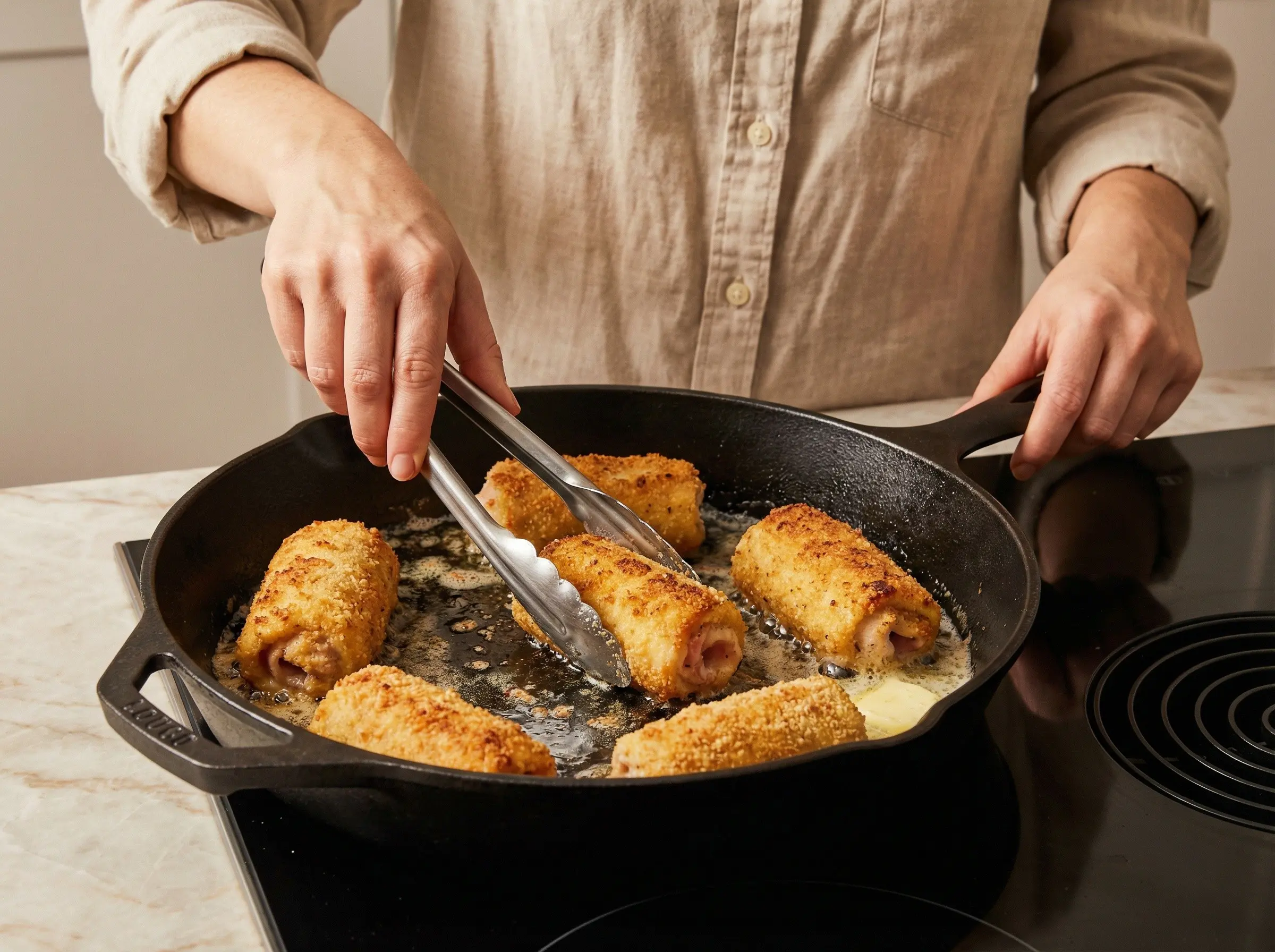
5Preheat your oven to 400 degrees F. Heat the vegetable oil and butter together in a large oven-safe skillet over medium-high heat. The combination of oil and butter provides both high smoke point and rich flavor. When the butter has melted and the fat is shimmering, carefully add the breaded chicken rolls, seam-side down first. Cook for 2-3 minutes until the bottom is golden brown, then carefully roll to brown all sides evenly - about 6-8 minutes total. The chicken should be deep golden brown all over. Do not crowd the pan - work in batches if necessary to maintain even browning.
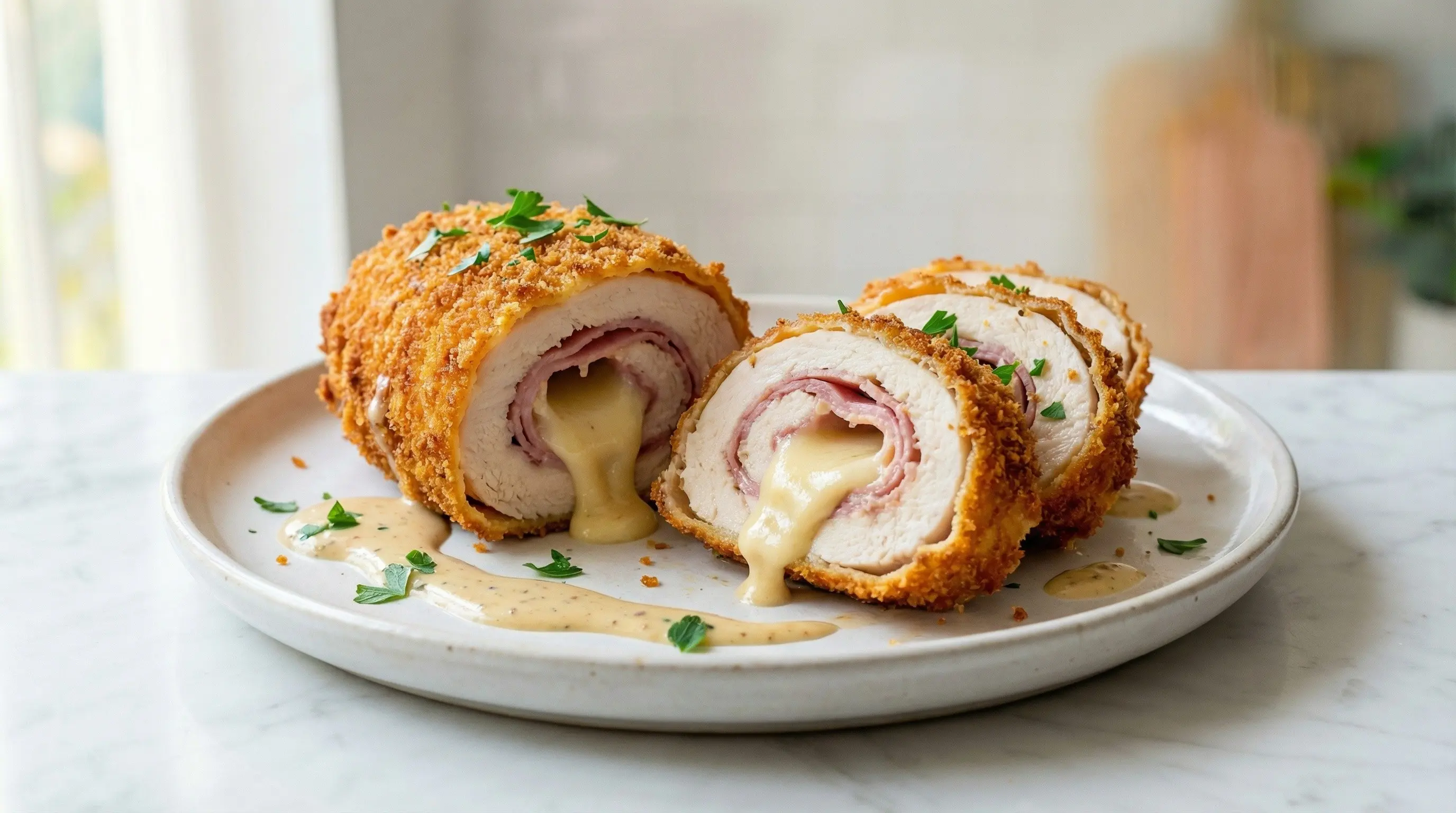
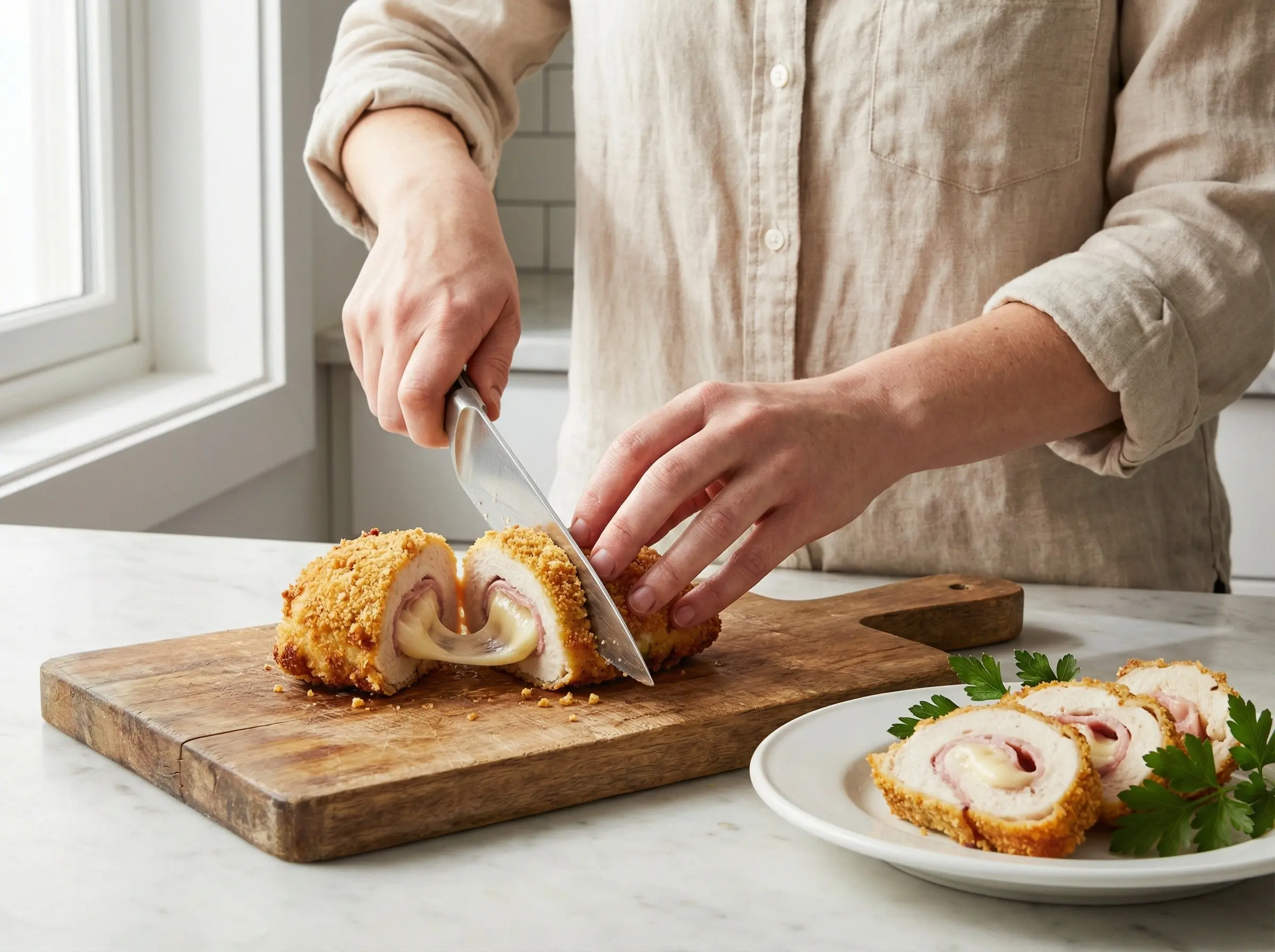
6Transfer the skillet to the preheated oven (or move the browned chicken to a baking sheet if your skillet is not oven-safe). Bake for 15-20 minutes until the internal temperature reaches 165 degrees F when measured at the thickest part of the chicken. The cheese inside should be melted and gooey. Remove from the oven and let rest for 5 minutes - this allows the juices to redistribute and the cheese to set slightly so it does not all pour out when sliced. Remove the toothpicks or twine. Slice each roll on the bias to reveal the beautiful spiral of ham and melted cheese inside. Serve immediately, garnished with fresh parsley. Chicken cordon bleu pairs beautifully with a creamy Dijon sauce, mashed potatoes, steamed vegetables, or a simple green salad. For the Dijon sauce, whisk together 1 cup heavy cream, 2 tablespoons Dijon mustard, and a splash of white wine in a saucepan, simmering until slightly thickened.


 Download