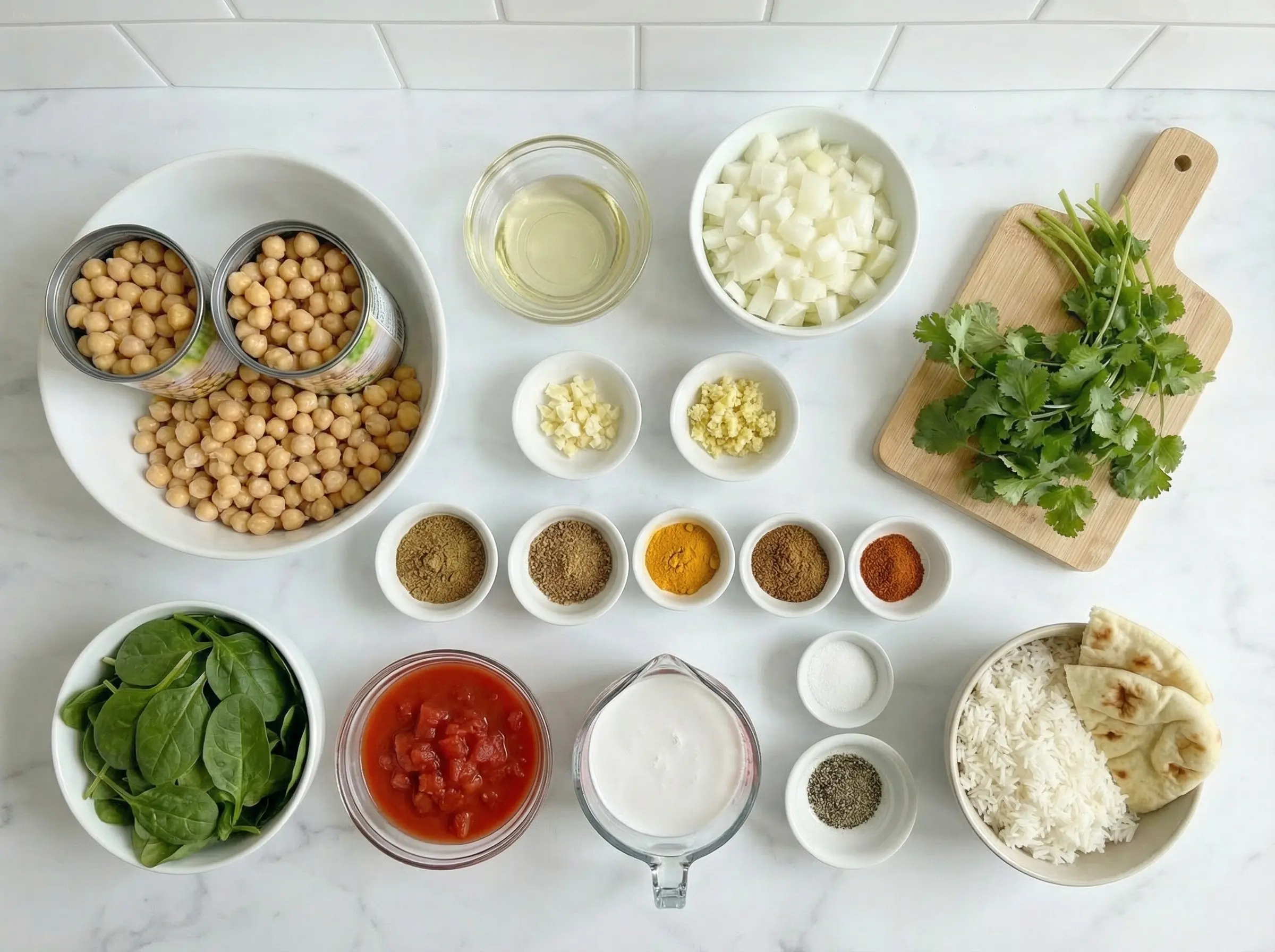
1Drain and rinse the canned chickpeas in a colander under cold water. This removes excess sodium and the slightly metallic taste that can come from canned beans. Pat them dry with a paper towel or let them drain well. If you prefer to use dried chickpeas, soak 1 cup of dried chickpeas overnight, then cook them in water for about 1-1.5 hours until tender. Canned chickpeas are much more convenient for a quick weeknight meal. Prepare all your other ingredients - dice the onion, mince the garlic and ginger, and measure out all your spices. Having everything ready before you start cooking makes the process smooth and ensures you do not burn anything while scrambling to prep.
2Heat the vegetable oil in a large, deep skillet or pot over medium heat. Add the diced onion and cook for 5-7 minutes, stirring occasionally, until the onion is soft and golden brown. The onions should be caramelized and sweet - this creates a flavorful base for your curry. Add the minced garlic and ginger and cook for another 1-2 minutes, stirring constantly, until fragrant. Be careful not to burn the garlic and ginger as they can turn bitter. The kitchen should smell amazing at this point, with the sweet onions and aromatic ginger-garlic filling the air.
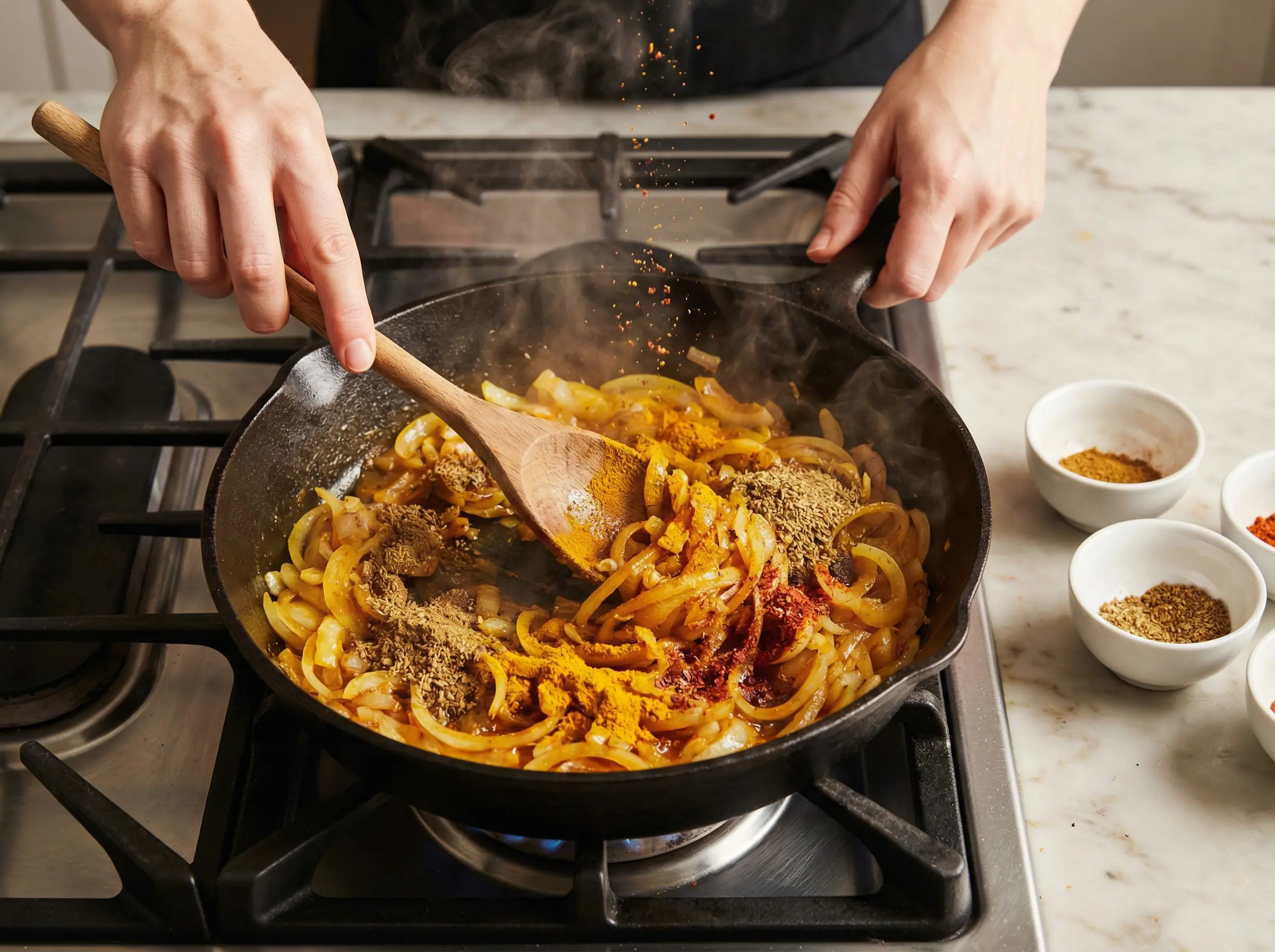
3Add all the ground spices - cumin, coriander, turmeric, garam masala, and cayenne pepper - to the onion mixture. Stir constantly for about 1 minute until the spices are fragrant and toasted. This step is called blooming the spices and it releases their essential oils and deepens their flavors. The mixture will become very aromatic and the spices will coat the onions. If the mixture seems dry and the spices are sticking to the pan, you can add a tablespoon of water to help them cook without burning. Do not skip this step - it makes a huge difference in the depth of flavor in your curry.
4Pour in the can of diced tomatoes with their juices and stir to combine with the spiced onion mixture. Let this simmer for 5-7 minutes, stirring occasionally, until the tomatoes break down and the mixture thickens into a rich, sauce-like consistency. The oil will start to separate from the tomato mixture and rise to the surface - this is a good sign that your masala base is ready. Use the back of your spoon to mash some of the tomato chunks if you prefer a smoother sauce. This tomato-spice mixture is the foundation of your curry and should be thick, dark, and deeply flavorful.
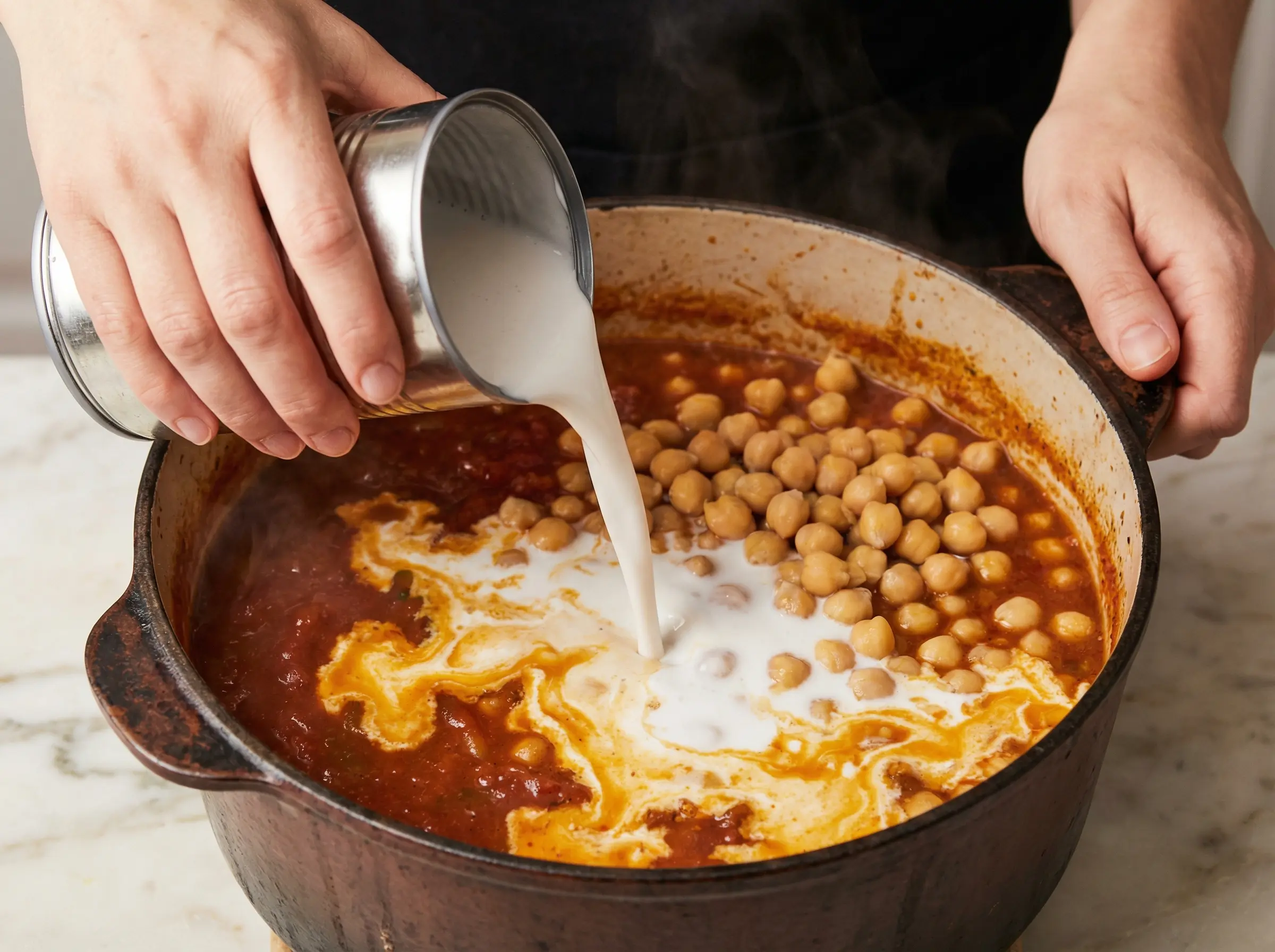
5Add the drained chickpeas and coconut milk to the pot, stirring everything together until well combined. The creamy coconut milk will lighten the color of the sauce and make it luxuriously rich. Add the salt and black pepper, then bring the curry to a gentle simmer. Reduce the heat to medium-low and let it simmer uncovered for 10-15 minutes, stirring occasionally. This allows the chickpeas to absorb the flavors of the sauce and gives the curry time to thicken. The chickpeas should be heated through and the sauce should coat the back of a spoon. If the curry seems too thick, add a splash of water; if too thin, simmer a bit longer to reduce the liquid.
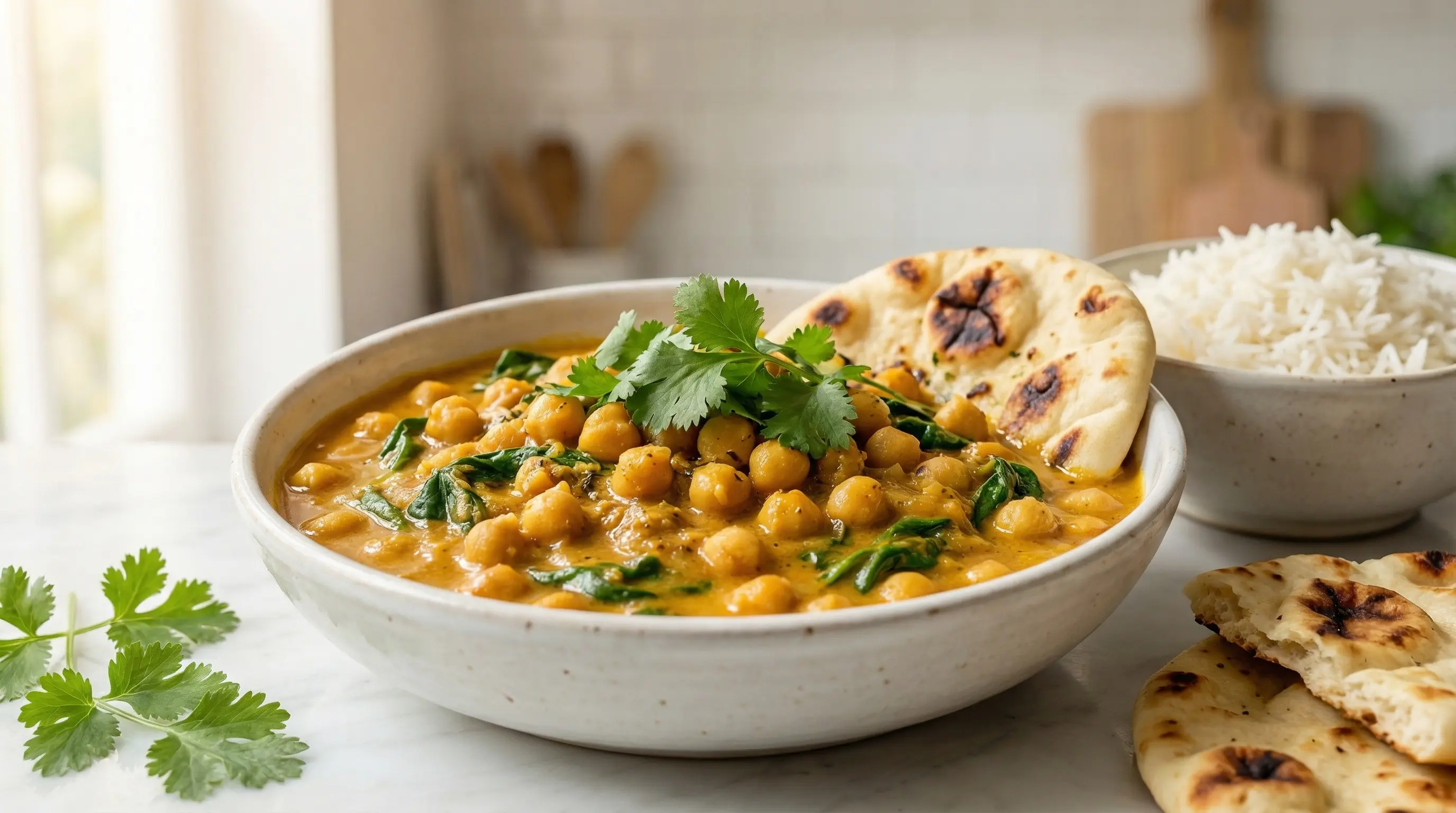
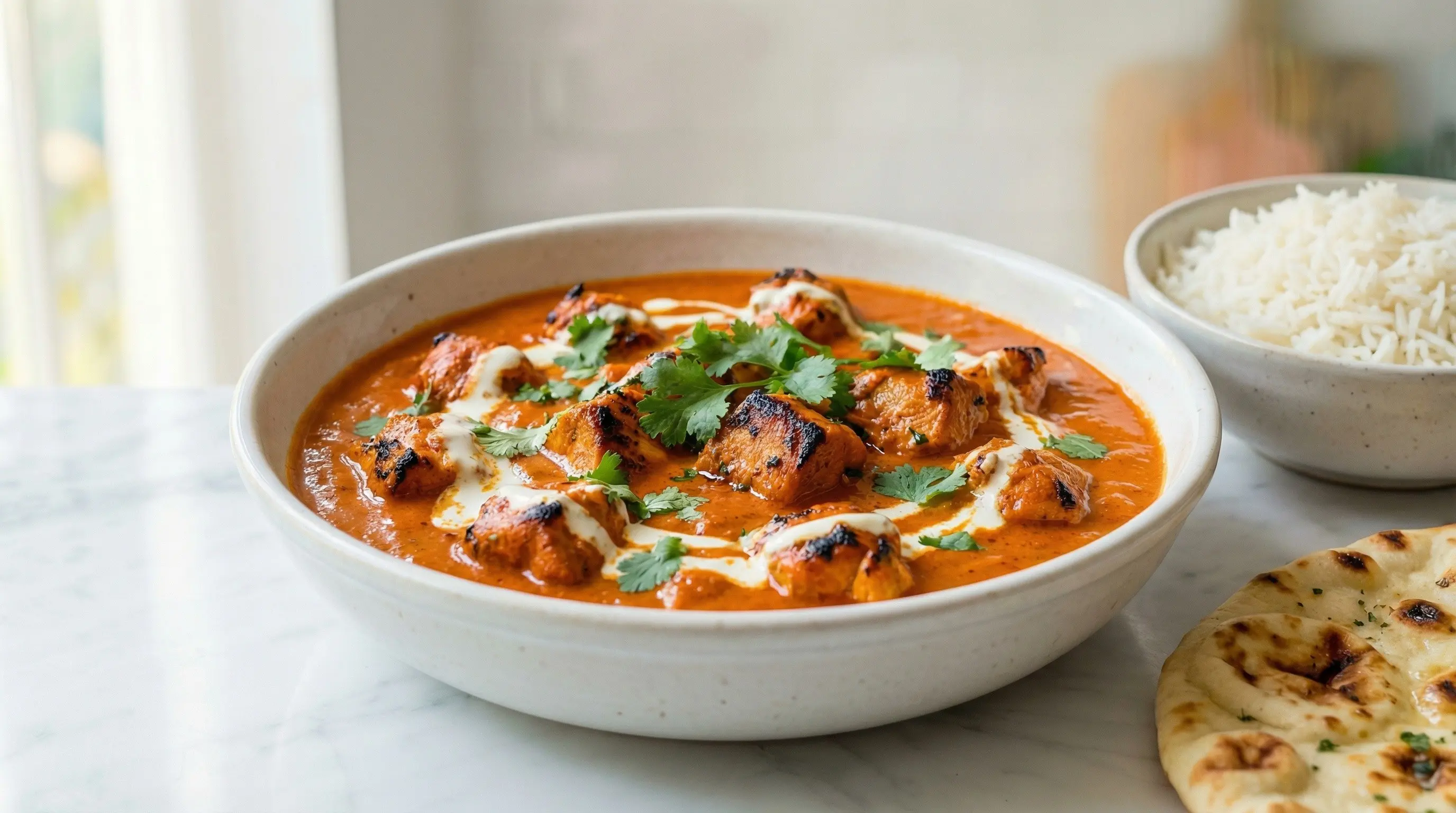
6Stir in the fresh spinach and let it wilt into the curry for about 2-3 minutes. The spinach adds color, nutrition, and a slight earthiness that complements the spices beautifully. Taste the curry and adjust seasonings as needed - you might want more salt, a squeeze of lemon juice for brightness, or an extra pinch of garam masala for depth. Remove from heat and garnish with fresh chopped cilantro. Serve hot over basmati rice, with warm naan bread for scooping, or with roti. This curry is even better the next day after the flavors have had time to meld, making it perfect for meal prep. Store in an airtight container in the refrigerator for up to 5 days or freeze for up to 3 months.


 Download