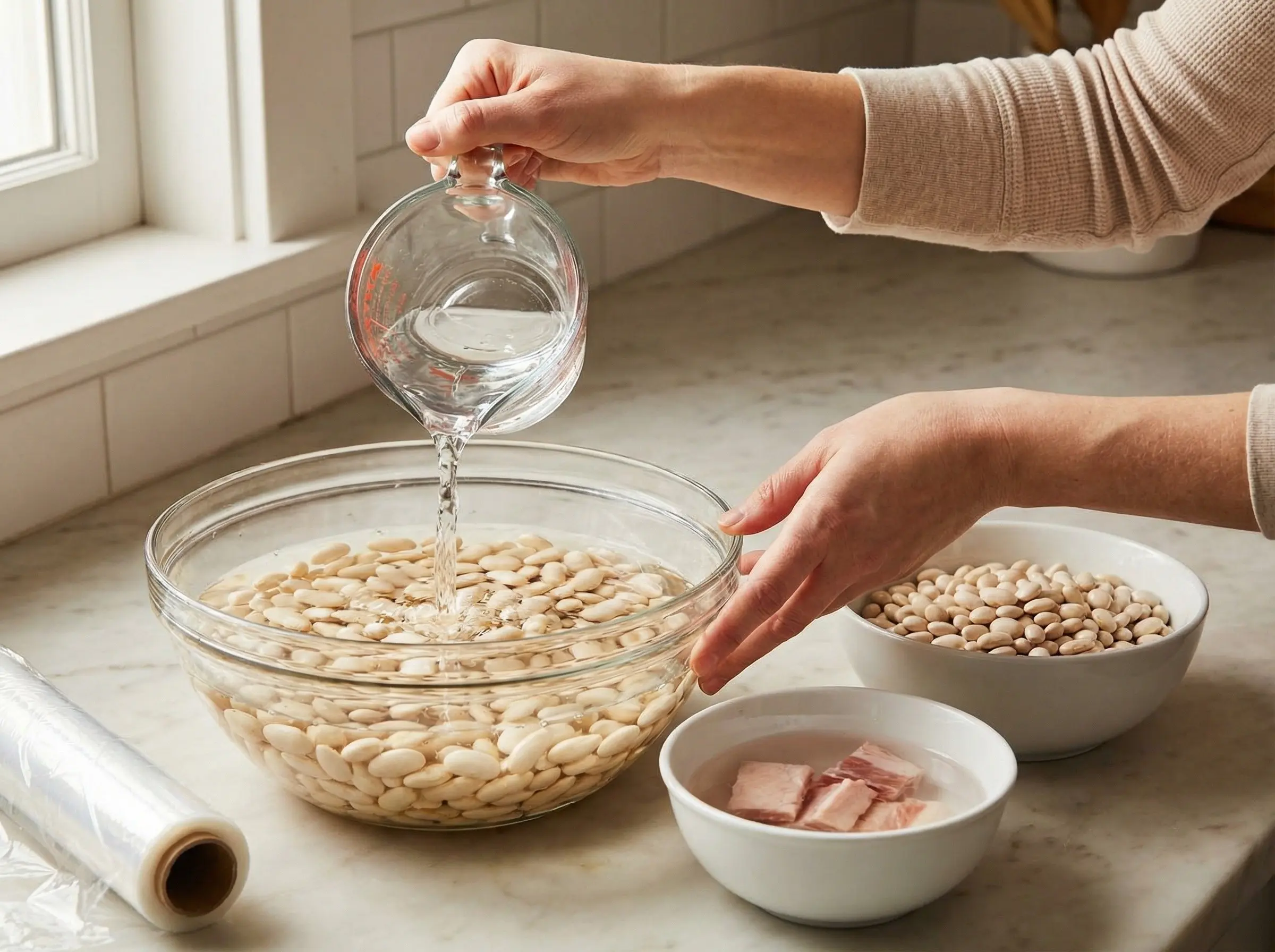
1The night before cooking, place the dried beans in a large bowl and cover with plenty of cold water - at least 3 inches above the beans. Let soak for 12-24 hours at room temperature. The beans will double or triple in size. If using salt pork or lacón that is very salty, soak it separately in cold water overnight as well to remove excess salt - change the water once or twice if possible. Authentic fabes de la Granja from Asturias are ideal, but large white lima beans, gigante beans, or butter beans can substitute. The beans must be large with thin skins - small white beans will not produce the proper texture.
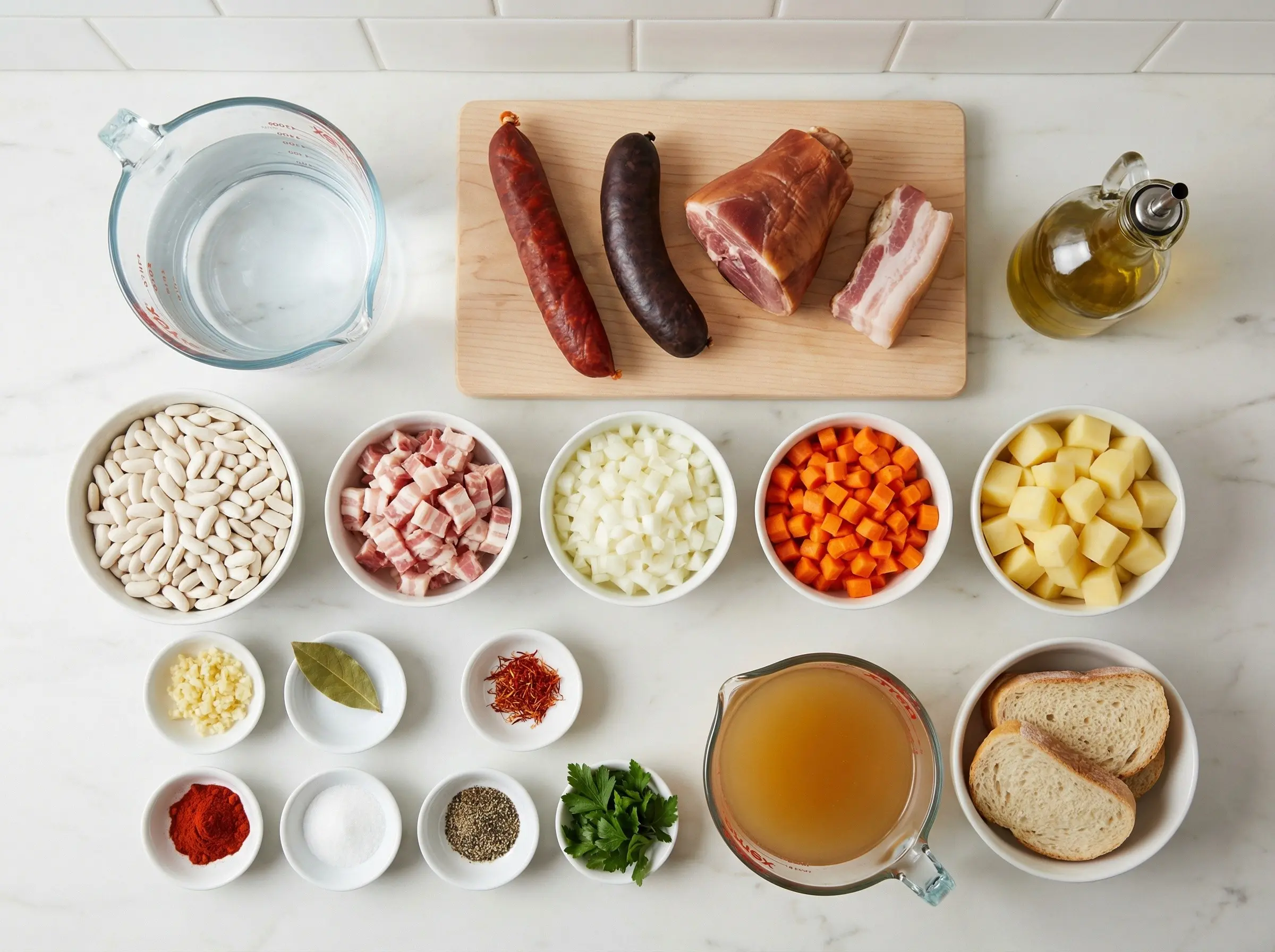
2Drain the soaked beans and place them in a large, heavy-bottomed pot or Dutch oven. Add the whole chorizo, whole morcilla, lacón or ham hock, and tocino or salt pork. Add the halved onion, whole garlic cloves, bay leaf, and saffron threads. The saffron is traditional and adds a subtle golden color and earthy aroma. Pour in the cold water - it should cover everything by about 2 inches. It is essential to start with cold water, not hot, as this allows the beans to cook evenly from the outside in and helps release their starch gradually for a creamy broth.
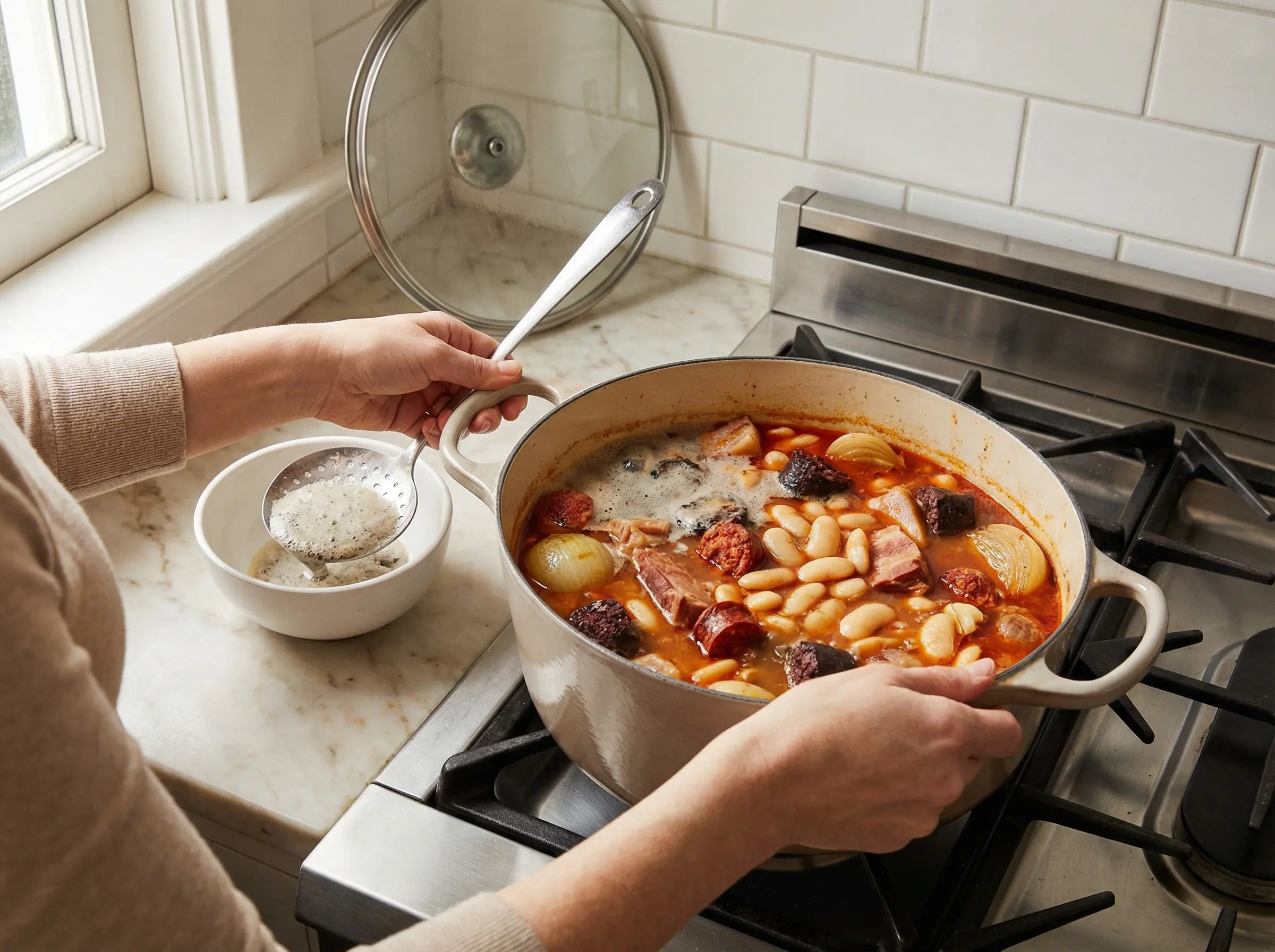
3Bring the pot to a boil over high heat. As it heats, skim off any foam or impurities that rise to the surface - this keeps the broth clear and clean-tasting. Once boiling, reduce the heat to the lowest possible setting. The fabada must cook at a bare simmer - you should see only occasional lazy bubbles breaking the surface, never a rolling boil. Boiling will break the beans and make the broth cloudy. Cover the pot with the lid slightly ajar to allow steam to escape. This gentle cooking is the secret to creamy, intact beans.
4Simmer the fabada very gently for 2 to 3 hours. Here is the crucial technique: never stir the pot with a spoon, as this will break the delicate beans. Instead, periodically give the pot a gentle shake or swirl to prevent sticking. If the water level drops below the beans, add more cold water - always cold, never hot, as hot water can crack the beans. This technique of adding cold water is called asustar (to scare) and is believed to help the beans cook more evenly. Check the beans after 2 hours - they should be very tender and creamy but still holding their shape.
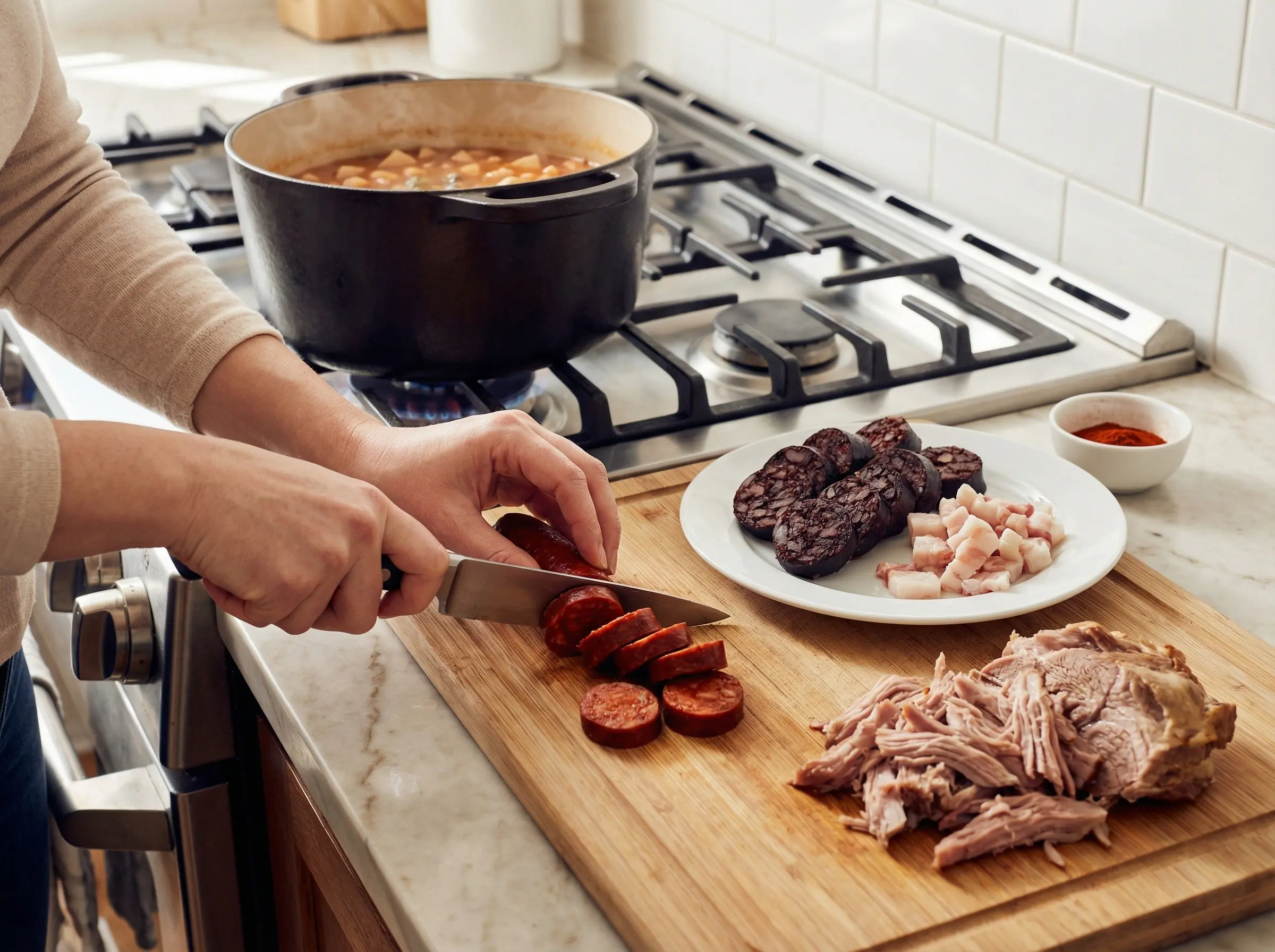
5After about 1.5 hours of cooking, carefully remove the chorizo and morcilla from the pot - they cook faster than the beans and can become too soft if left the entire time. Set them aside on a plate. Continue simmering the beans with the lacón and tocino until everything is completely tender. The lacón should be falling-off-the-bone tender and the beans should be creamy throughout with no chalky center. About 15 minutes before serving, return the chorizo and morcilla to the pot to warm through. Add the smoked paprika and stir very gently - or better, swirl the pot to incorporate.
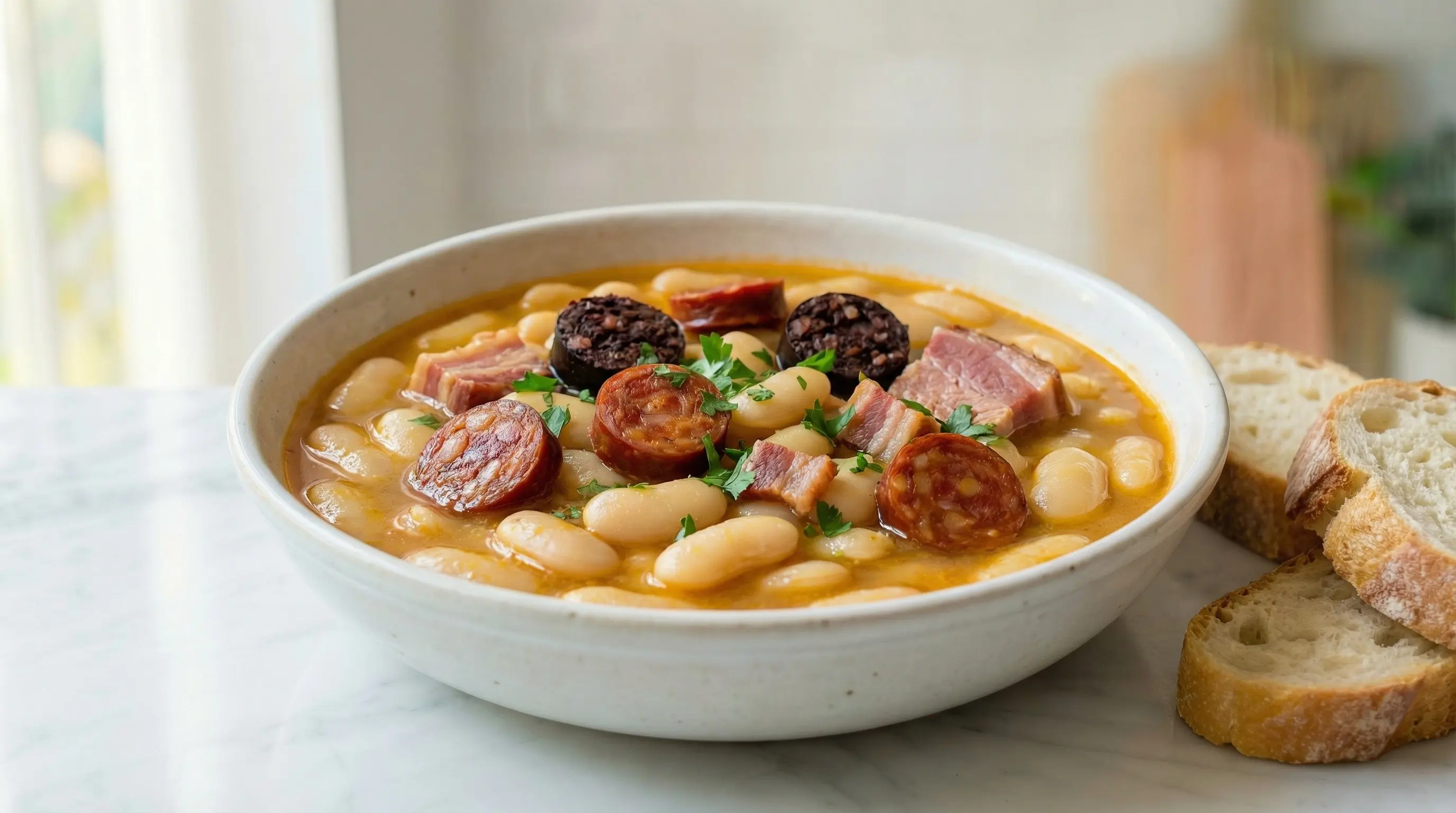
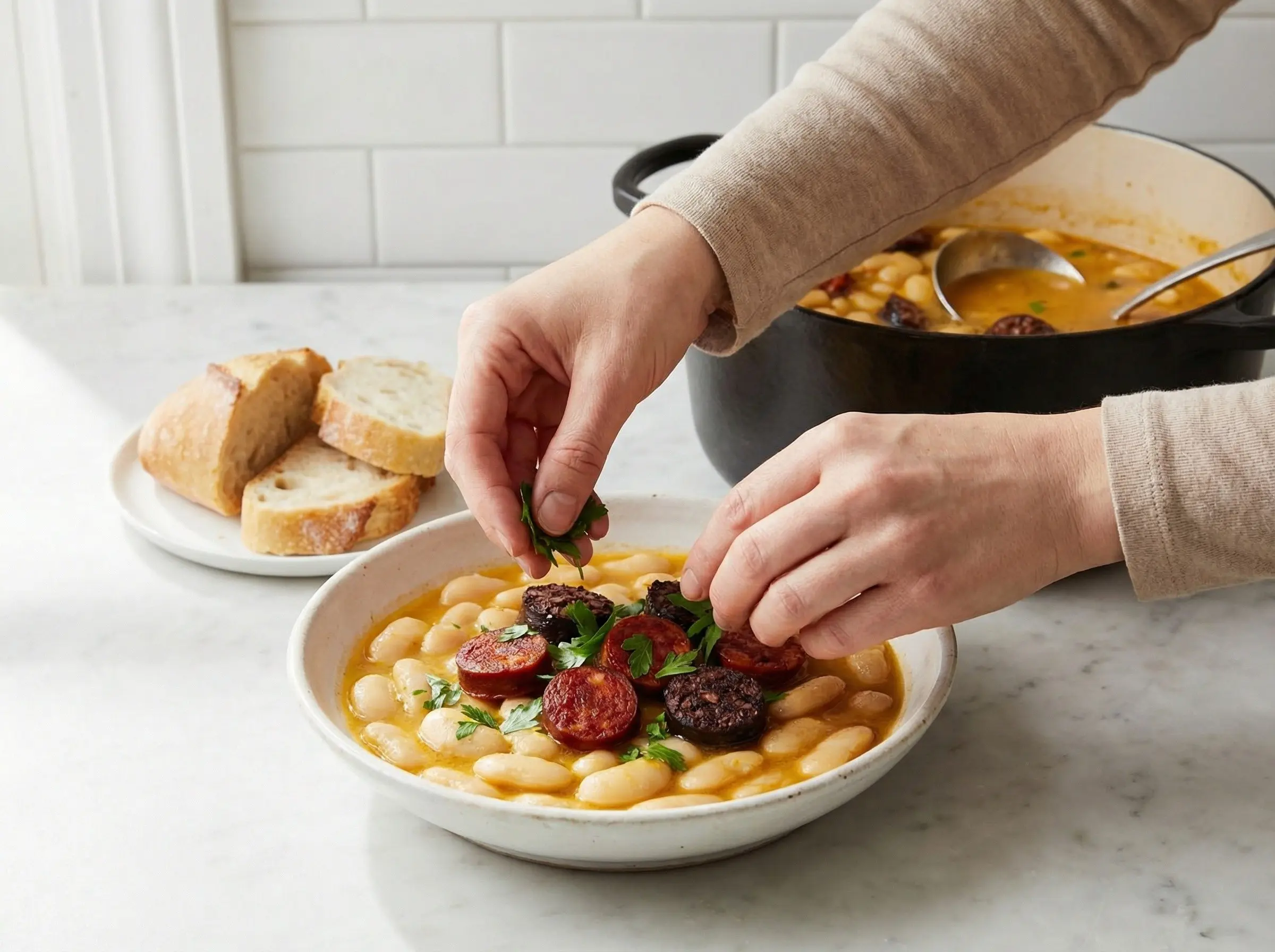
6Taste the broth and season with salt as needed - be cautious as the cured meats add significant saltiness. Remove and discard the onion, garlic, and bay leaf. The broth should be rich, slightly thick from the bean starch, and deeply flavorful. Let the fabada rest off heat for 10-15 minutes before serving - this allows the flavors to meld and the broth to thicken slightly. To serve traditionally, ladle the beans and broth into deep bowls first. Remove the meats, slice them, and arrange on a separate platter or on top of the beans. The lacón should be shredded or sliced, the chorizo and morcilla cut into rounds. Garnish with fresh parsley. Serve with crusty bread and Asturian sidra (cider) if available. Fabada is traditionally served as the main event of a meal, often followed by a simple salad or fruit. It tastes even better the next day - refrigerate overnight and reheat gently, adding a splash of water if needed.


 Download