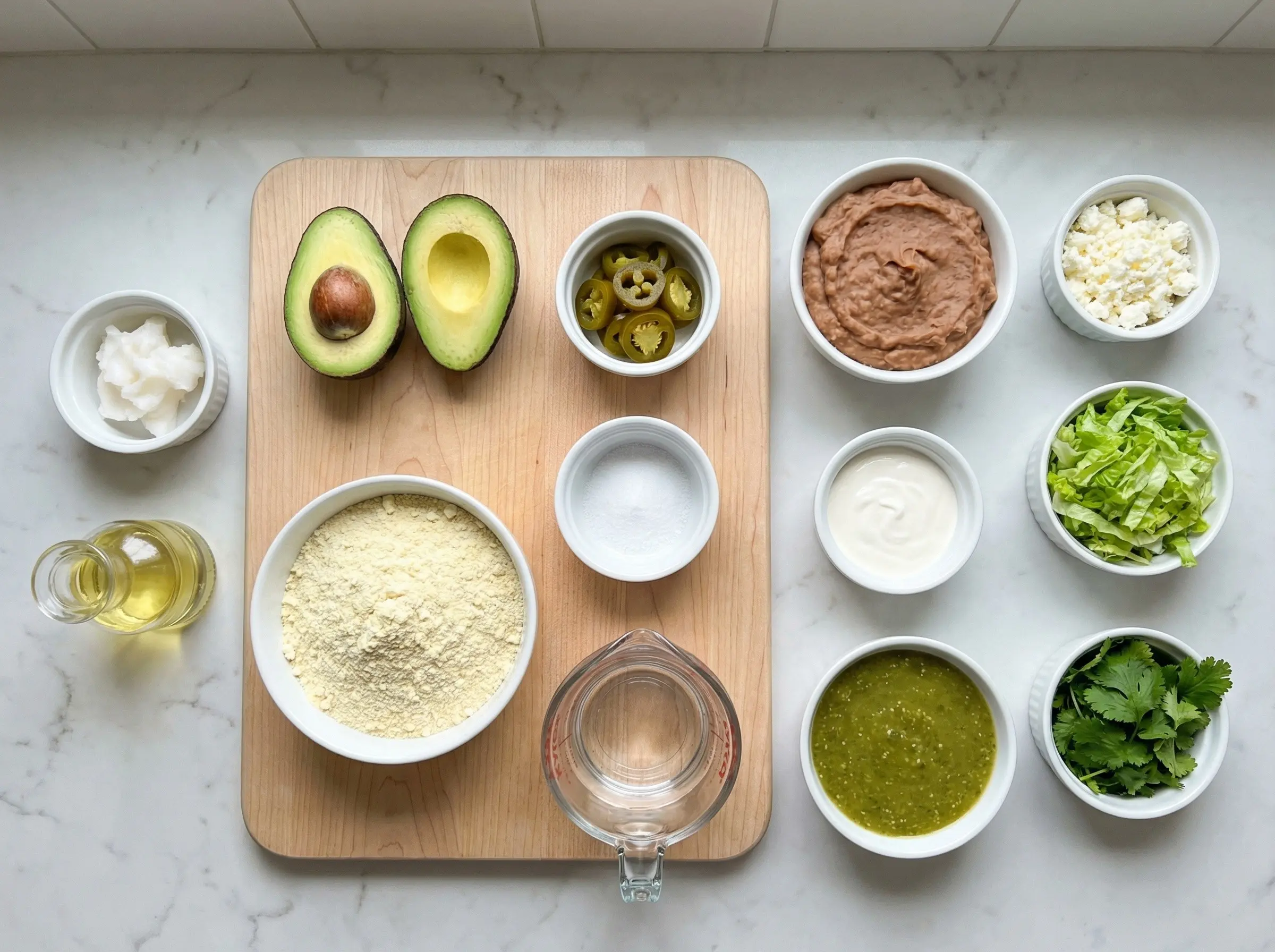
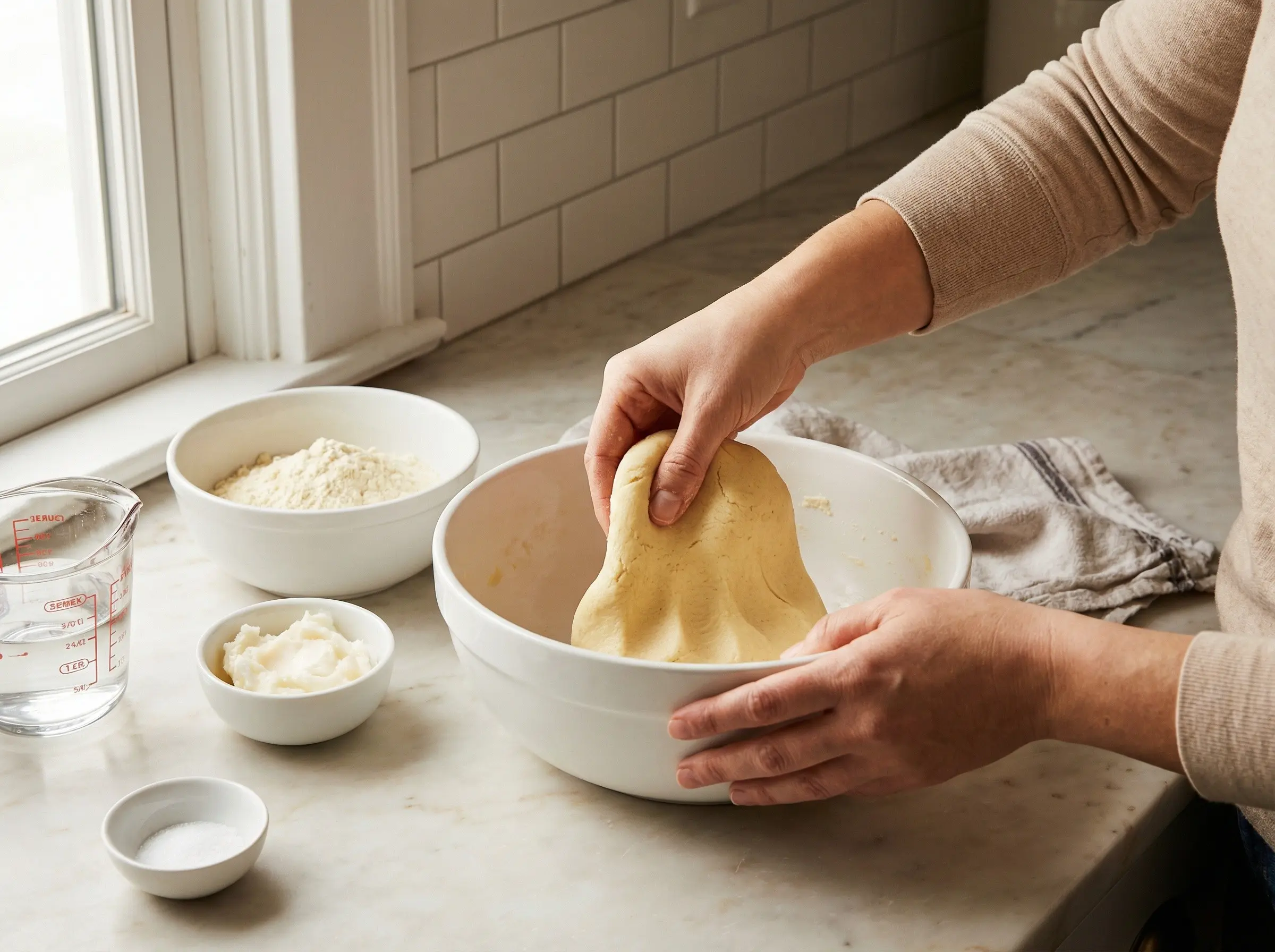
1In a large mixing bowl, combine the masa harina and salt. Add the softened lard or vegetable shortening to the dry ingredients. Using your hands, work the fat into the masa harina, rubbing and pressing until the mixture resembles coarse sand with no large pieces of fat remaining. This step is important - the fat makes the gorditas tender and helps them puff slightly when cooked. Gradually add the warm water, mixing with your hands as you go. Knead the dough in the bowl for 2-3 minutes until smooth, soft, and pliable. The dough should be moist but not sticky - similar to soft playdough. If it feels too dry and crumbly, add more water one tablespoon at a time. If too wet and sticky, add a bit more masa harina. Cover the dough with a damp kitchen towel or plastic wrap and let it rest for 15-20 minutes. This resting period allows the masa harina to fully hydrate and makes the dough easier to work with.
2Divide the rested dough into 8 equal portions, each about the size of a golf ball. Roll each portion between your palms to form a smooth ball with no cracks. Working with one ball at a time, flatten it between your palms or using a tortilla press lined with plastic wrap (to prevent sticking) to form a thick disc about 3-4 inches in diameter and 1/4 to 1/2 inch thick. This is key - gorditas should be much thicker than tortillas. If the edges crack, the dough may be too dry; knead in a tiny bit more water. The disc should be thick enough to create a pocket later but not so thick that it will not cook through properly. Keep the formed discs covered with a damp towel while you work to prevent them from drying out.
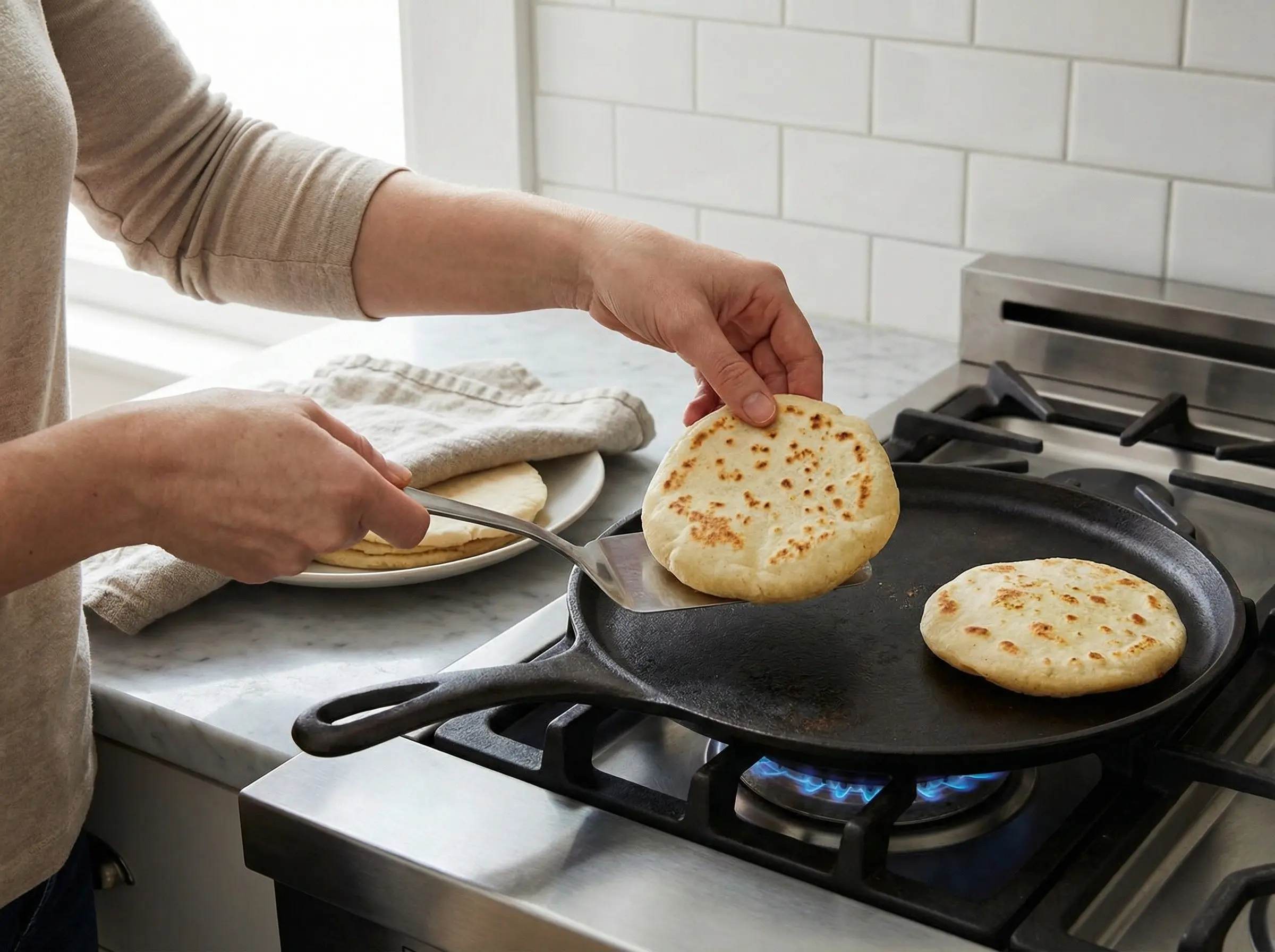
3Heat a dry comal, cast iron skillet, or griddle over medium heat. Once hot, place one or two gordita discs on the dry surface - do not use oil at this stage. Cook for 3-4 minutes on the first side until the bottom develops light golden spots and the masa begins to look dry around the edges. Flip and cook for another 3-4 minutes on the second side. The gorditas should puff slightly in the center as they cook - this creates the pocket you will fill later. If they are not puffing, your comal may not be hot enough, or gently press on the gordita with a spatula to encourage puffing. The exterior should be lightly golden with some darker spots, and the gordita should feel firm but not hard. Remove to a plate and repeat with remaining dough.
4For crispier gorditas, you can fry them after the initial cooking. Heat the vegetable oil in a skillet over medium-high heat until it shimmers, about 350 degrees F. Carefully place the cooked gorditas in the hot oil and fry for 1-2 minutes per side until golden brown and crispy on the exterior. The frying step is optional but traditional in many regions - it creates a wonderfully crispy shell that contrasts with the soft interior. Use a slotted spoon to transfer the fried gorditas to a paper towel-lined plate to drain excess oil. If you prefer softer gorditas, you can skip this frying step and proceed directly to stuffing after cooking on the comal.
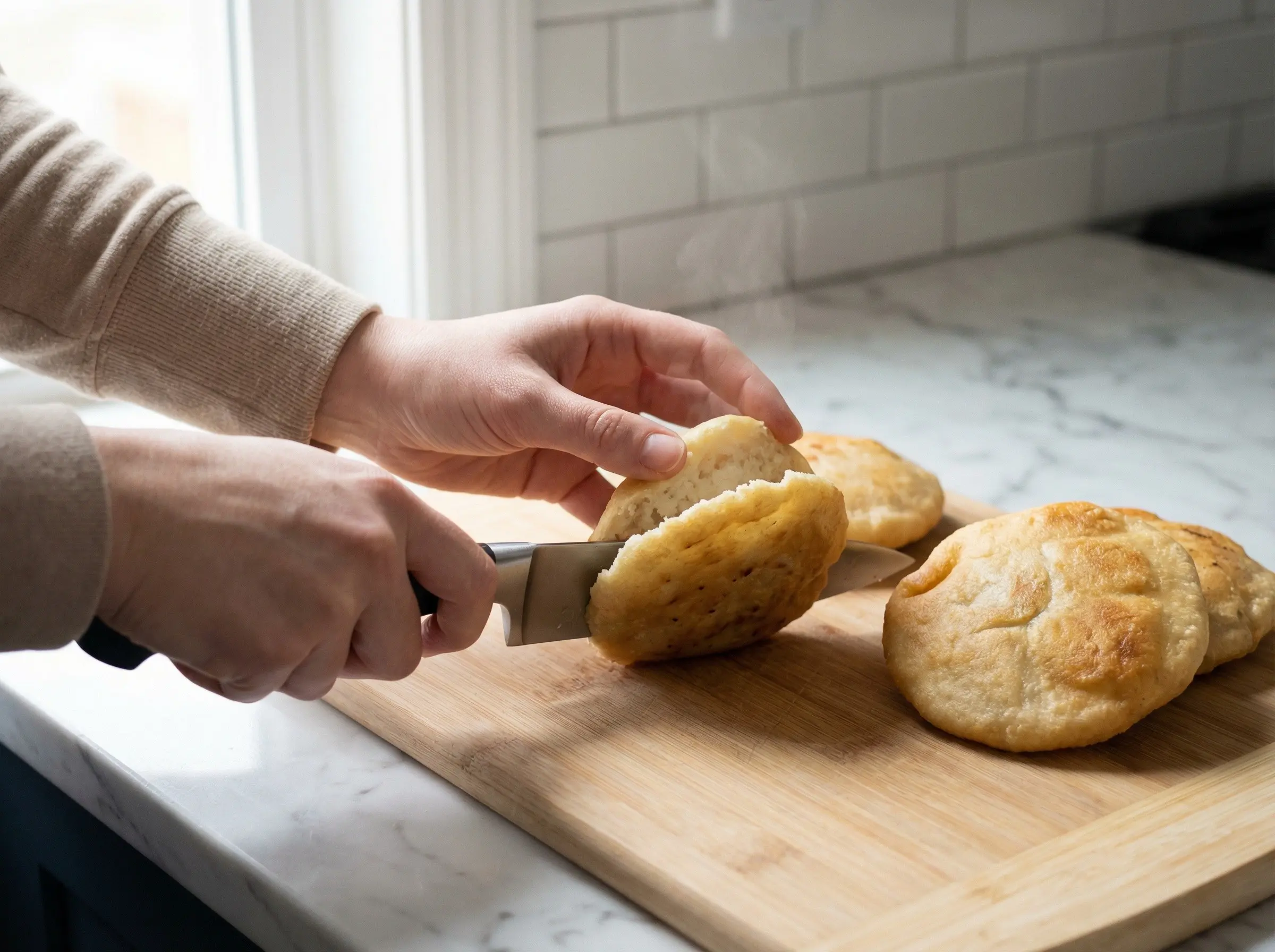
5While the gorditas are still warm, carefully slice them open to create a pocket. Using a sharp knife, cut horizontally through the edge of the gordita about halfway through, as if you were opening a pita bread. Do not cut all the way through - you want to create a pocket while keeping one side intact as a hinge. The inside should be soft and slightly hollow from the puffing. If your gordita did not puff much, you can gently press the center to create space for the filling. Be careful as the gorditas will be hot inside. The pocket should be large enough to hold a generous amount of filling.
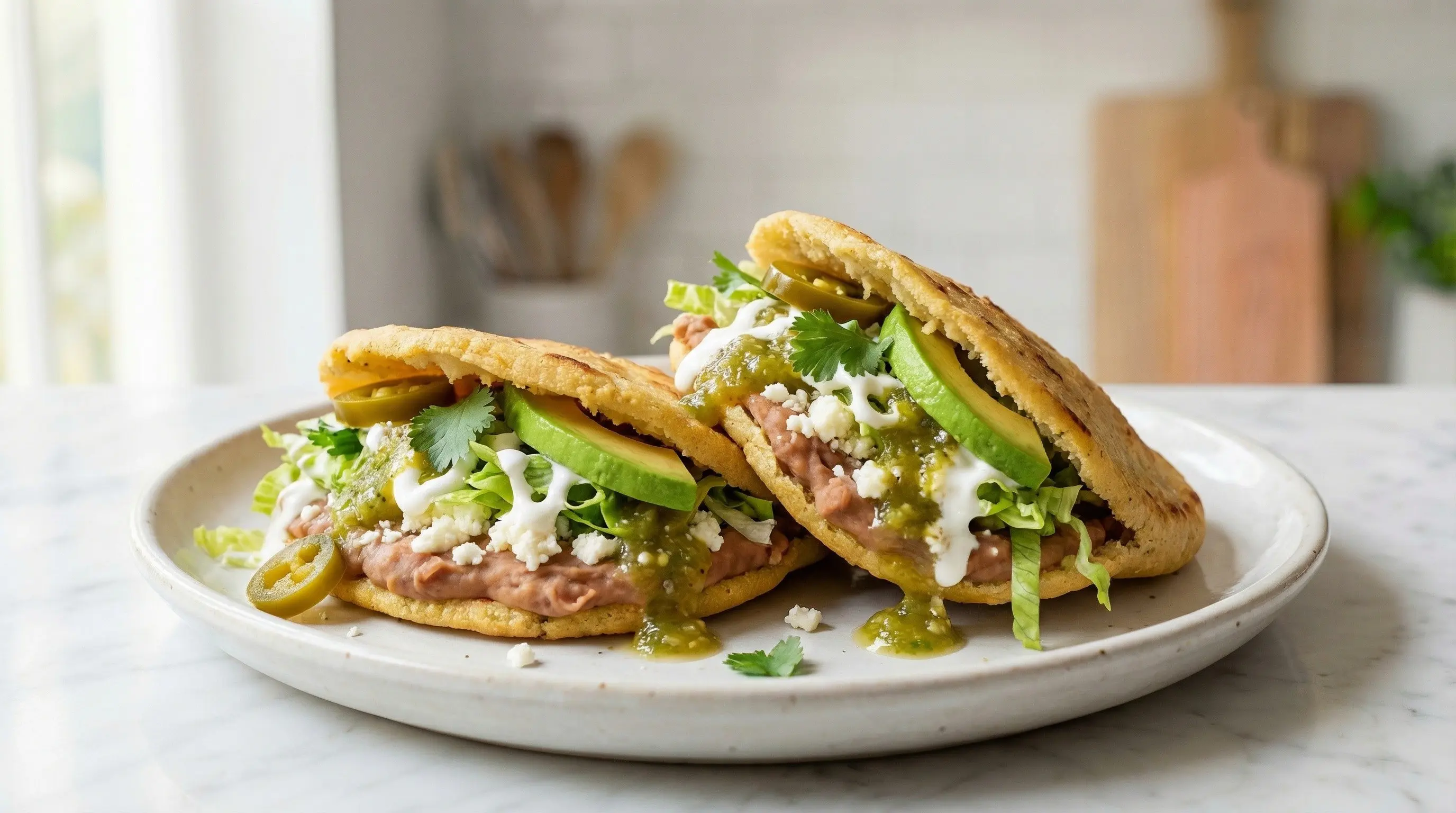
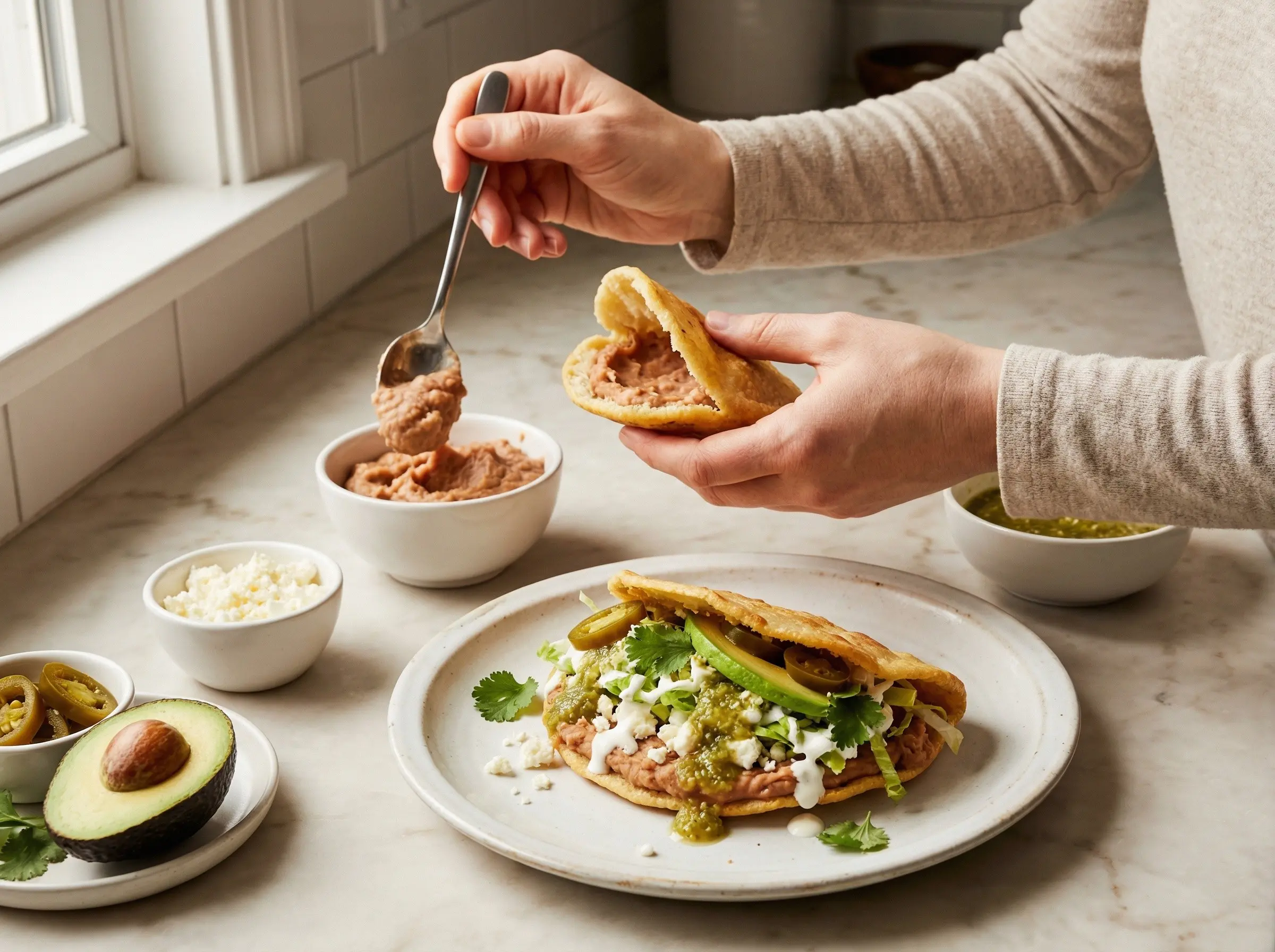
6Stuff each gordita pocket with your desired fillings. Start with a base of warm refried beans - about 2-3 tablespoons per gordita. You can also fill them with other traditional options like chicharrón prensado (pressed pork cracklings), picadillo (spiced ground beef), rajas con crema (roasted poblano strips with cream), or scrambled eggs with chorizo. After adding the main filling, top with crumbled queso fresco, shredded lettuce, a drizzle of Mexican crema, and your choice of salsa verde or roja. Add fresh cilantro, sliced avocado, and pickled jalapeños if desired. The toppings should overflow slightly from the pocket, creating an abundant, colorful presentation. Serve immediately while the gorditas are still warm and crispy. Gorditas are meant to be eaten with your hands - they are a complete, portable meal. Traditionally served at breakfast, lunch, or as a street food snack, gorditas are best enjoyed fresh. The combination of crispy-soft masa, creamy beans, tangy cheese, and fresh toppings is quintessential Mexican comfort food.
 Download