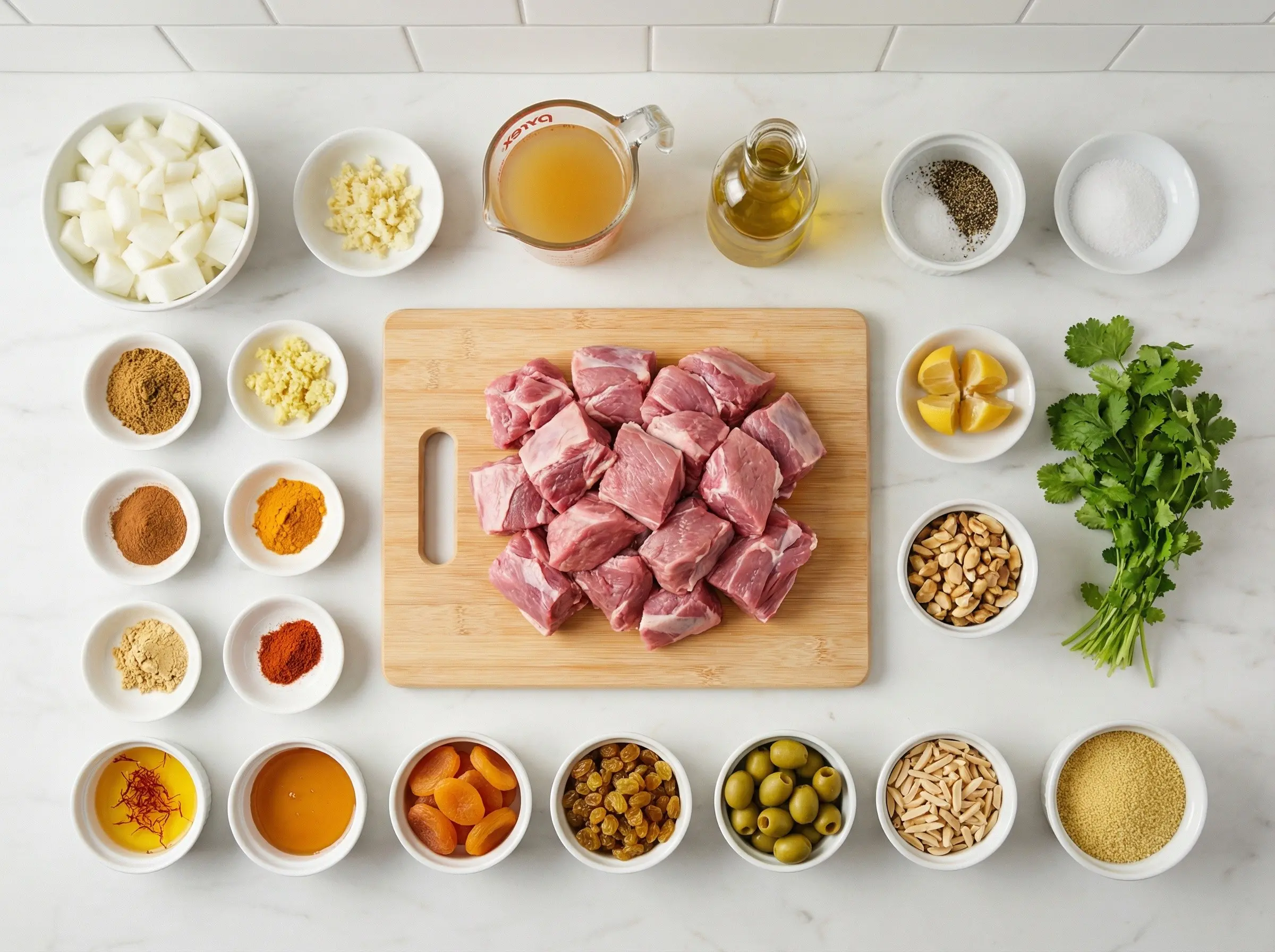
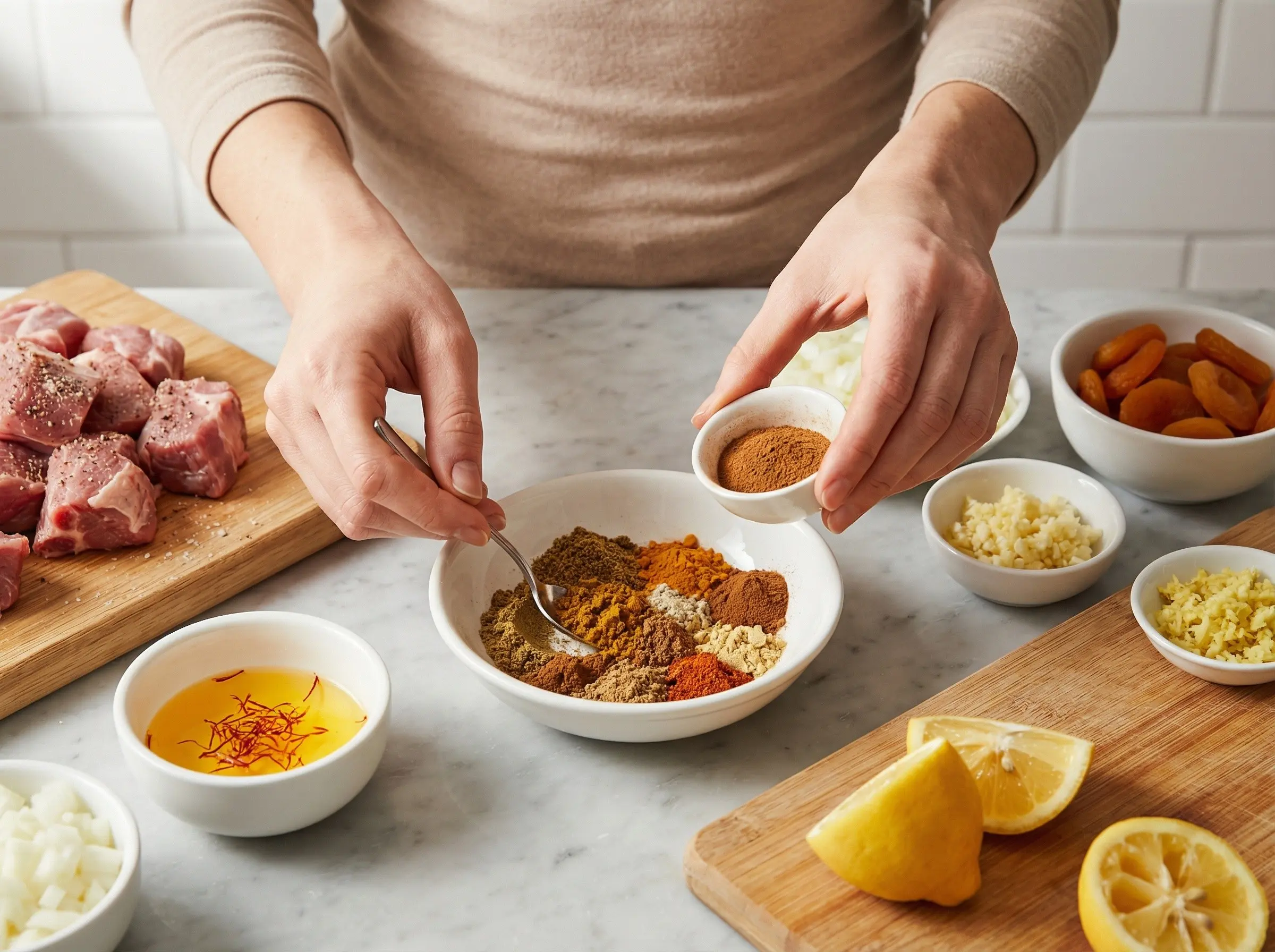
1Season the lamb generously with salt and pepper. In a small bowl, combine the cumin, coriander, cinnamon, turmeric, ground ginger, and cayenne pepper - this is your spice blend. Steep the saffron threads in 2 tablespoons of warm water and set aside - the saffron will bloom and release its golden color and distinctive aroma. If your dried apricots are very hard, soak them in warm water for 15 minutes to soften slightly, then drain. Rinse the preserved lemon, quarter it, and scrape out and discard the pulp - only the flavorful rind is used.
2Heat 2 tablespoons of olive oil in a tagine, Dutch oven, or large heavy-bottomed pot over medium-high heat. Working in batches to avoid overcrowding, brown the lamb pieces on all sides, about 3-4 minutes per batch. Do not move the meat too frequently - let it develop a deep golden-brown crust. This browning step creates tremendous depth of flavor through caramelization. Transfer the browned lamb to a plate and set aside. The browned bits on the bottom of the pot (fond) will add flavor to the sauce.
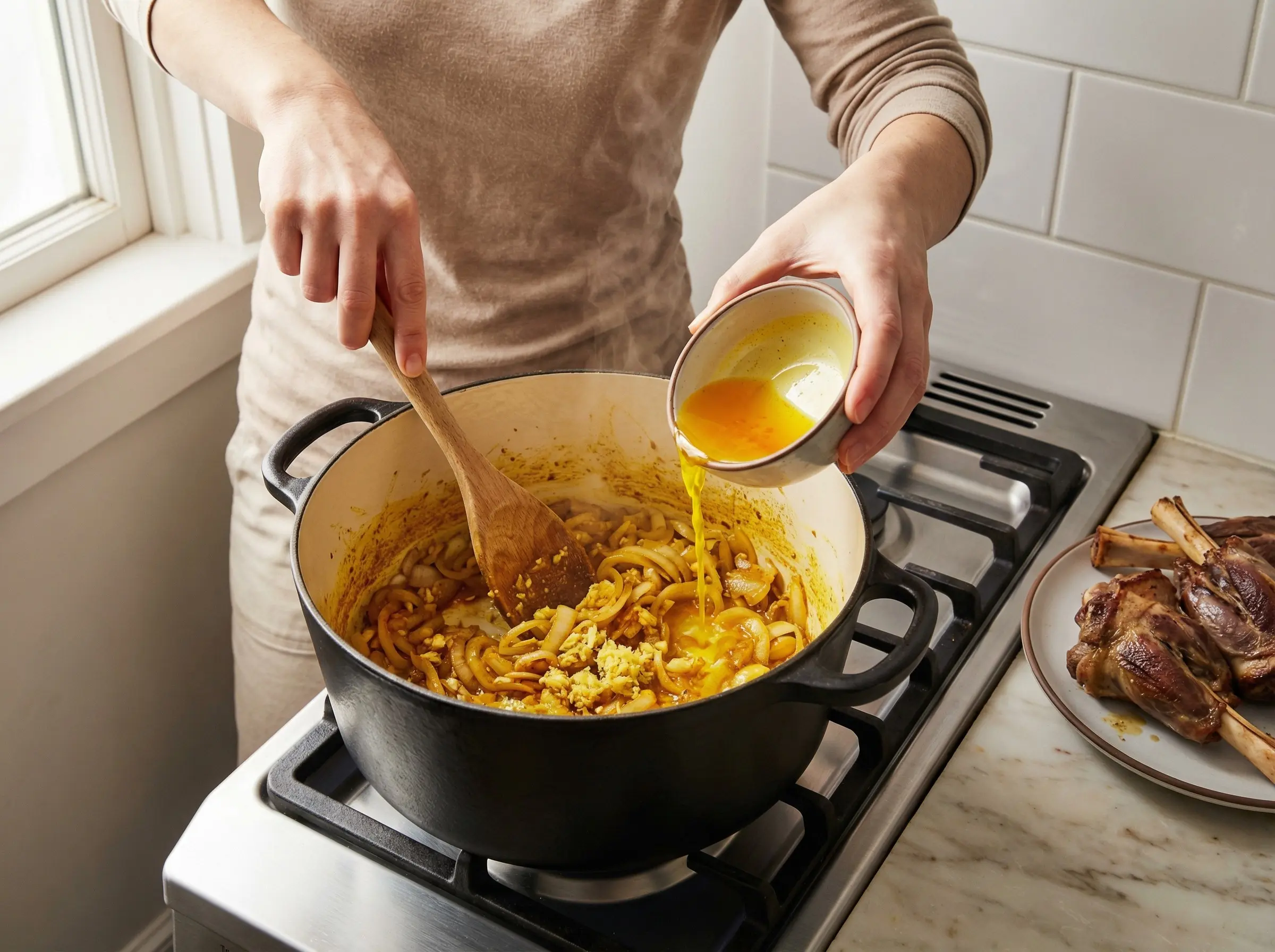
3Reduce the heat to medium and add the remaining tablespoon of olive oil. Add the diced onion and cook for 5-6 minutes until softened and golden. Add the minced garlic and fresh grated ginger, stirring for about 1 minute until fragrant. Add the spice blend and stir constantly for 30-45 seconds to toast the spices and coat the onions - this blooms the spices and releases their aromatic oils. Be careful not to burn the spices or they will become bitter. Add the saffron with its soaking liquid and stir to combine.
4Return the browned lamb and any accumulated juices to the pot. Add the chicken or lamb broth, honey, dried apricots, and golden raisins. Nestle the preserved lemon quarters into the stew. If using olives, add them now. Stir gently to combine everything and bring to a boil. Reduce the heat to low, cover with a tight-fitting lid (or the tagine cone), and simmer gently for 1.5 to 2 hours, stirring occasionally. The lamb is done when it is fork-tender and practically falls apart. The sauce should be thick and glossy - if it is too thin, remove the lid during the last 20 minutes to allow it to reduce.
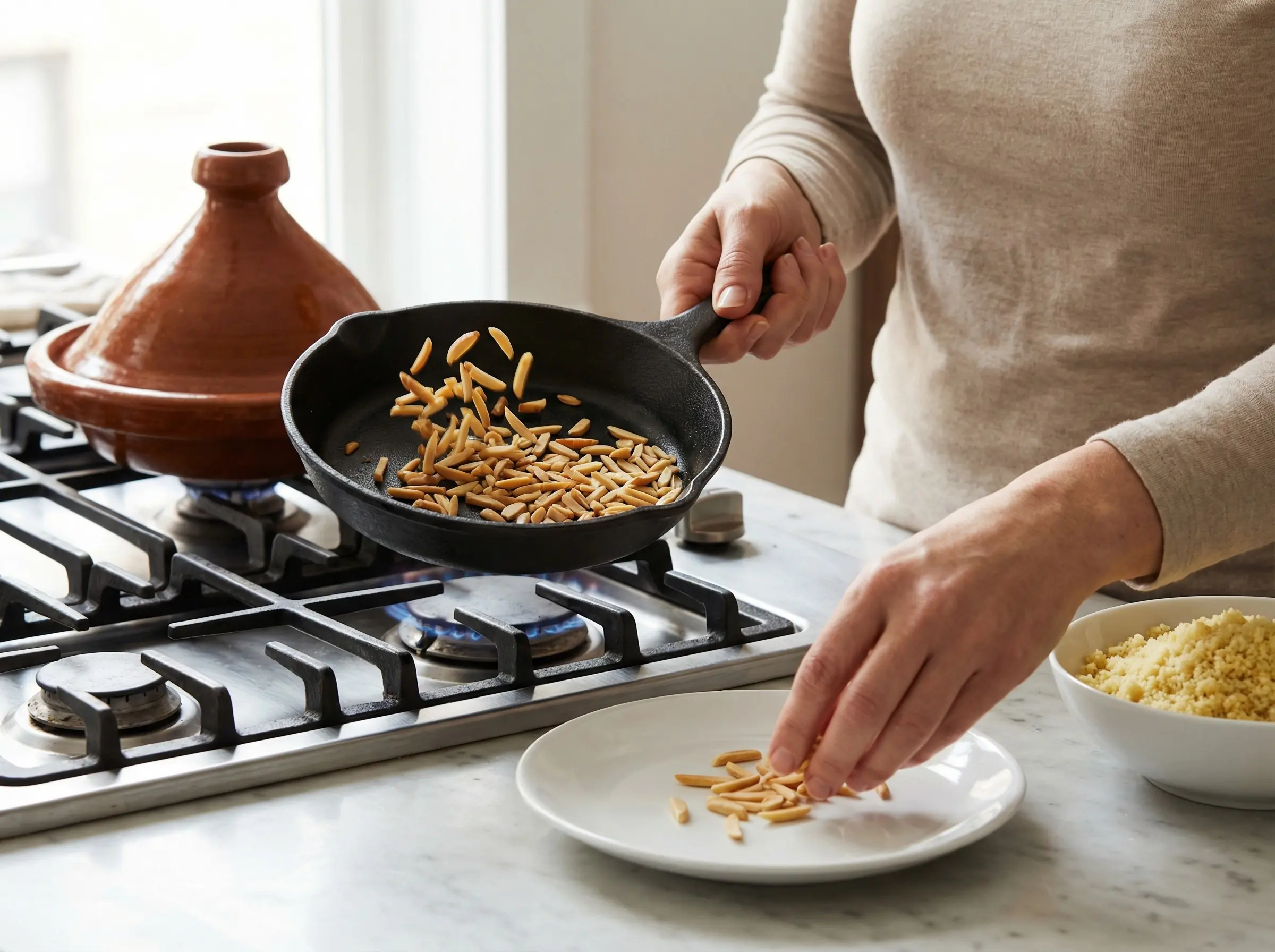
5While the tagine finishes cooking, toast the slivered almonds. Spread them in a single layer in a dry skillet over medium heat. Cook, stirring frequently, for 3-4 minutes until golden brown and fragrant. Watch carefully as they can burn quickly. Transfer immediately to a plate to cool. Prepare the couscous according to package directions - fluff with a fork and add a pat of butter and a pinch of salt for extra flavor. Moroccan couscous is traditionally steamed multiple times for the fluffiest texture, but instant couscous works well for everyday cooking.
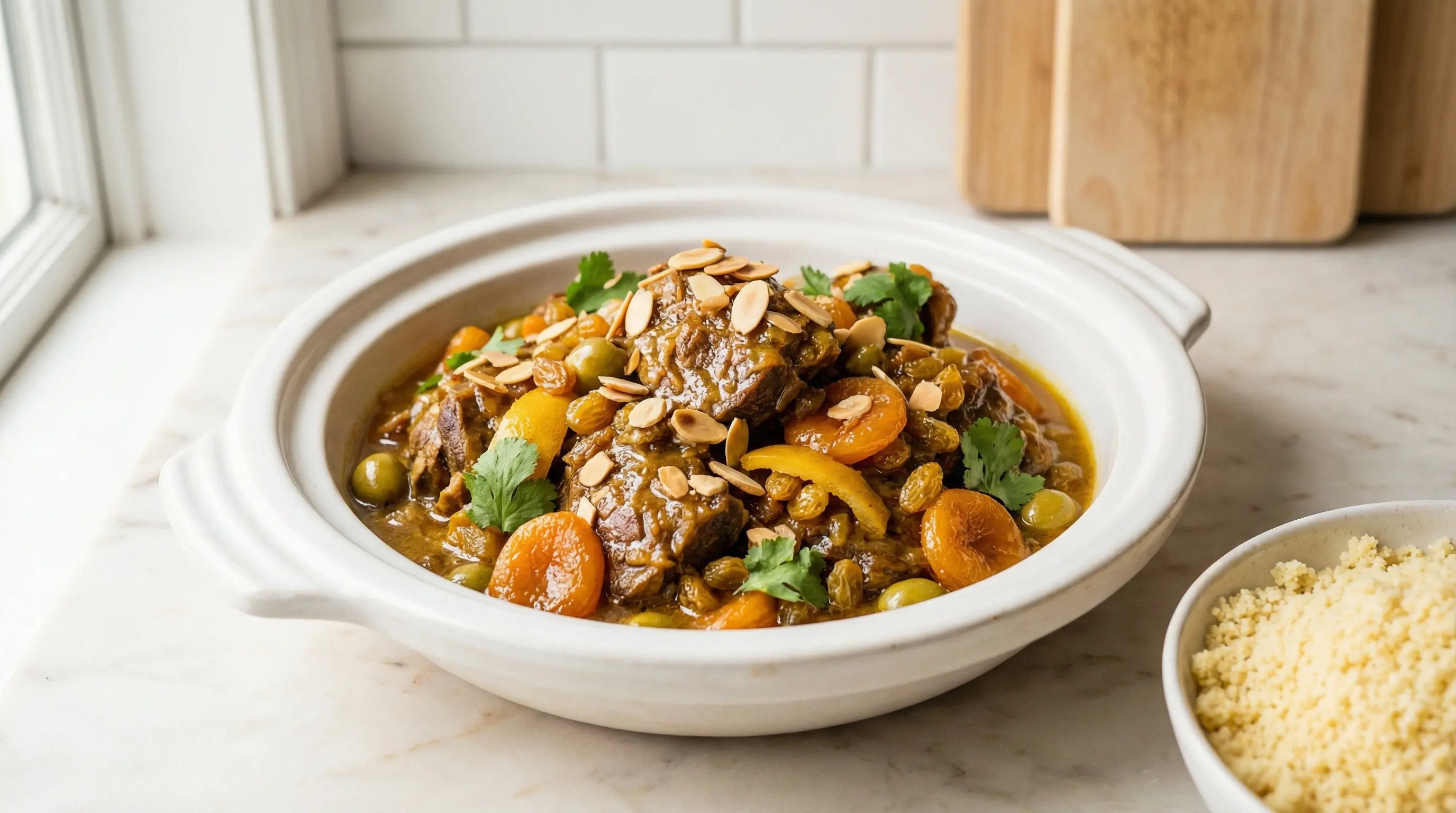
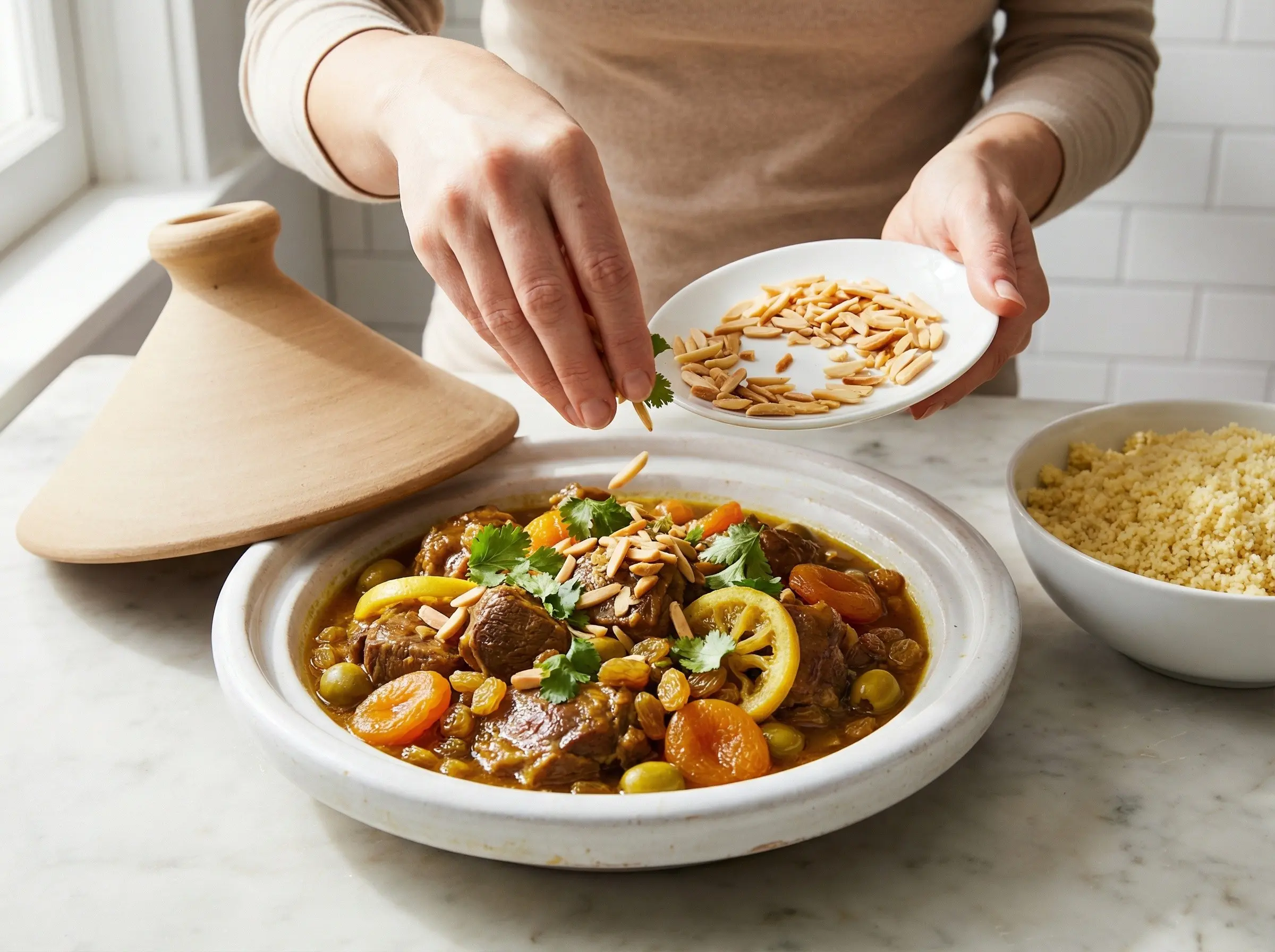
6Taste the tagine and adjust seasoning - you may need more salt, a touch more honey for sweetness, or a squeeze of lemon juice for brightness. The balance should be savory with subtle sweetness from the fruits and honey, warmth from the spices, and a gentle background heat. Transfer the tagine to a serving dish or bring the tagine pot directly to the table for a dramatic presentation. Scatter the toasted almonds generously over the top and garnish with fresh chopped cilantro (or mint, which is also traditional). Serve over fluffy couscous, which soaks up the fragrant sauce beautifully. Crusty Moroccan bread (khobz) is also traditional for scooping up every last bit. Lamb tagine tastes even better the next day after the flavors have melded further. Store refrigerated for up to 4 days - reheat gently, adding a splash of broth if the sauce has thickened.


 Download