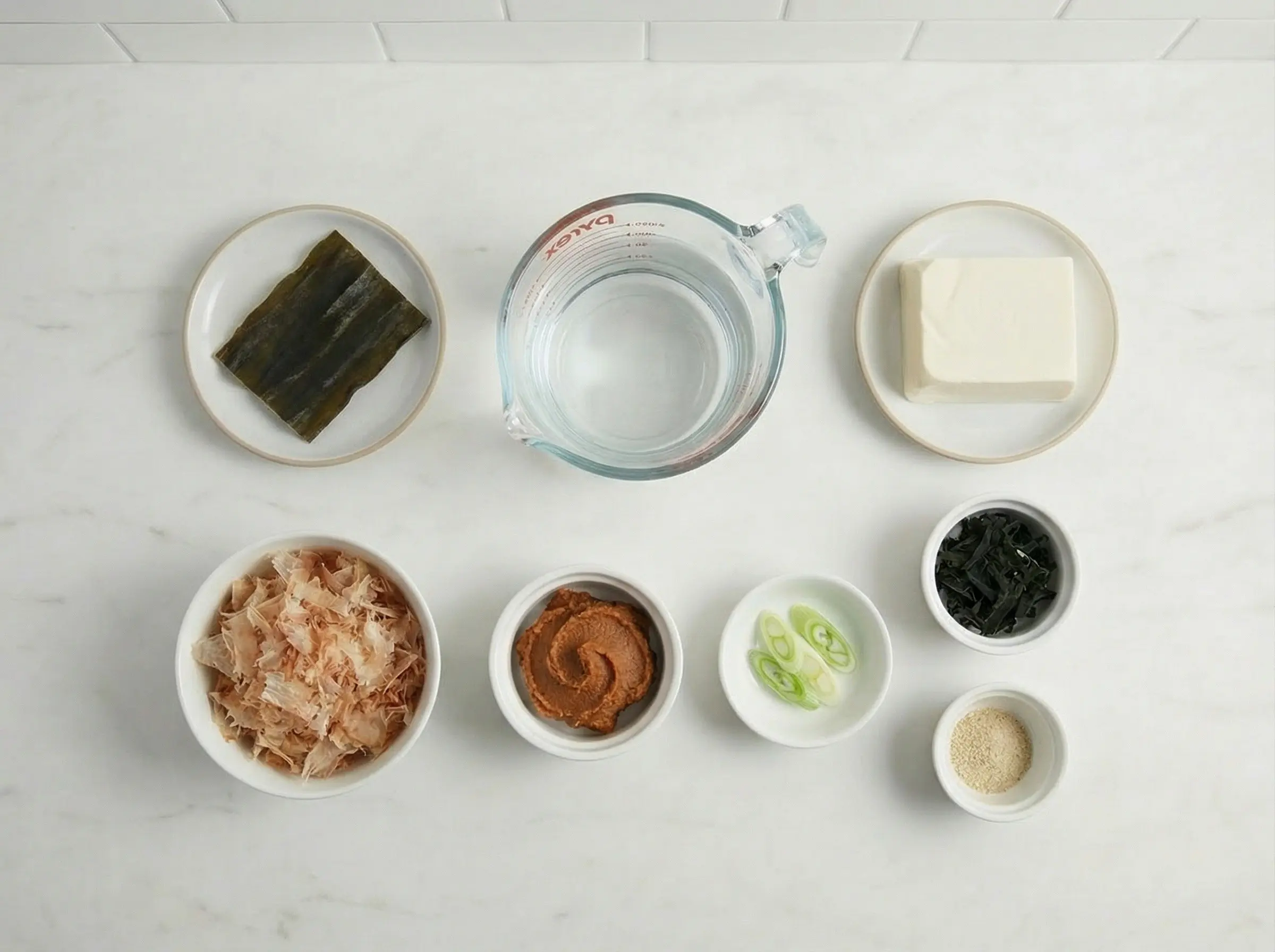
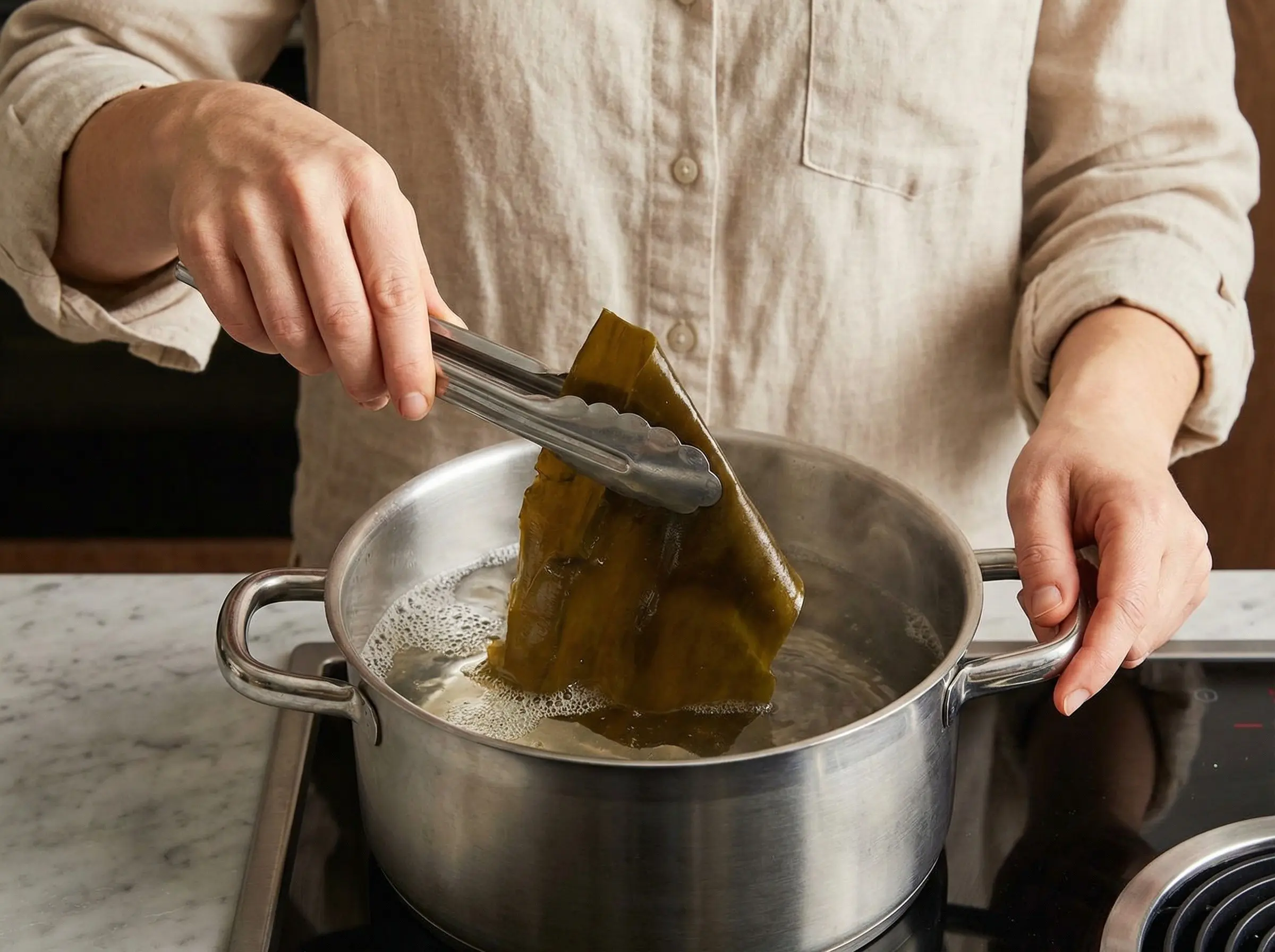
1Make the dashi broth, which is the foundation of authentic miso soup. Place the kombu in a pot with the water and let it soak for at least 15-30 minutes if time allows - this extracts more flavor. Place the pot over medium heat and slowly bring to just below a boil. Watch carefully - you should see small bubbles forming around the edges and the kombu starting to float. Remove the kombu just before the water reaches a full boil, as boiling kombu releases bitter, slimy compounds. If you are short on time, you can skip making dashi from scratch and use 4 cups of water mixed with 1 teaspoon of instant dashi powder (hondashi).
2Once the kombu is removed, bring the water to a full boil. Remove the pot from heat and immediately add the katsuobushi (bonito flakes). Let the flakes steep for about 3-5 minutes without stirring - they will slowly sink to the bottom as they release their smoky, savory essence into the broth. Strain the dashi through a fine-mesh sieve lined with cheesecloth or a paper towel, gently pressing to extract all the liquid. Discard the bonito flakes. You should have about 3.5 cups of clear, golden, aromatic dashi. The dashi should smell of the sea with smoky undertones - this is the umami foundation of your miso soup.
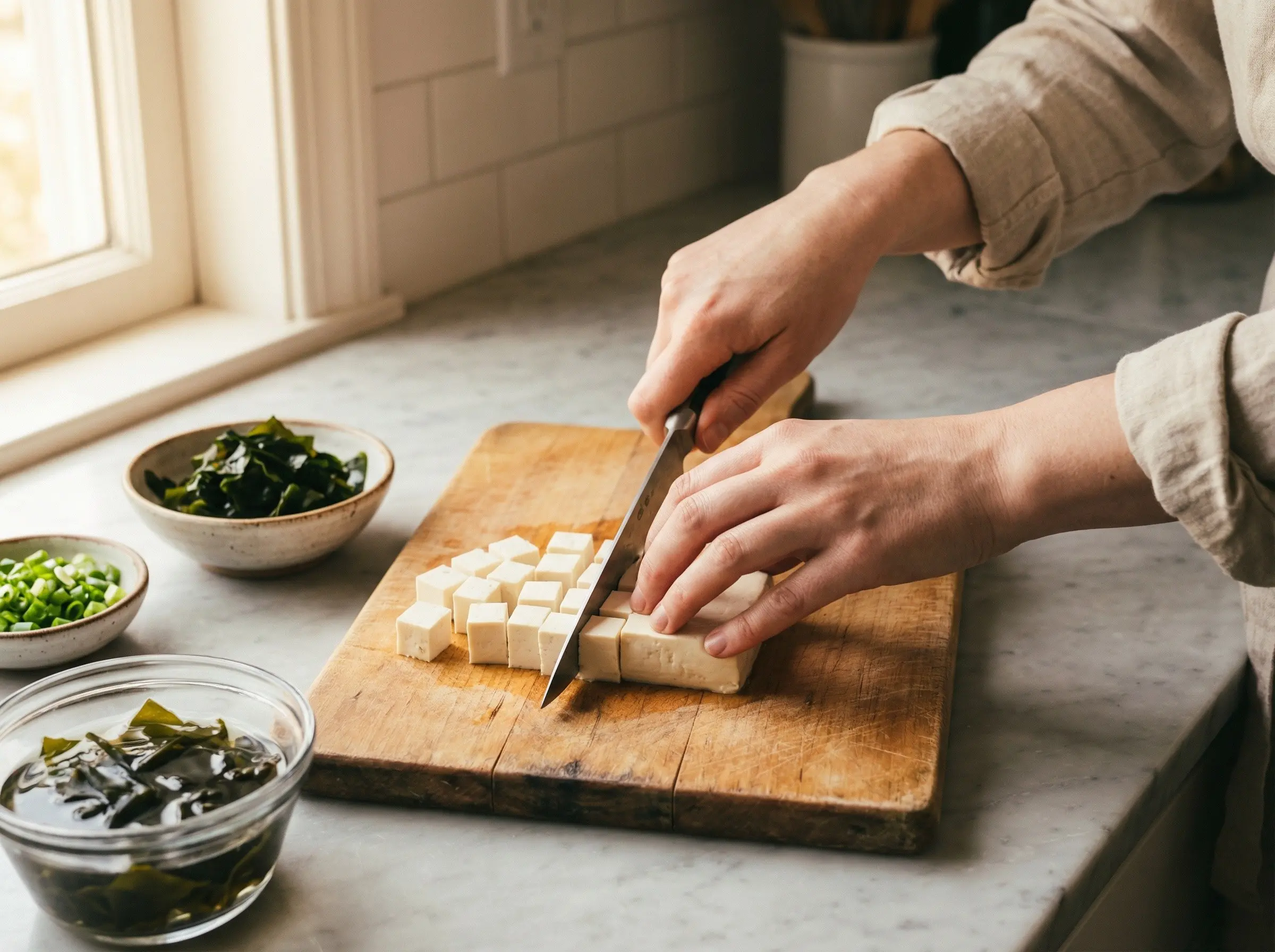
3While making the dashi, prepare the other ingredients. Rehydrate the dried wakame seaweed by placing it in a small bowl of cold water for 5-10 minutes. It will expand significantly - 2 tablespoons of dried wakame becomes about 1/2 cup rehydrated. Once soft and pliable, drain well and cut into bite-sized pieces if the pieces are large. Cut the tofu into small cubes, about 1/2 inch - silken or soft tofu is traditional and has a delicate, custard-like texture. Slice the green onions thinly, separating the white and green parts.
4Return the strained dashi to the pot and bring to a gentle simmer over medium heat. Add the tofu cubes and the white parts of the green onions. Let them warm through for 2-3 minutes - the tofu should be heated but handle it gently as silken tofu breaks apart easily. Add the drained wakame seaweed and simmer for another minute until the wakame is heated through and tender. Reduce the heat to low - from this point forward, the soup should not boil.
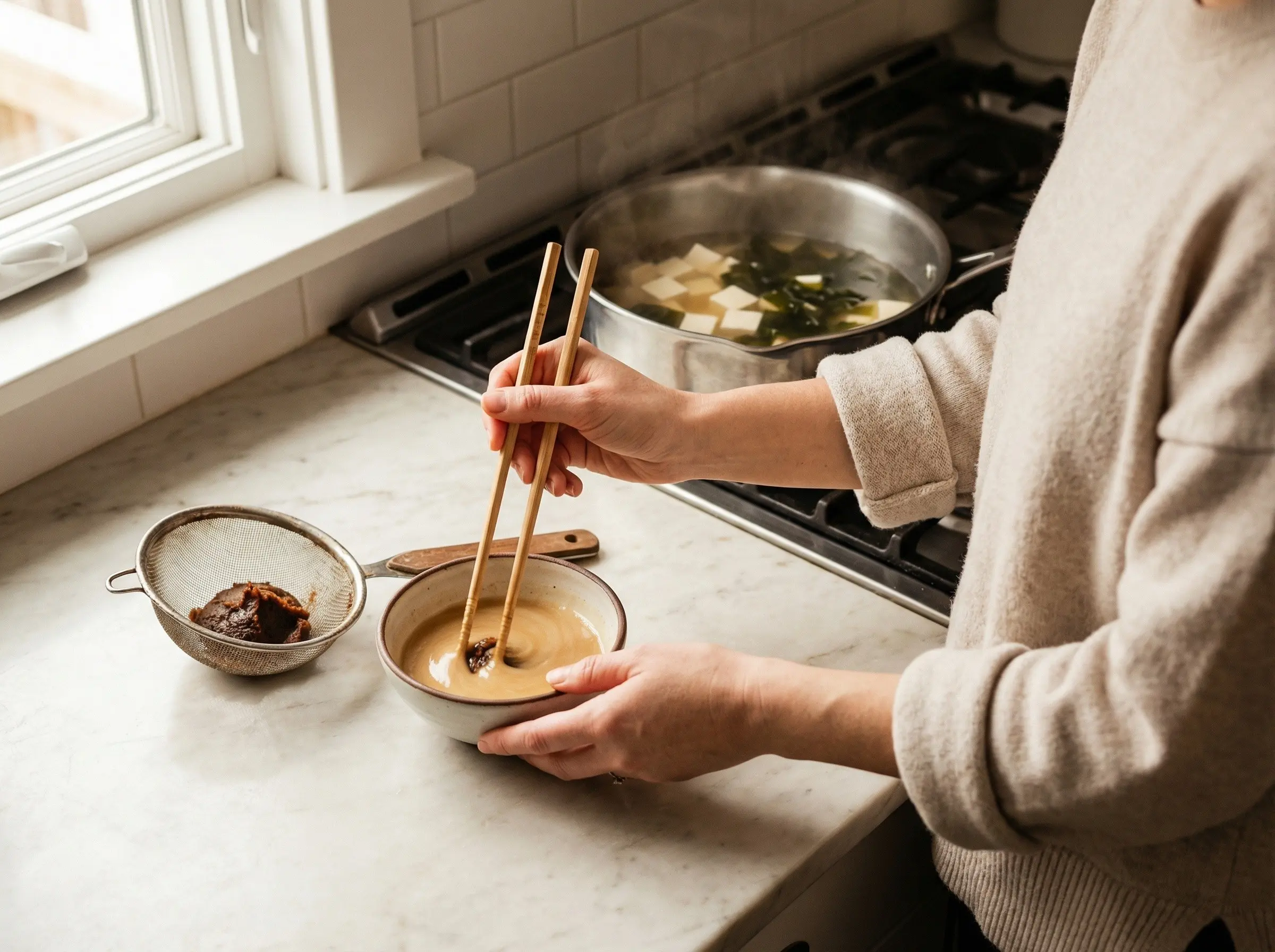
5This is the crucial step: dissolving the miso. Place the miso paste in a small bowl or ladle. Add a few tablespoons of the warm dashi broth and whisk or stir until the miso is completely dissolved and smooth - no lumps should remain. This step ensures even distribution and prevents clumps of undissolved miso in your soup. Alternatively, use a miso strainer (miso koshi) - a small fine-mesh strainer designed specifically for this purpose. Place the miso in the strainer, submerge it in the soup, and stir until dissolved.
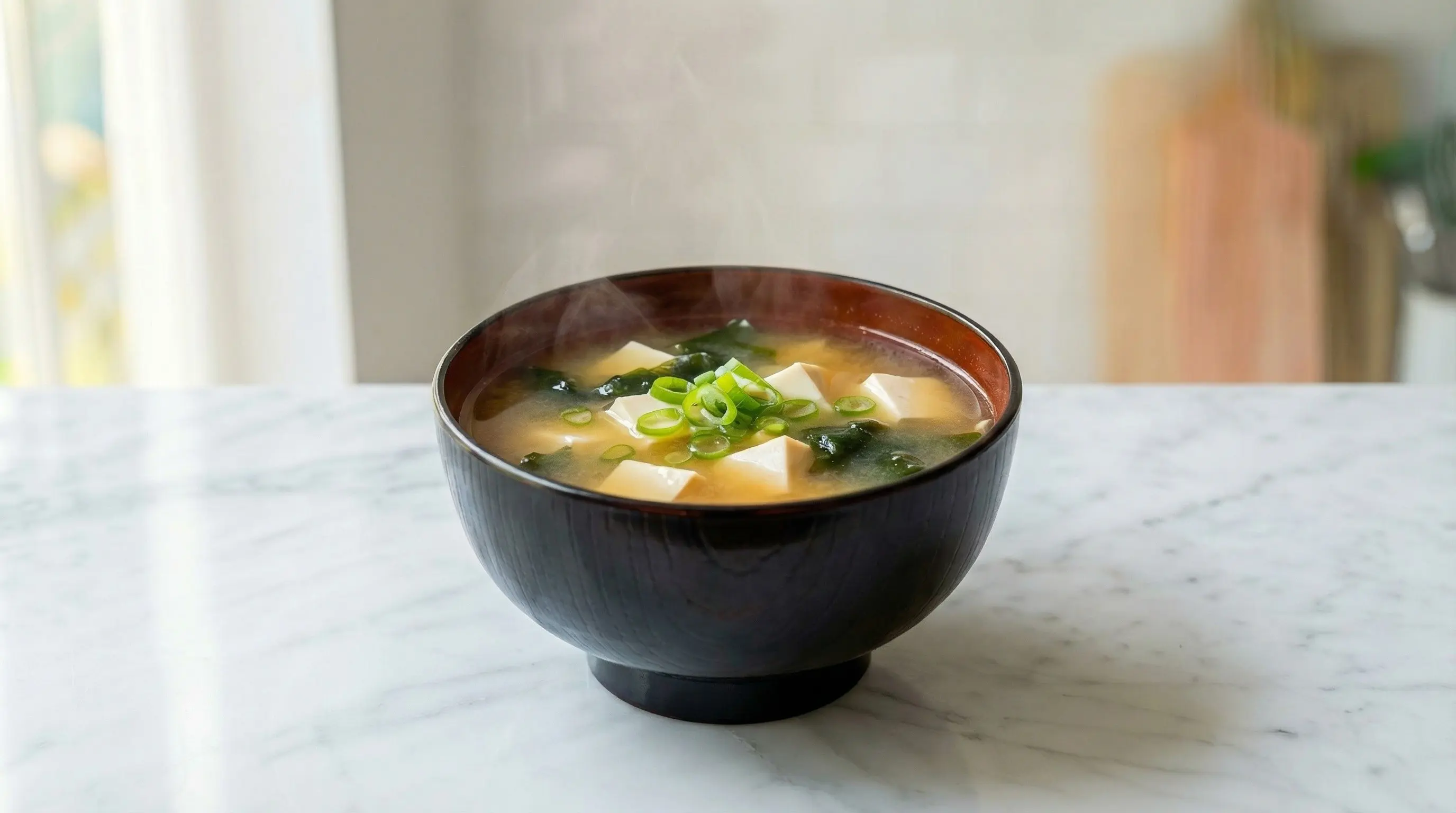
6Pour the dissolved miso into the pot of warm dashi and ingredients. Stir gently to combine. This is the most important rule of miso soup: never let it boil after adding the miso. Boiling destroys the delicate flavor compounds and beneficial probiotics in the miso, resulting in a flat, dull-tasting soup. The soup should be steaming hot but not bubbling. Taste and adjust - add more miso for a stronger flavor, keeping in mind that miso is salty. Remove from heat immediately. Ladle the soup into individual bowls, distributing the tofu and wakame evenly. Garnish with the green parts of the sliced green onions. Serve immediately - miso soup is best enjoyed fresh and hot, as the aroma and flavors dissipate as it sits. In Japan, miso soup is sipped directly from the bowl, with chopsticks used to eat the solid ingredients.


 Download