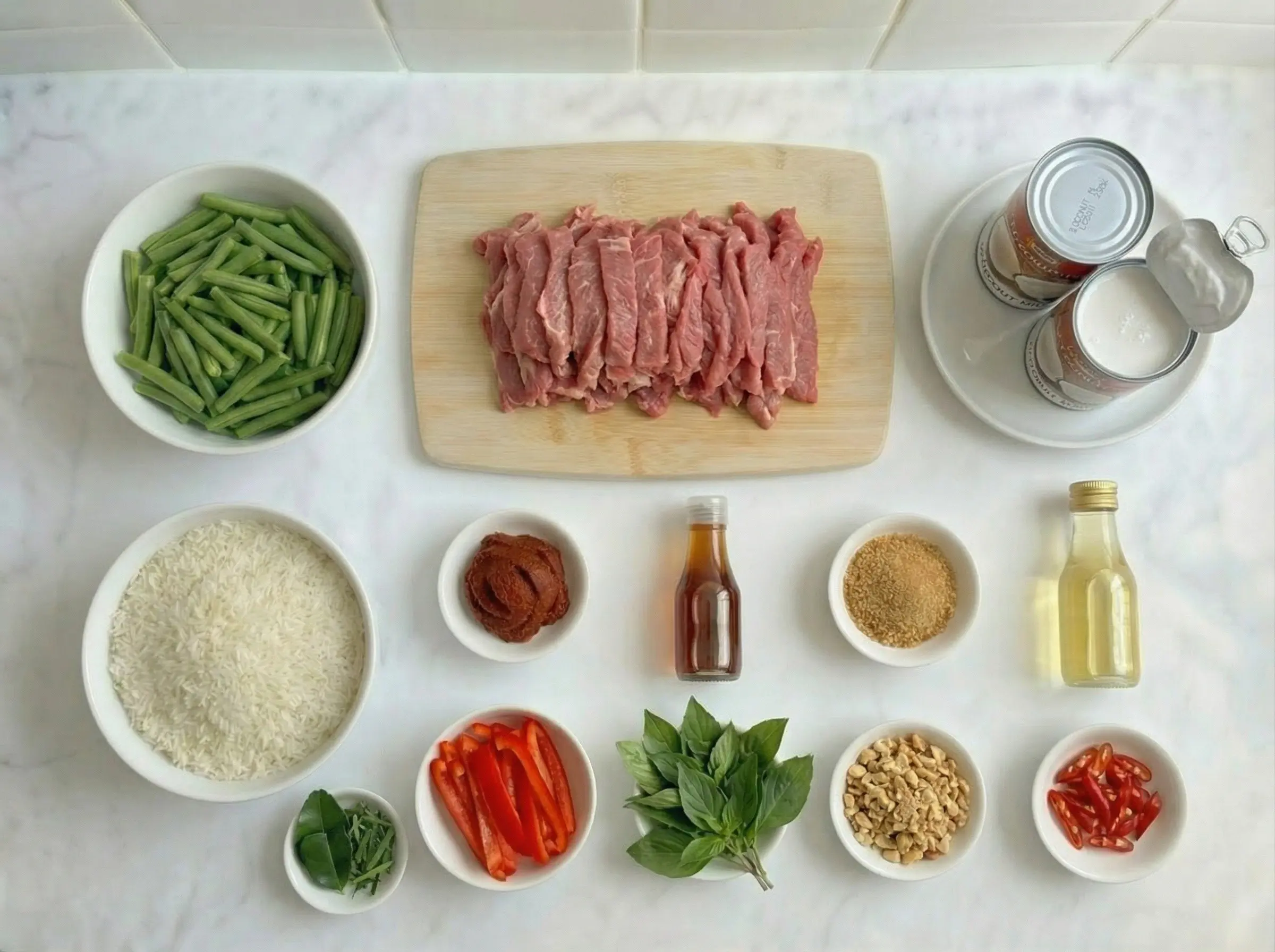
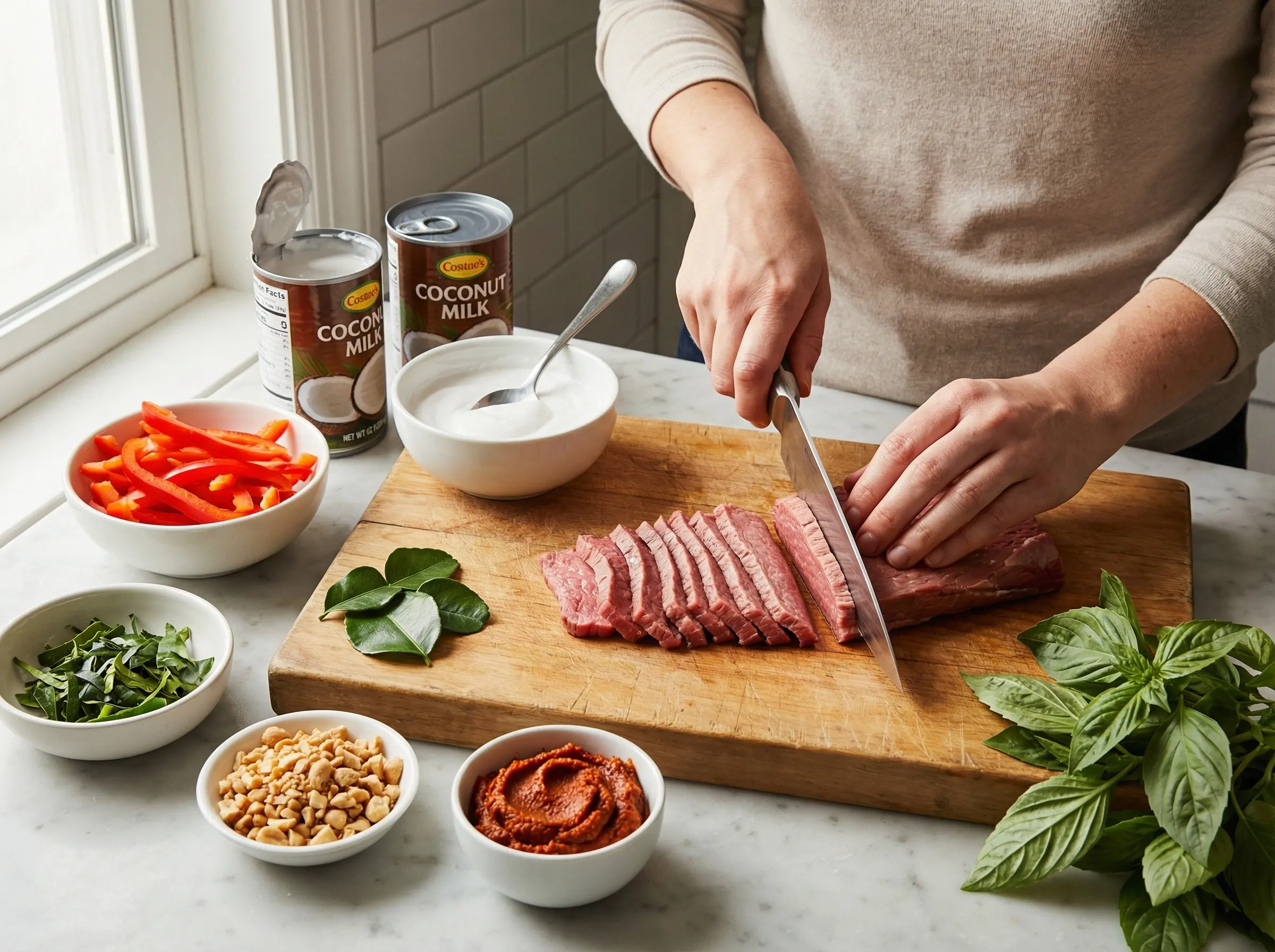
1Prepare all ingredients before cooking. Slice the beef against the grain into thin strips, about 1/4 inch thick and 2 inches long - cutting against the grain ensures tender pieces. If the beef is slightly frozen, it will be easier to slice thinly. Slice the red bell pepper into thin strips. Remove the tough center stem from the kaffir lime leaves, stack them, roll tightly, and slice into very thin ribbons. Roughly crush the roasted peanuts with a knife or mortar and pestle - you want chunky pieces, not powder. Open the cans of coconut milk and do not shake them. Carefully scoop out the thick cream that has risen to the top and set it aside separately from the thinner milk - you will use these at different stages.
2Heat a wok or large deep skillet over medium-high heat. Add the vegetable oil and about 1/2 cup of the thick coconut cream. Let it heat until the cream begins to separate and you see oil pooling around the edges - this takes about 2-3 minutes. This process is called cracking the coconut cream and is essential for properly frying the curry paste. Add the panang curry paste to the cracked coconut cream. Fry the paste vigorously for 2-3 minutes, stirring constantly, until it becomes very fragrant, darkens slightly, and the oil turns a deep reddish-orange. The aroma should be intensely aromatic - you will smell the lemongrass, galangal, and spices blooming. This step builds the flavor foundation of the curry.
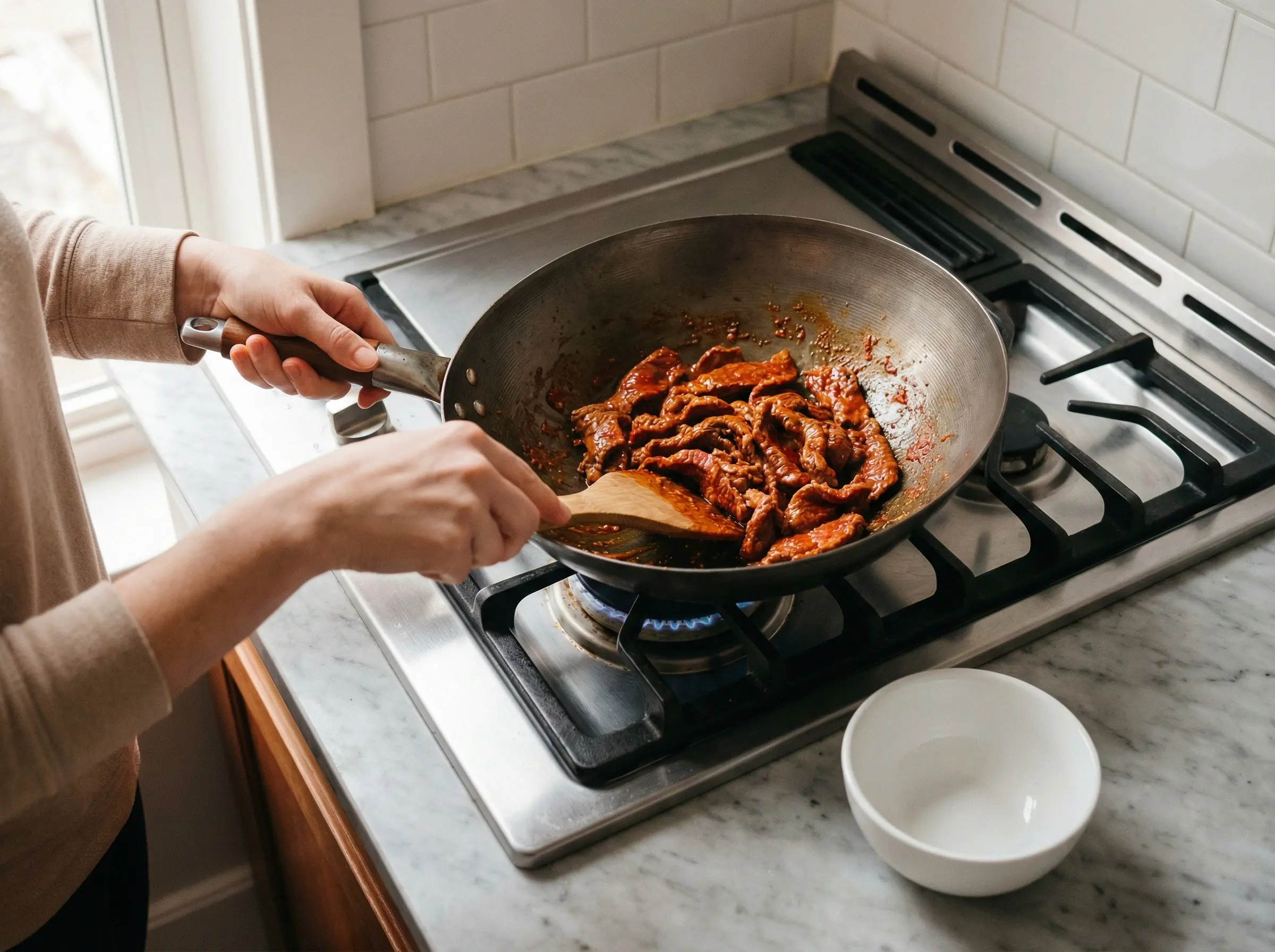
3Add the sliced beef to the wok with the fried curry paste. Stir-fry for 2-3 minutes, tossing to coat each piece of beef evenly with the fragrant paste. The beef should be seared on the outside but can still be slightly pink inside at this stage - it will continue cooking in the sauce. The curry paste should coat the meat completely, giving it a vibrant red-orange color. If the paste begins to stick to the wok, add a splash of the thin coconut milk to help deglaze.
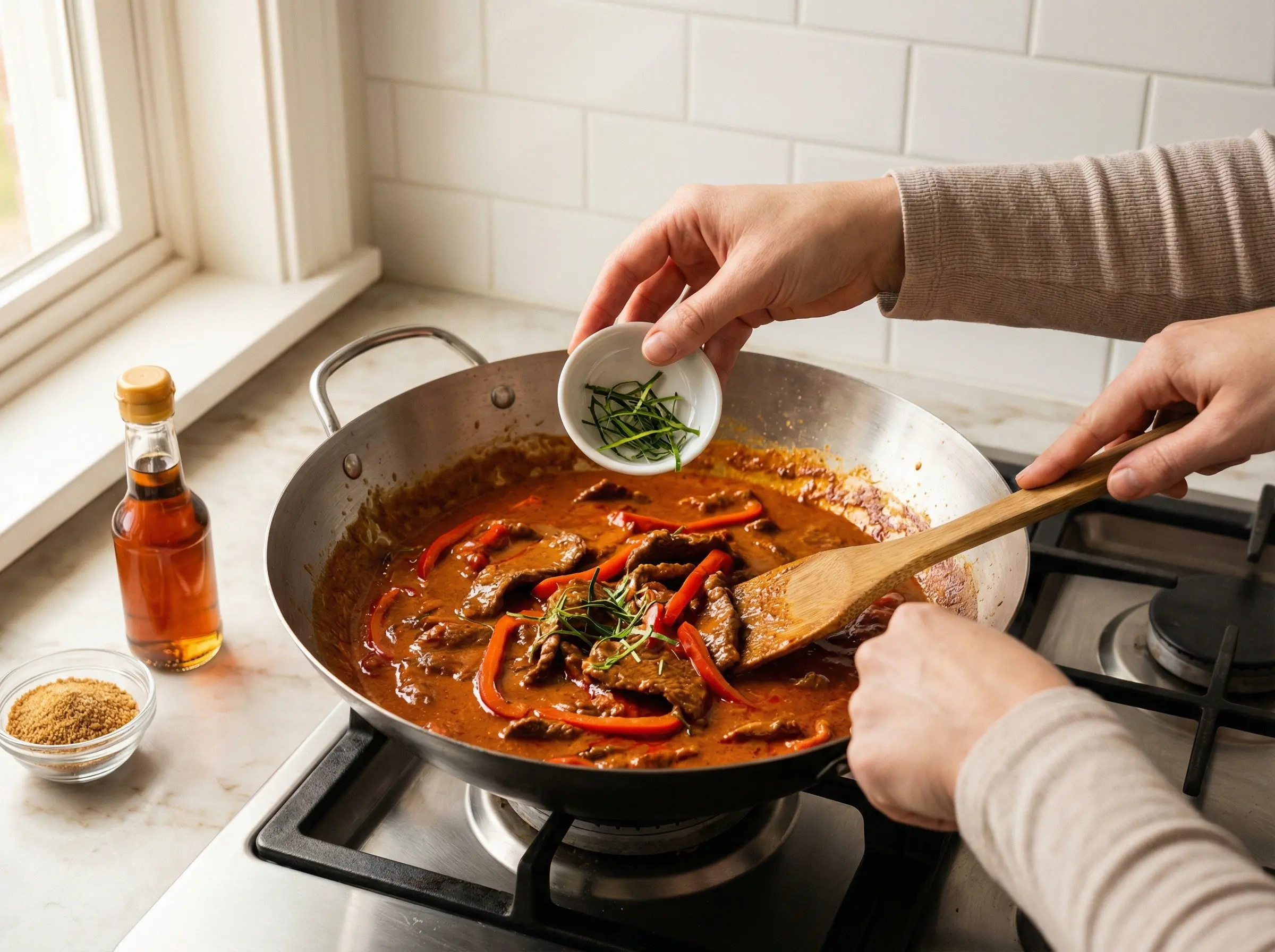
4Pour in the remaining thin coconut milk, reserving about 1/4 cup of the thick cream for garnishing later. Stir to combine and bring to a gentle simmer. Unlike other Thai curries that are quite soupy, panang curry should be thick and rich. Simmer for 8-10 minutes, stirring occasionally, until the sauce has reduced and thickened enough to coat the back of a spoon. The beef should be tender and cooked through. Add the sliced red bell pepper during the last 3-4 minutes of cooking so it softens slightly but retains some crunch.
5Season the curry with fish sauce and palm sugar. Stir to dissolve the sugar and taste carefully. The flavor should be rich and balanced - savory from the fish sauce, slightly sweet from the sugar, with a creamy peanut undertone from the paste. Adjust to your preference: add more fish sauce for saltiness, more sugar for sweetness, or more curry paste for heat. Panang curry should be noticeably sweeter and milder than green or red curry. Add half of the sliced kaffir lime leaves and stir through - they will release their incredible citrus aroma into the curry.
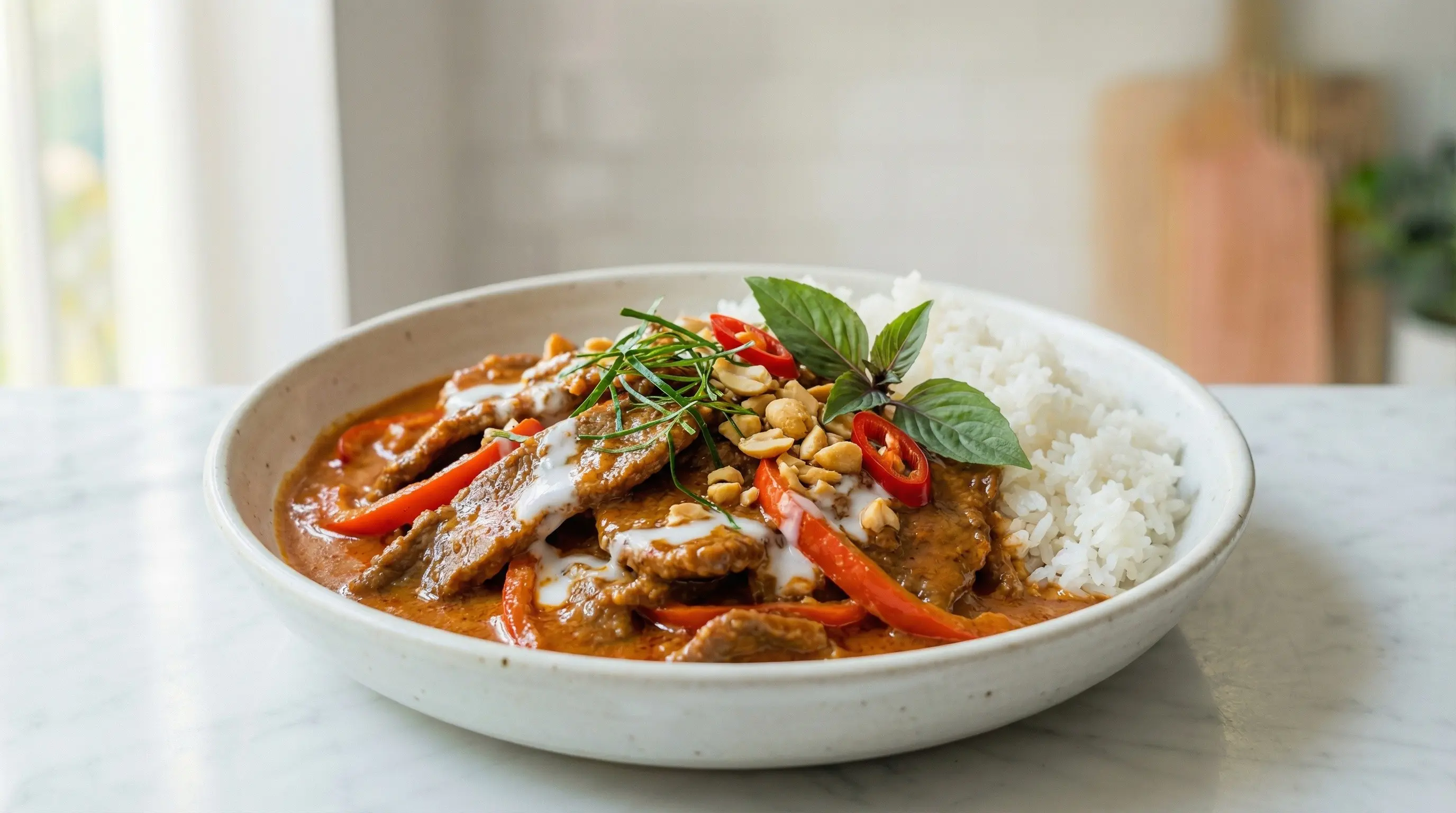
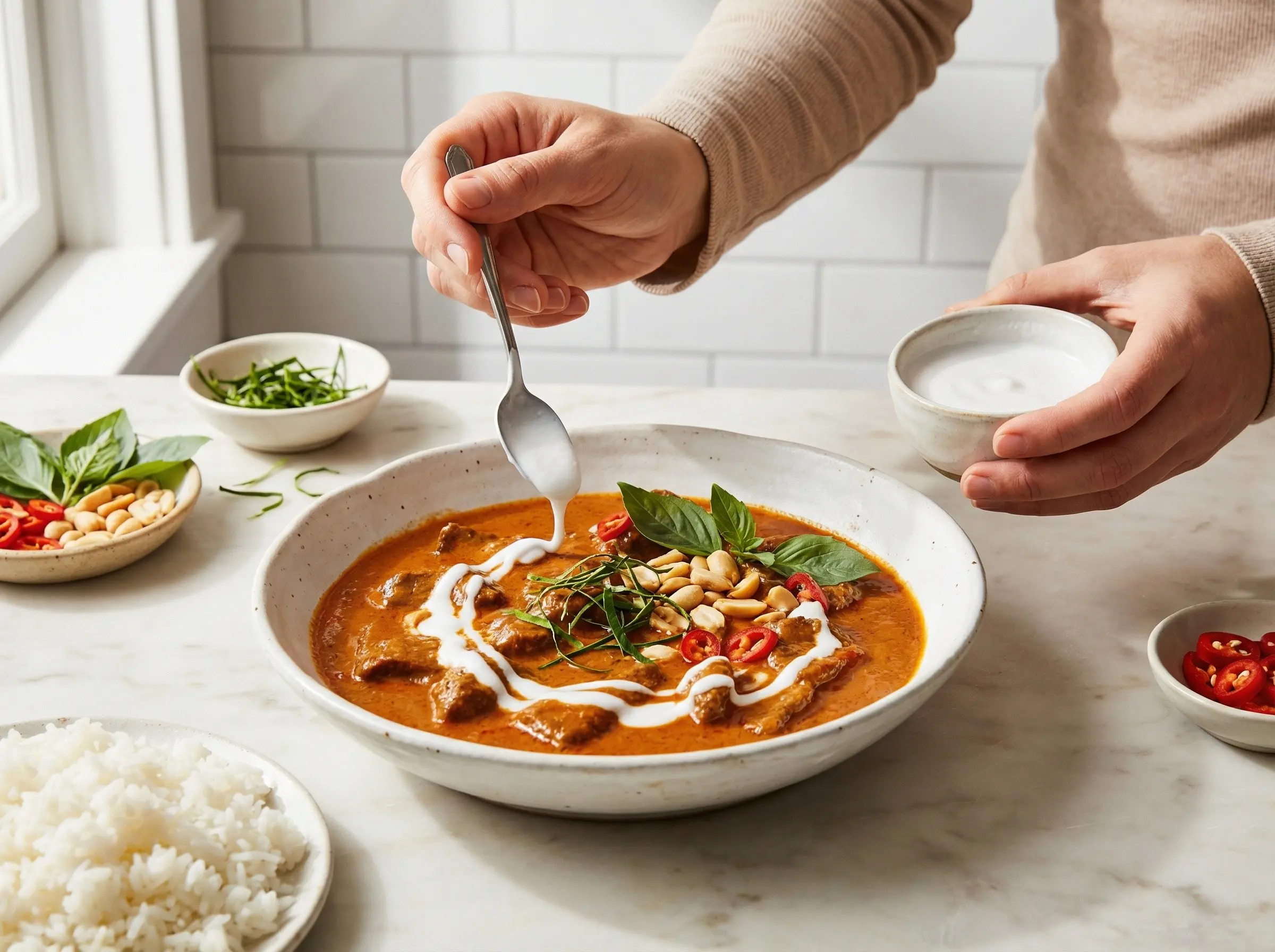
6Transfer the curry to a serving bowl or plate. Drizzle the reserved thick coconut cream over the top in a decorative pattern - this is a traditional presentation that adds extra richness and visual appeal. Garnish with the remaining kaffir lime leaf ribbons, crushed roasted peanuts, sliced red chili, and fresh Thai basil leaves. The finished curry should be thick and glossy, deeply aromatic with the scent of kaffir lime and basil. Serve immediately with steamed jasmine rice. The thick consistency of panang curry makes it perfect for spooning over rice, with each grain soaking up the rich, fragrant sauce. Store leftovers refrigerated for up to 3-4 days - the flavors develop and improve overnight. Reheat gently, adding a splash of coconut milk if the sauce has thickened too much.


 Download