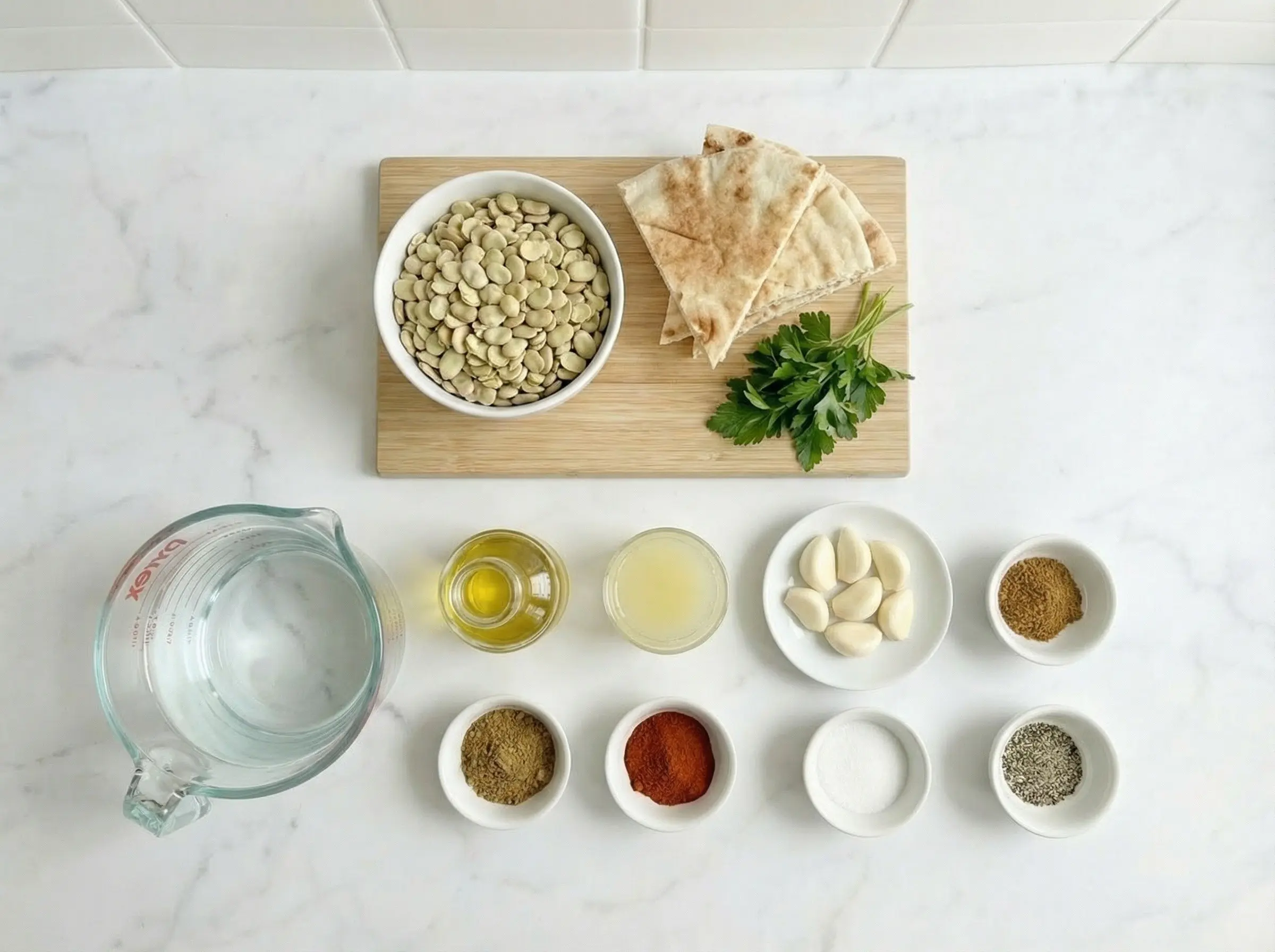
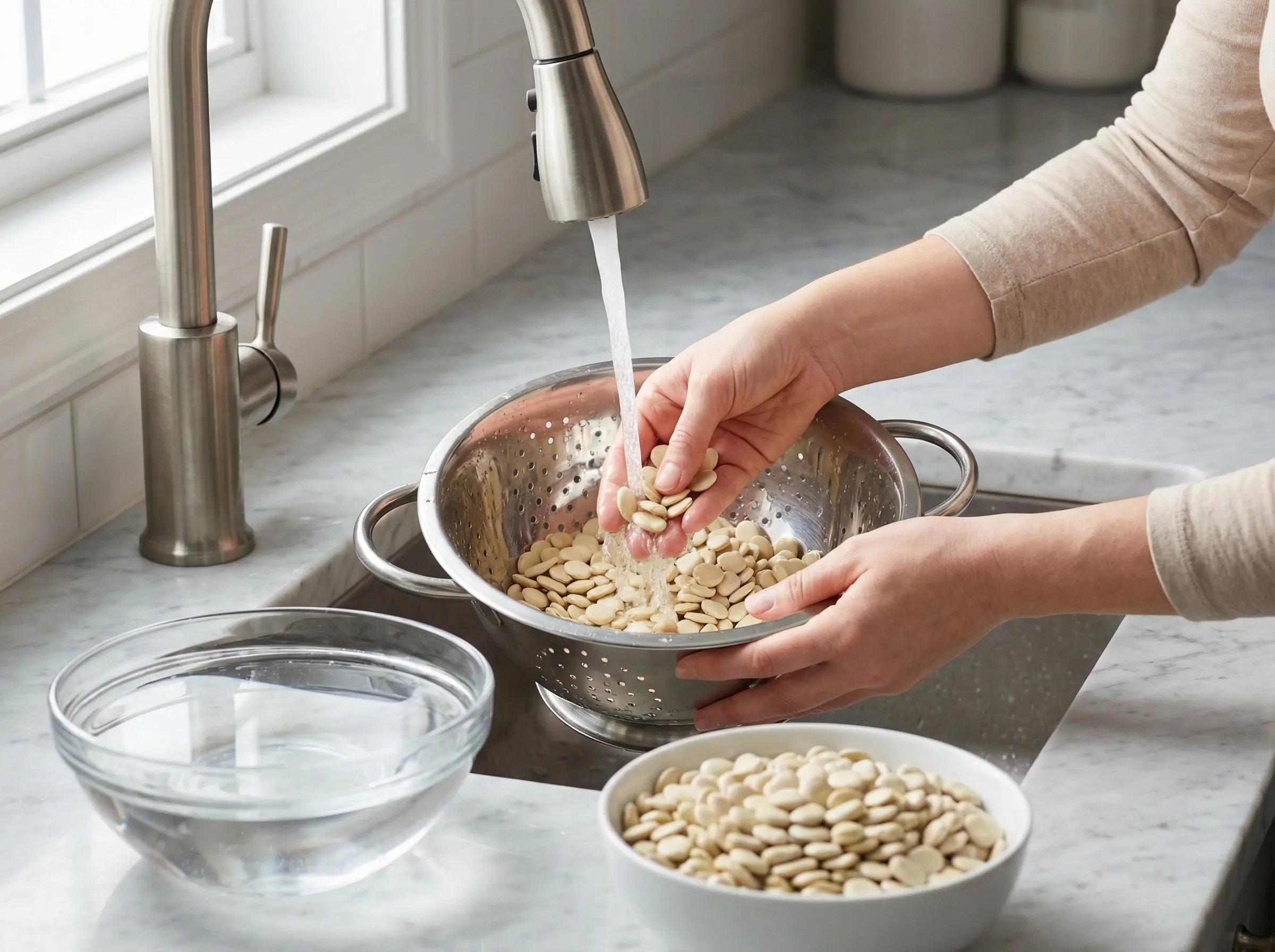
1Rinse the dried split fava beans thoroughly under cold water in a colander, removing any debris or discolored beans. Place them in a large bowl and cover with plenty of cold water - at least 3 inches above the beans as they will expand significantly. Let the beans soak overnight or for at least 8 hours at room temperature. This soaking process softens the beans and reduces cooking time. If you are short on time, you can use the quick-soak method: bring the beans to a boil in a pot of water, boil for 2 minutes, then remove from heat and let sit covered for 1 hour. After soaking, drain the beans and rinse them again. If using whole fava beans rather than split ones, you will need to remove the tough outer skins after soaking by gently squeezing each bean - the inner bean will slip out easily.
2Place the soaked and drained fava beans in a large pot or Dutch oven. Add the 6 cups of fresh water and the whole peeled garlic cloves. The garlic will soften completely during cooking and be blended into the soup, adding wonderful aromatic flavor. Bring to a boil over high heat, then reduce the heat to medium-low and simmer gently, partially covered. Skim off any foam that rises to the surface during the first 10 minutes of cooking. Cook for about 45-60 minutes, stirring occasionally, until the fava beans are completely soft and falling apart. You should be able to easily crush a bean between your fingers. If the water level gets too low during cooking, add more hot water as needed. The beans should always be covered with liquid.
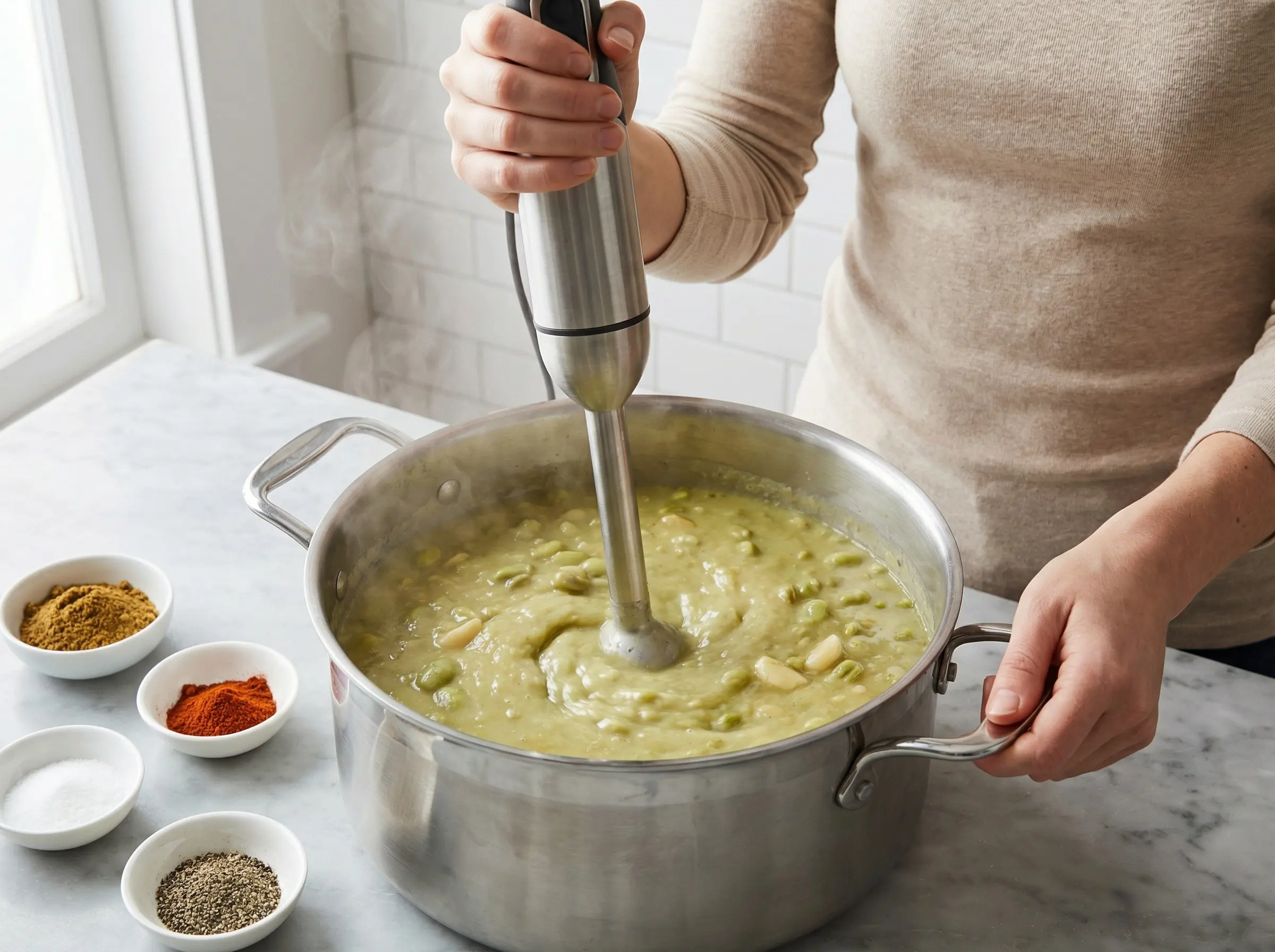
3Once the fava beans are completely tender and the garlic cloves have softened, remove the pot from heat. Add the ground cumin, paprika, salt, and black pepper. Using an immersion blender, blend the soup directly in the pot until completely smooth and creamy. Alternatively, you can carefully transfer the hot mixture in batches to a regular blender - blend until very smooth, being careful with the hot liquid. If using a regular blender, remove the center cap and cover with a kitchen towel to allow steam to escape while blending. The consistency should be thick and creamy, similar to a smooth purée or very thick soup. If it seems too thick, you can add a bit of hot water to thin it to your desired consistency. The soup should be pourable but coat the back of a spoon.
4Return the blended bissara to medium-low heat and stir in the olive oil and fresh lemon juice. These final additions are crucial - the olive oil adds richness and a silky texture, while the lemon juice brightens all the flavors and adds a subtle tang that balances the earthy beans. Stir well to incorporate. Let the soup simmer gently for another 5 minutes, stirring frequently to prevent it from sticking to the bottom of the pot. The bissara should be hot, smooth, and glossy from the olive oil. Taste and adjust seasoning - you might want more salt, more cumin for earthiness, more lemon for brightness, or a pinch of cayenne for heat.
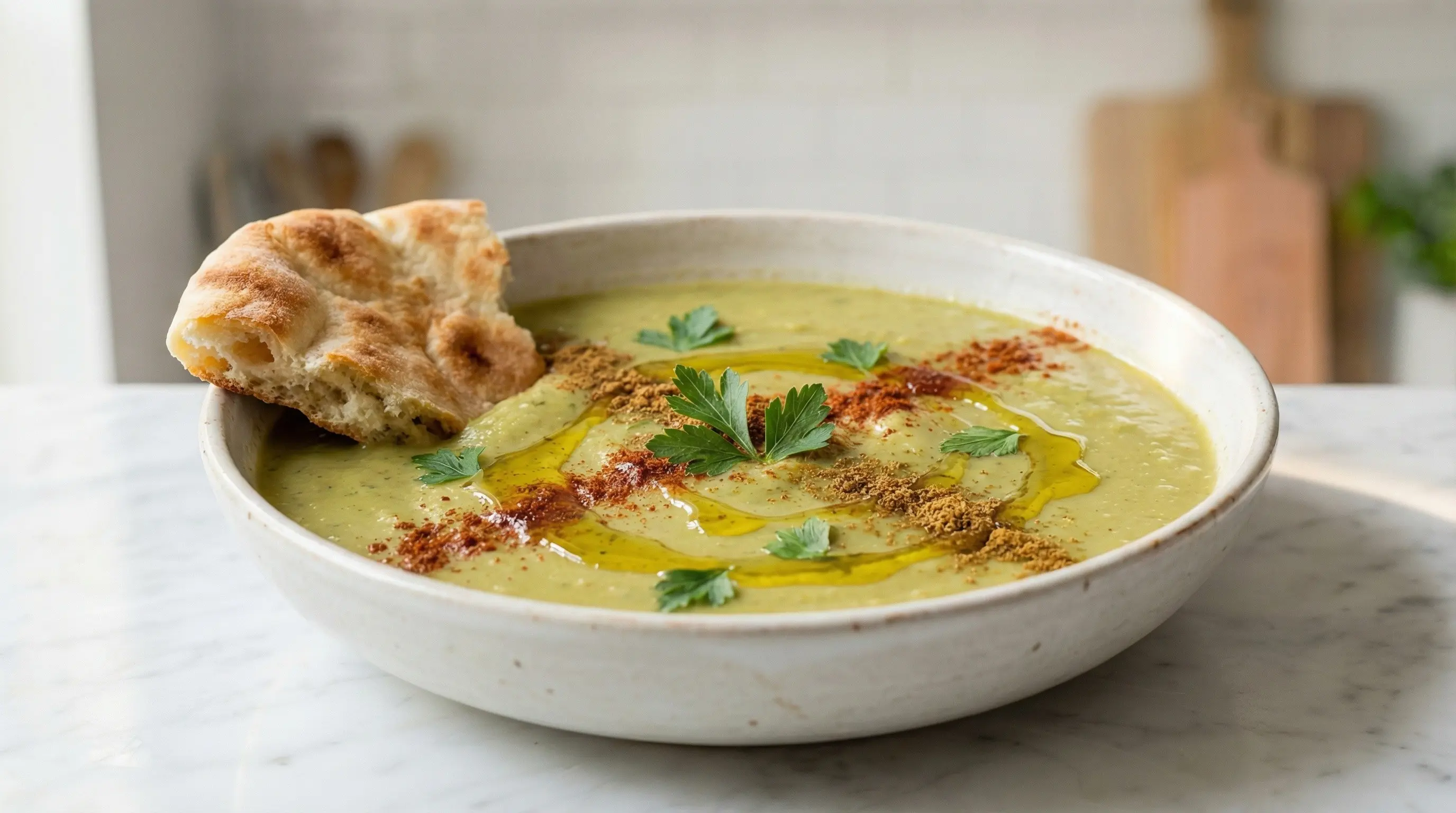
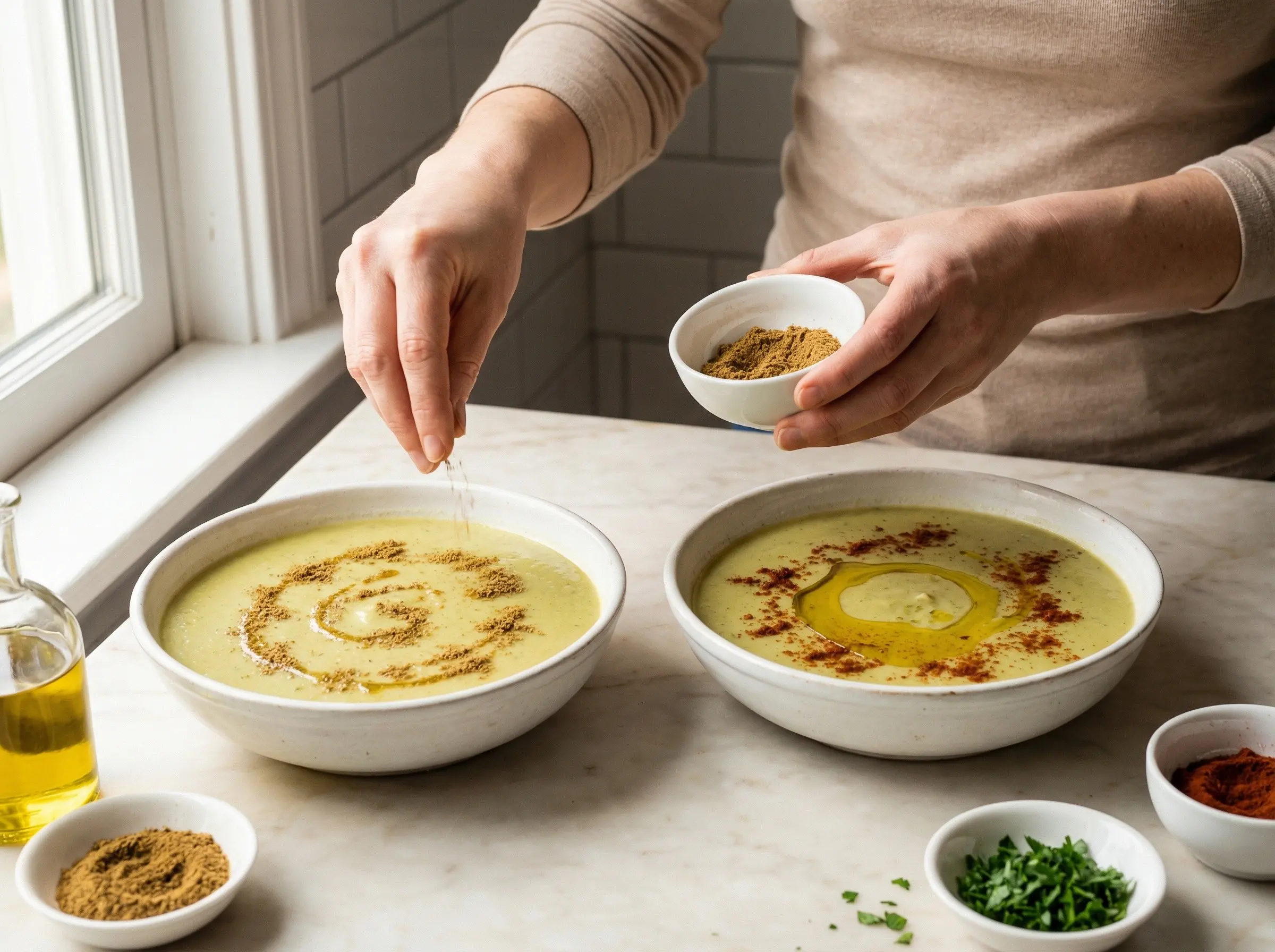
5To serve bissara in the traditional Moroccan style, ladle the hot soup into shallow bowls. This is where the magic happens - drizzle each bowl generously with high-quality extra virgin olive oil. Do not be shy with the olive oil; it is an essential part of the dish, not just a garnish. The oil creates a glossy pool on top of the soup and adds incredible richness. Sprinkle ground cumin and paprika over the surface - these spices provide both flavor and beautiful color contrast against the pale green soup. Some people like to make decorative patterns with the spices. Add a small handful of chopped fresh parsley for brightness and color.
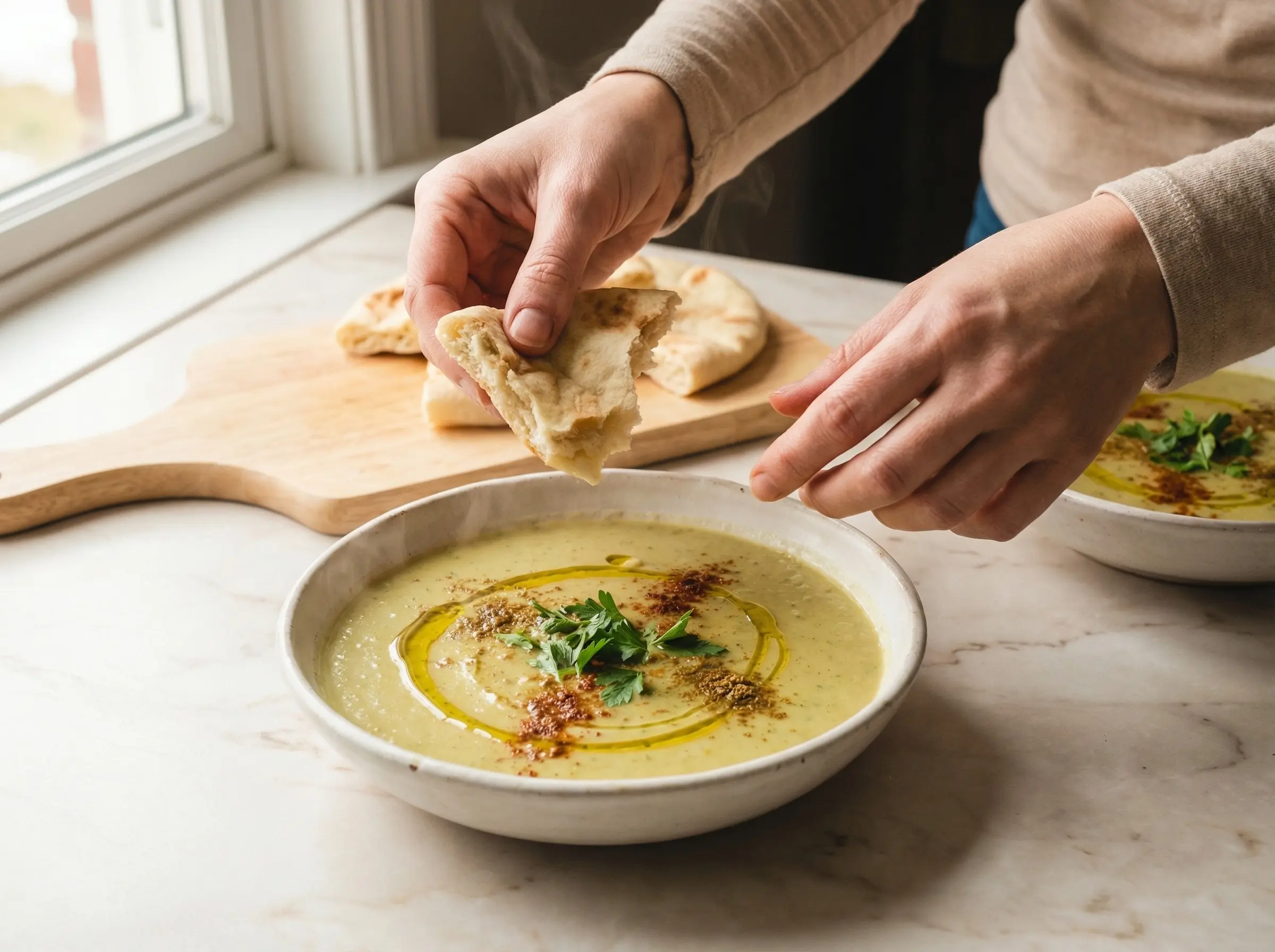
6Serve the bissara immediately while hot, with plenty of warm bread on the side for dipping and scooping. In Morocco, khobz (Moroccan bread) is traditional, but pita, flatbread, or crusty artisan bread all work beautifully. The bread is used to scoop up the soup rather than using a spoon - tear off pieces and drag them through the bissara, soaking up the creamy soup and olive oil. This communal, hands-on way of eating is part of the experience. Bissara is typically eaten for breakfast or lunch and is wonderfully warming on cold days. Leftovers can be refrigerated for up to 4 days and reheated gently on the stovetop with a splash of water if needed to thin the consistency. The soup will thicken considerably as it cools and sits, which is normal. Always re-drizzle with fresh olive oil and spices when reheating and serving.


 Download