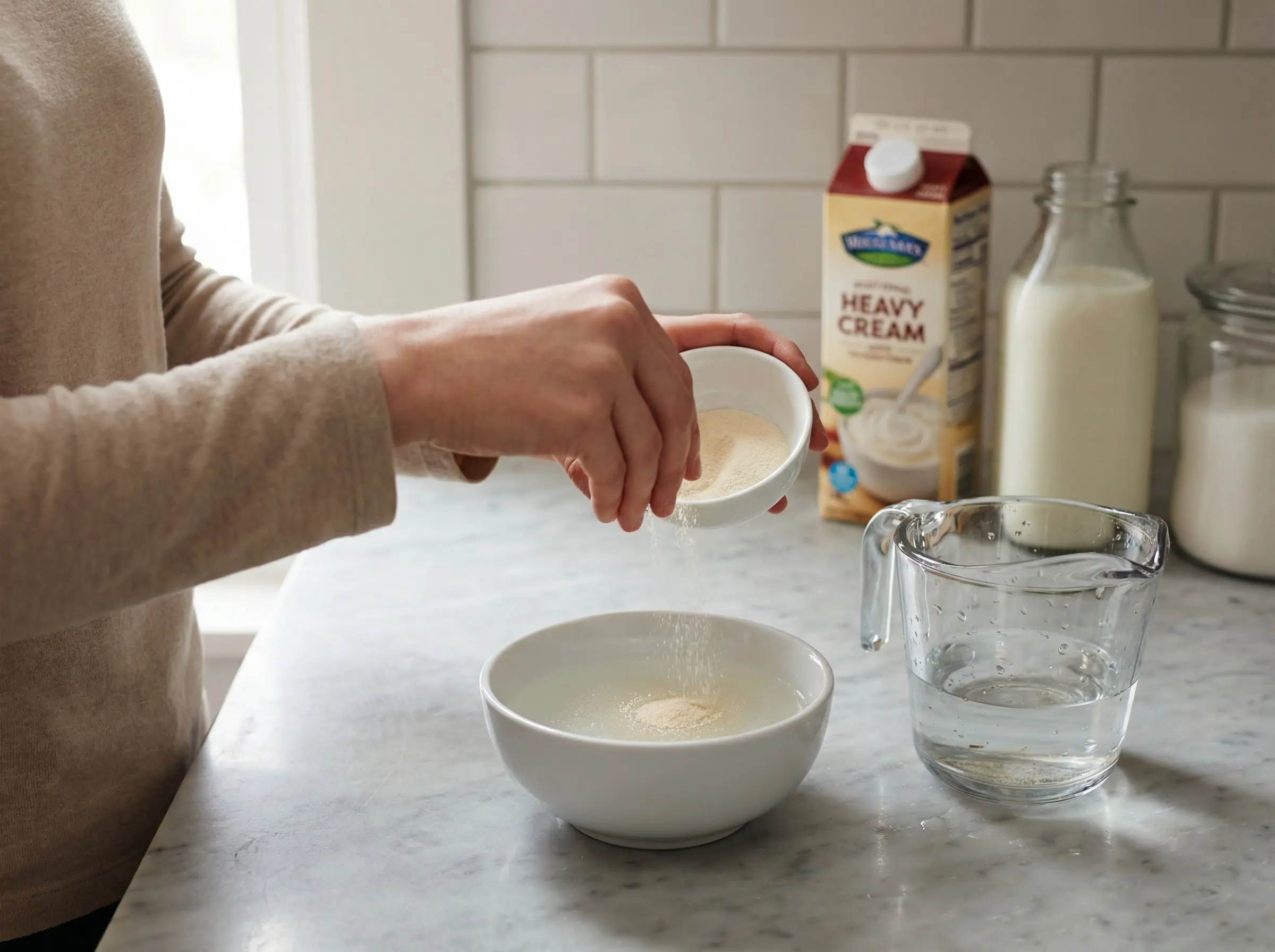
1Bloom the gelatin. Pour the cold water into a small bowl and sprinkle the powdered gelatin evenly over the surface. Let it sit for 5-10 minutes until the gelatin absorbs the water and becomes soft and spongy - this is called blooming. Do not stir during this time. The bloomed gelatin should look like a solid, wrinkled mass. This step is essential: unbloombed gelatin will not dissolve properly and will create a lumpy panna cotta. Use cold water only - hot water will partially melt the gelatin before you can control the process.
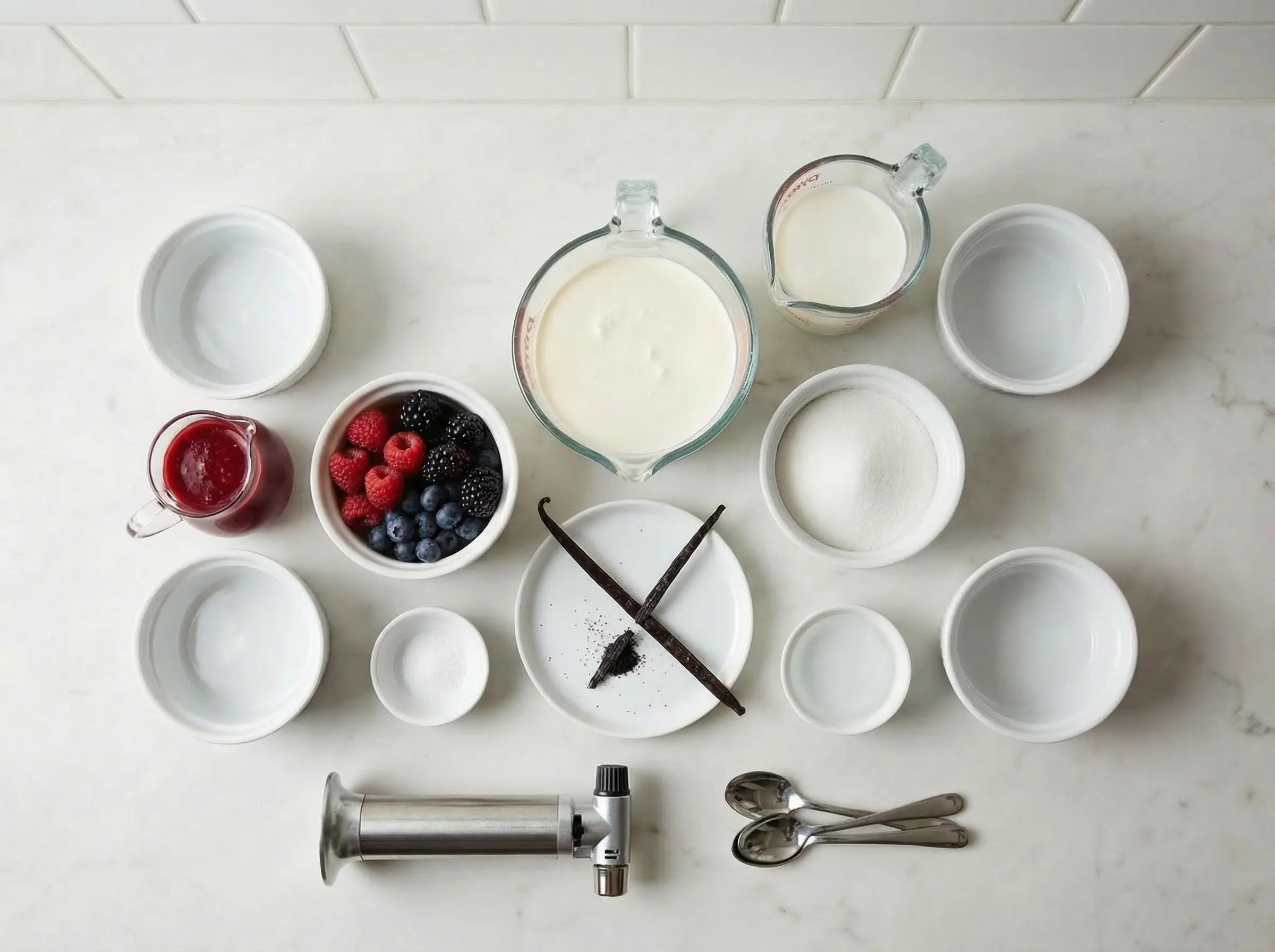
2Prepare the cream mixture. In a medium saucepan, combine the heavy cream, whole milk, sugar, salt, and vanilla bean with its scraped seeds (if using extract, add it later). Heat over medium heat, stirring occasionally, until the sugar dissolves completely and the mixture just begins to simmer - you will see small bubbles forming around the edges. Do not let it boil vigorously as this can cause the cream to reduce and thicken. Remove from heat immediately when you see the first signs of simmering.
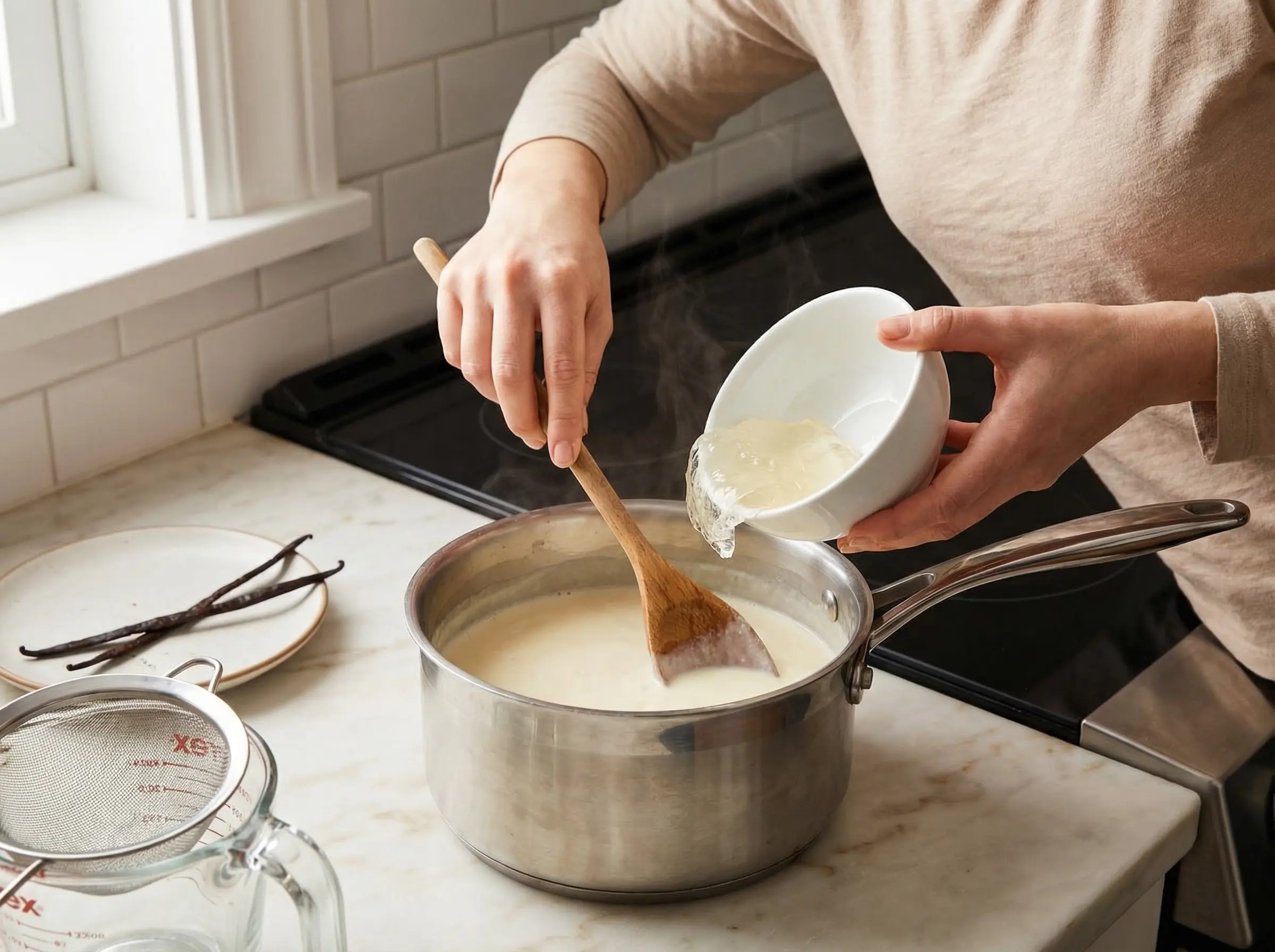
3Dissolve the gelatin into the warm cream. Remove the vanilla bean from the cream if using. Add the bloomed gelatin to the warm cream mixture and stir gently until completely dissolved - this takes about 2-3 minutes of stirring. The mixture should be perfectly smooth with no visible gelatin bits. To test, dip a spoon and run your finger across the back; you should not feel any granules. If using vanilla extract, stir it in now. For the silkiest texture, strain the mixture through a fine-mesh strainer into a clean bowl or large measuring cup.
4Pour the mixture into molds. Lightly grease 6 ramekins, small cups, or panna cotta molds with a thin coating of neutral oil - this helps with unmolding later. Alternatively, serve the panna cotta directly in attractive glasses without unmolding. Divide the cream mixture evenly among the prepared molds. You should have about 1/2 cup per serving. Skim any bubbles from the surface with a spoon for a perfectly smooth top. Let the panna cotta cool at room temperature for 15-20 minutes before refrigerating.
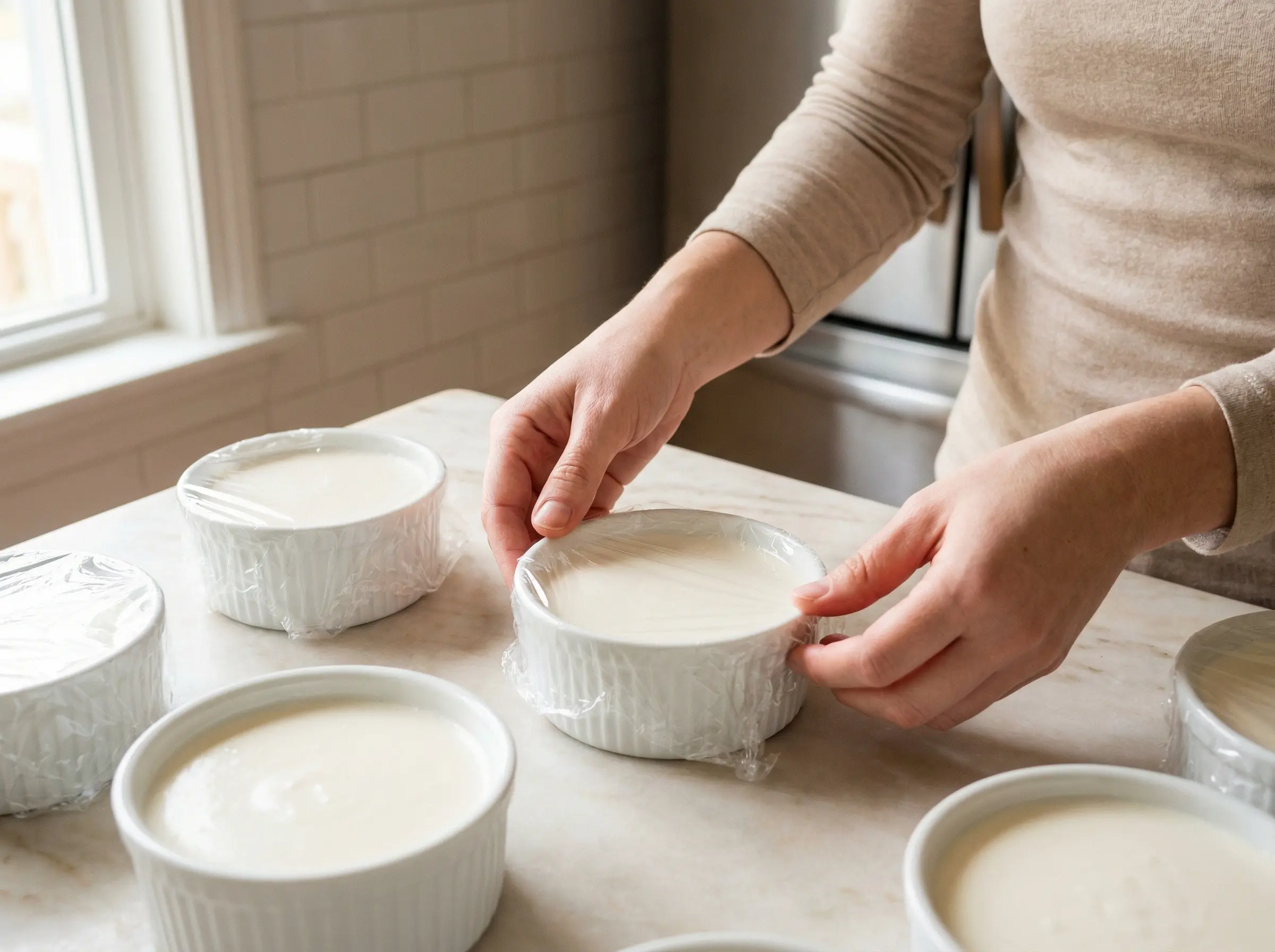
5Chill until set. Cover each mold with plastic wrap and refrigerate for at least 4 hours, or preferably overnight. The panna cotta is ready when it is firm to the touch but still has a slight wobble when jiggled - it should not be stiff or rubbery. Panna cotta can be made up to 3 days ahead and kept refrigerated; the texture actually improves after a full day of setting. The longer chilling time allows the flavors to develop and the gelatin to set evenly throughout.
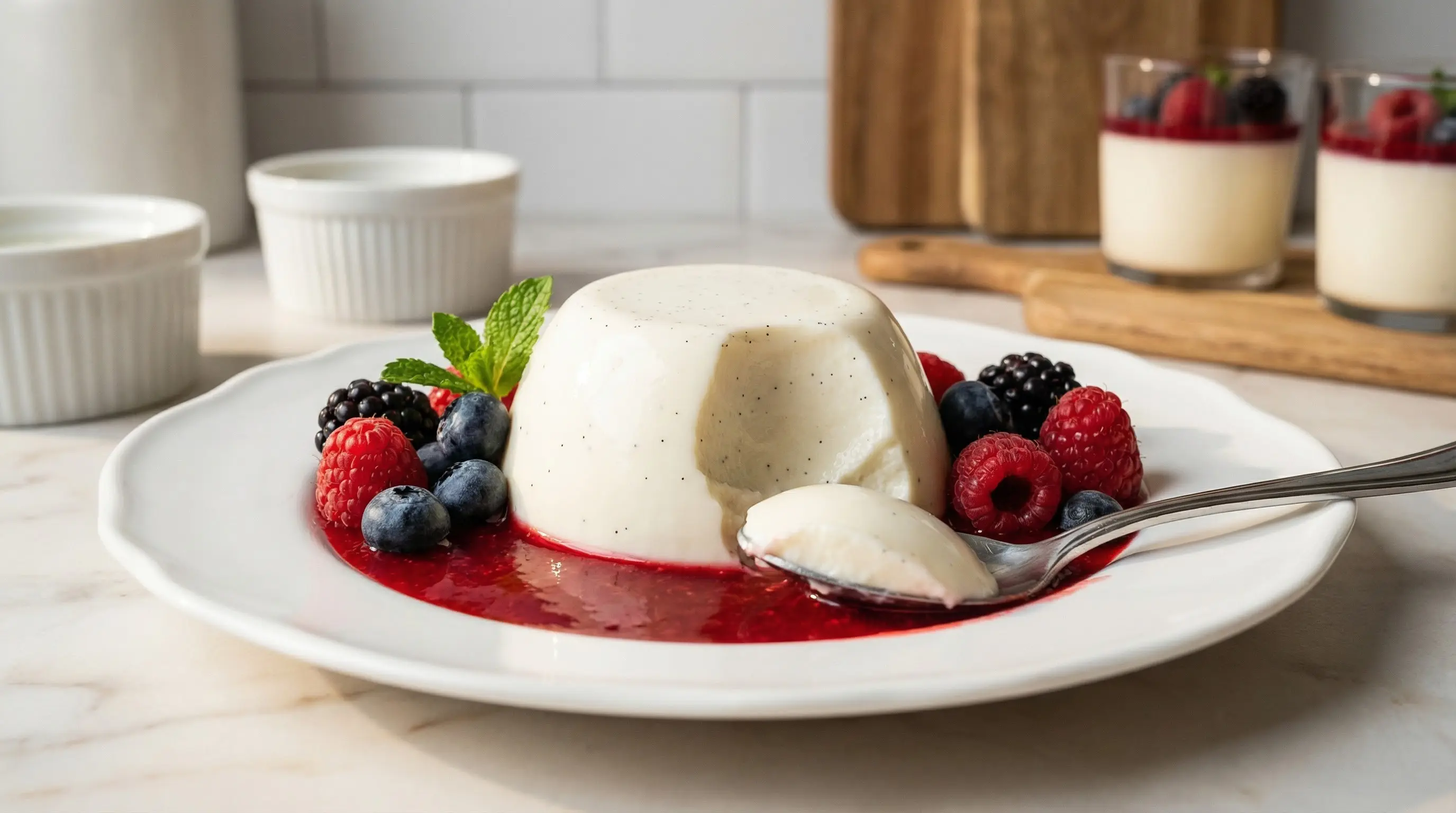
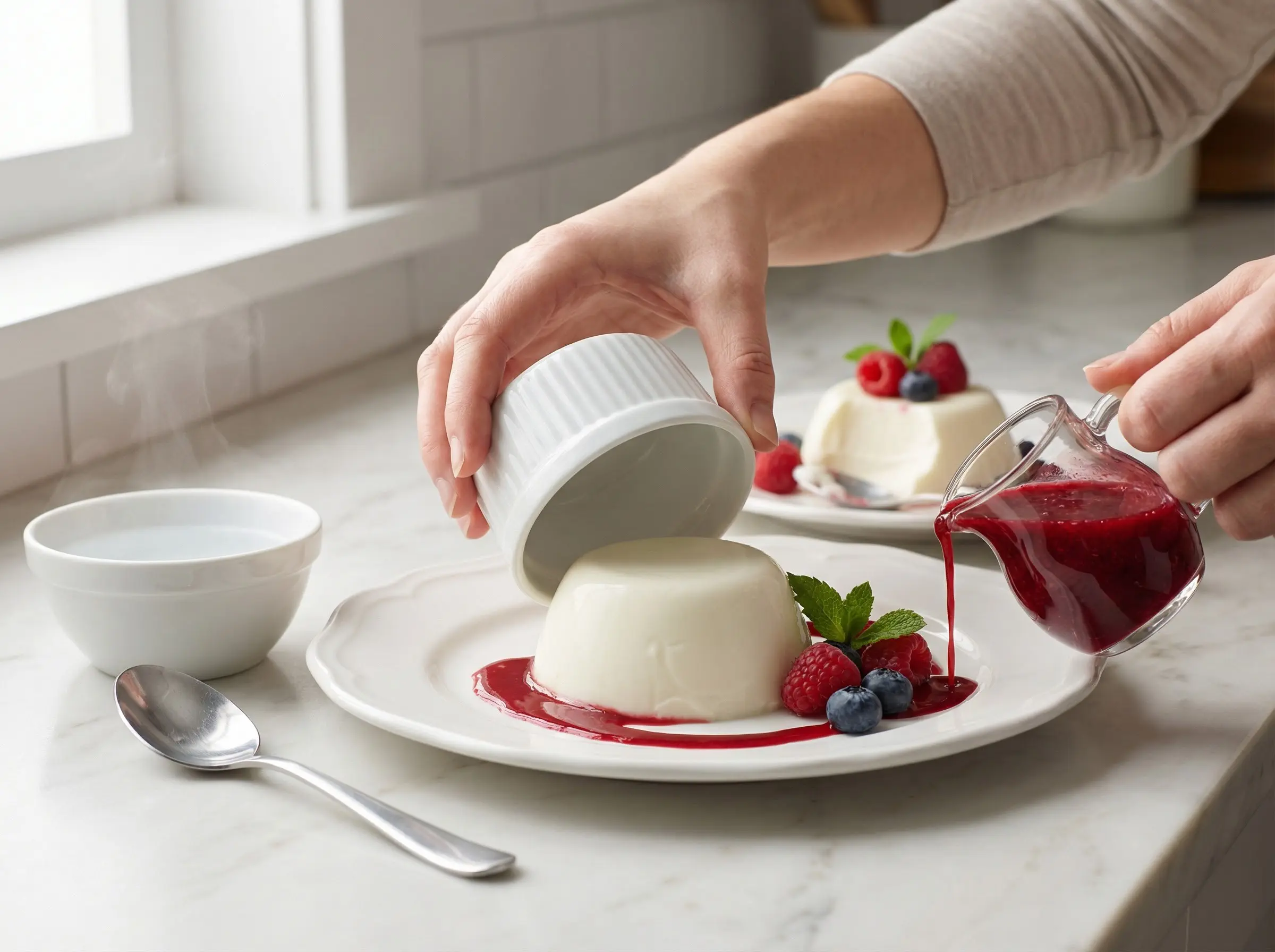
6Unmold and serve. To unmold, dip the bottom of each ramekin in hot water for 5-10 seconds to loosen the edges. Run a thin knife or offset spatula around the edge to break the seal. Place a serving plate on top of the ramekin, invert quickly, and lift away the mold. The panna cotta should slide out with a satisfying wobble. If it resists, dip in hot water again briefly. Alternatively, serve directly in glasses for a more casual presentation. Accompany with fresh berries, a drizzle of berry coulis, a pool of caramel sauce, or a compote of seasonal fruit. A few drops of aged balsamic vinegar over strawberries is a sophisticated Piedmontese pairing. The beauty of panna cotta is its simplicity, so the accompaniments should complement rather than overwhelm the delicate cream flavor. Serve chilled.

 Download