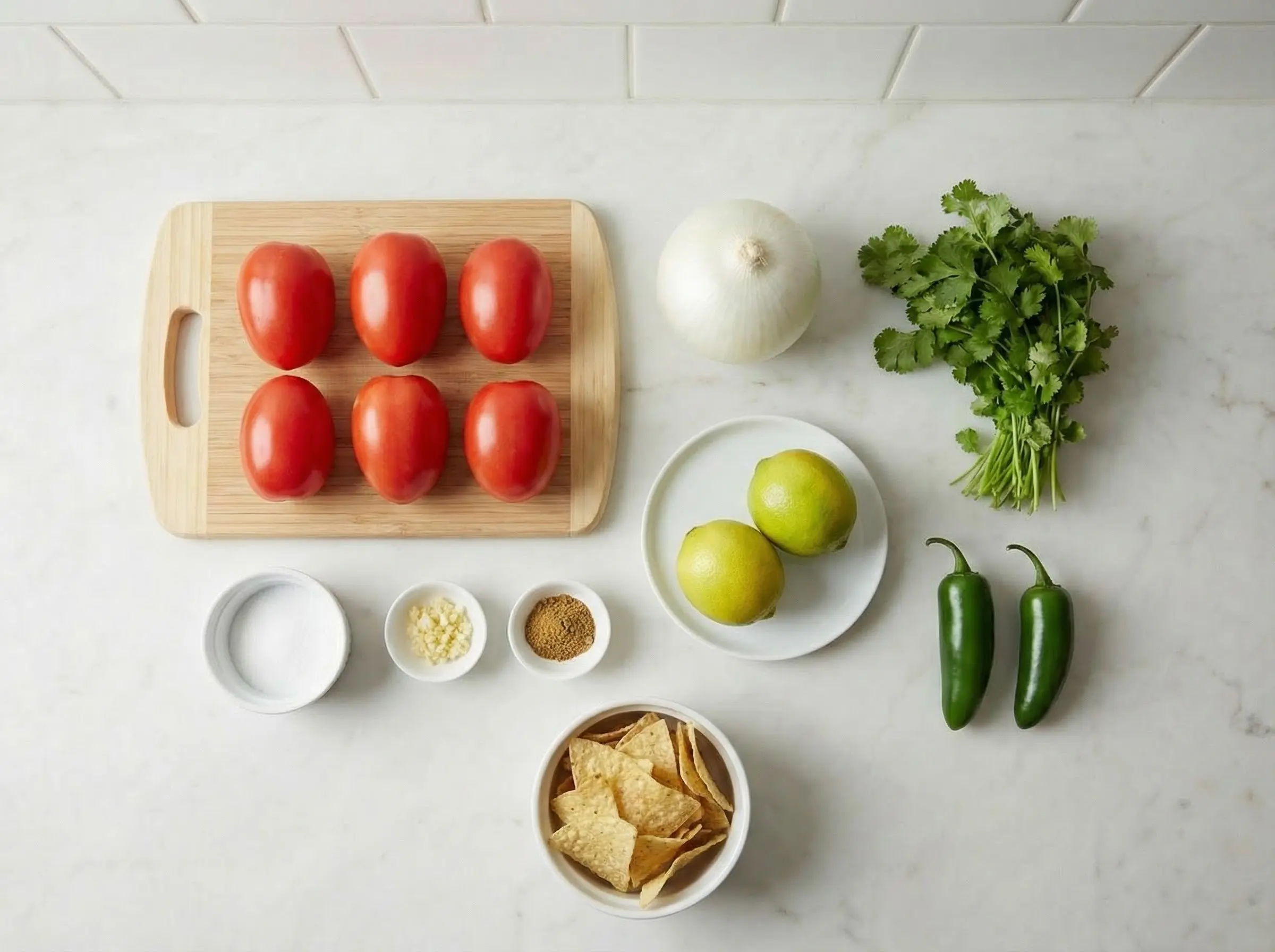
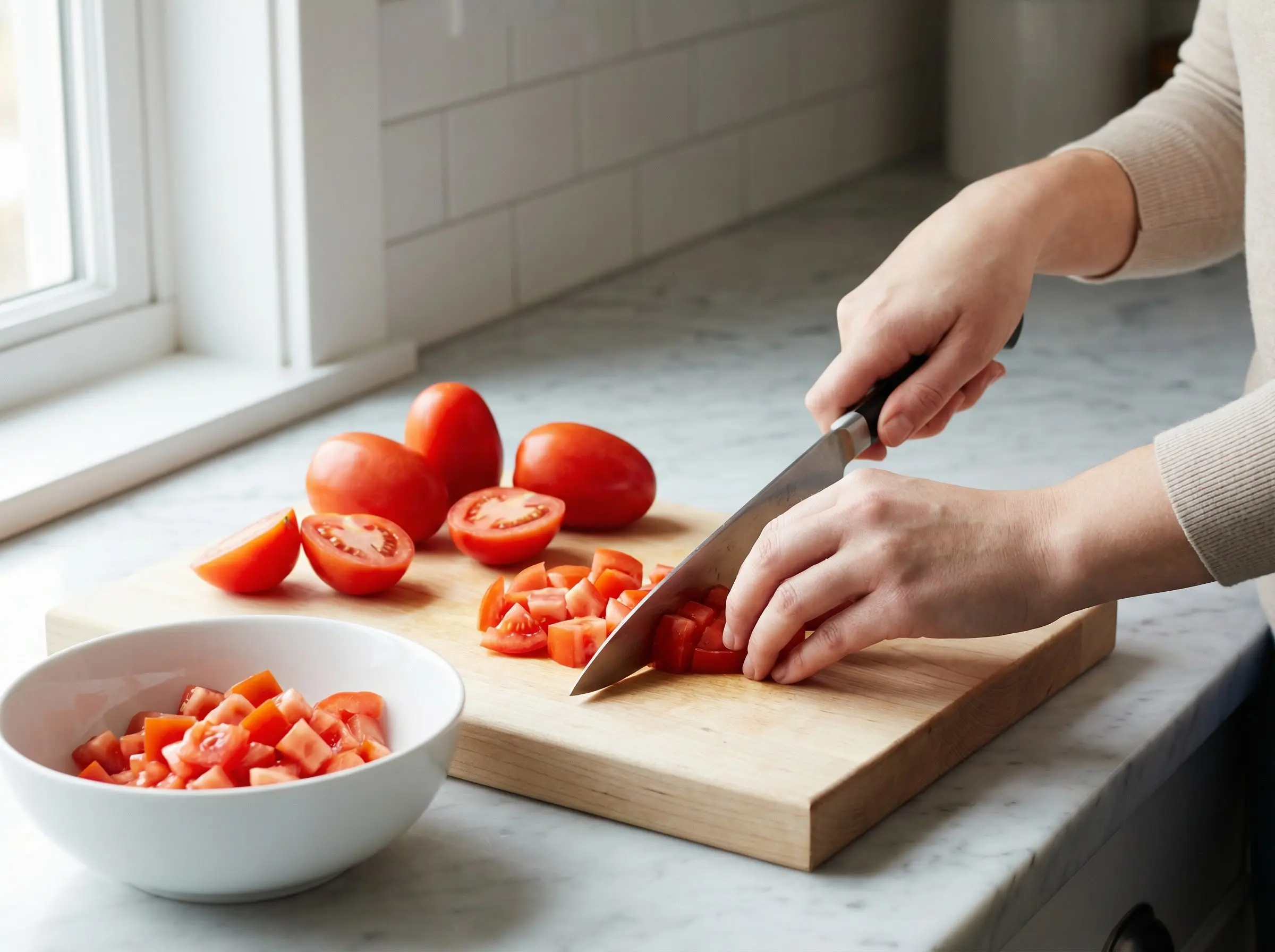
1Select the right tomatoes - this is the most important step. Choose ripe but firm tomatoes that smell fragrant at the stem end and give slightly when pressed. Roma (plum) tomatoes are ideal because they are meaty with fewer seeds and less juice, resulting in a pico that holds its texture rather than becoming watery. If using regular tomatoes, you may want to seed them. Dice the tomatoes into 1/4-inch pieces - not too fine or they will become mushy, not too large or they will be difficult to scoop with chips. Place the diced tomatoes in a medium bowl.
2Prepare the onion. White onion is traditional and provides the sharpest, cleanest bite that is characteristic of authentic pico de gallo. Finely dice the onion into pieces slightly smaller than the tomatoes - about 1/8 inch. If you find raw onion too pungent, you can rinse the diced onion under cold water and drain well, or soak in ice water for 5 minutes - this mellows the bite while preserving the crunch. Add the onion to the bowl with the tomatoes.
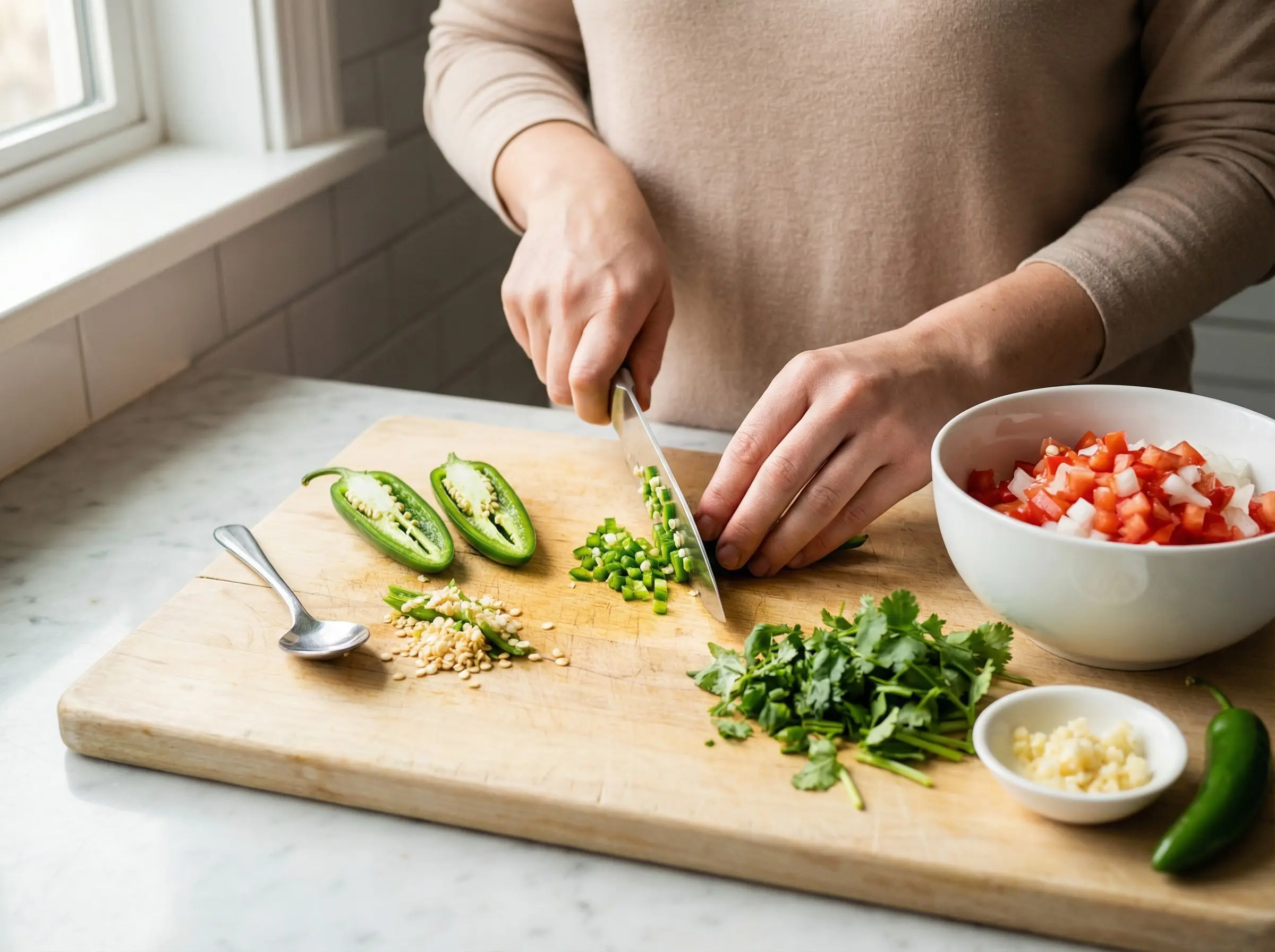
3Prepare the peppers and cilantro. Cut the jalapenos or serranos in half lengthwise and scrape out the seeds and white membranes with a spoon - this is where most of the heat resides. For milder pico, remove all seeds and membranes; for spicier, leave some or all. Mince the peppers very finely. Wash and dry the cilantro, then chop it roughly - both leaves and tender stems can be used. The stems actually have more concentrated flavor. Add the peppers and cilantro to the bowl. If using garlic, mince it finely and add it now.
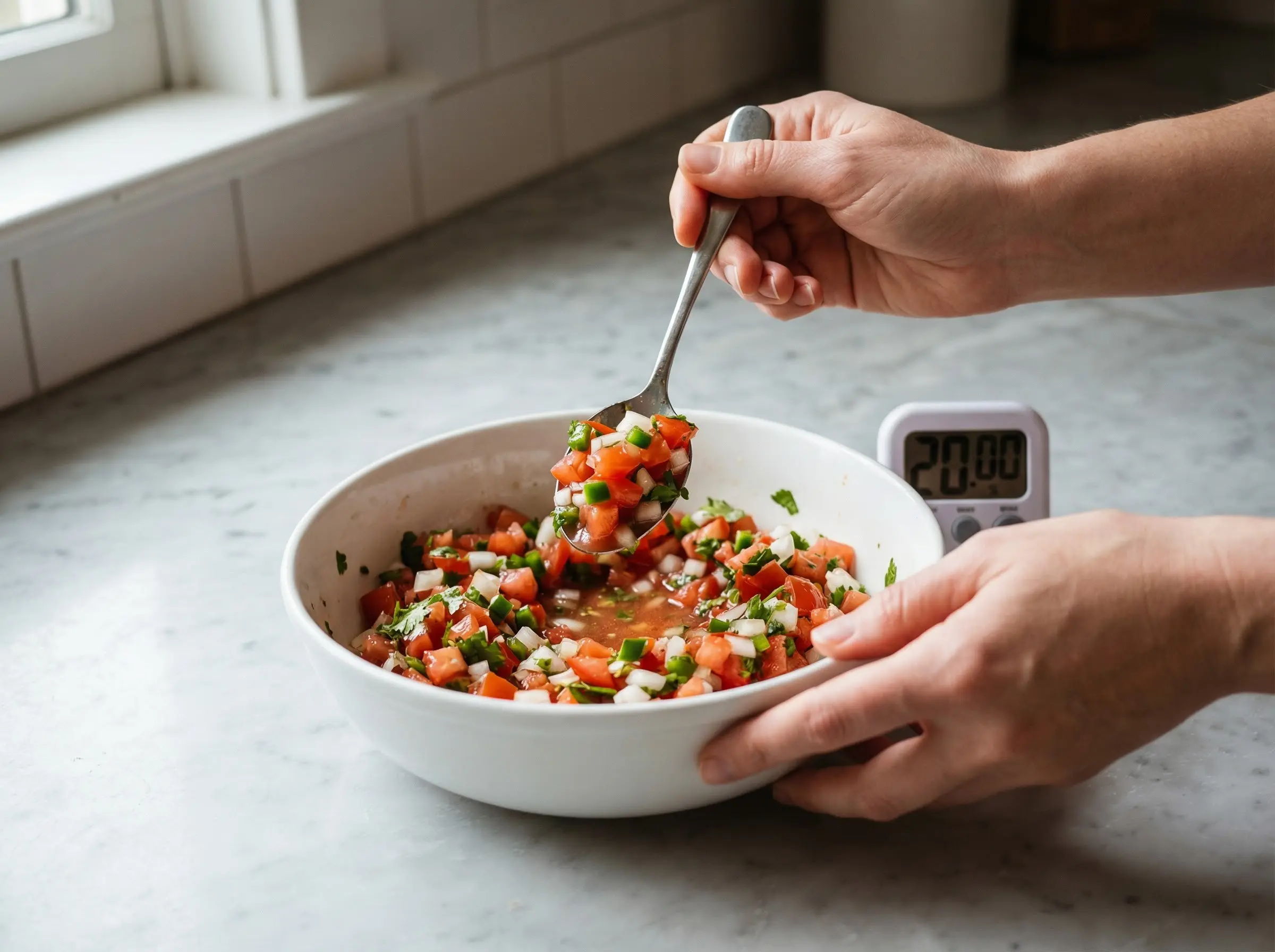
4Season and dress the pico de gallo. Squeeze fresh lime juice over the vegetables - bottled lime juice will not provide the same bright, fresh flavor. Add the salt and cumin if using. Gently fold everything together with a spoon or spatula, being careful not to crush the tomatoes. The goal is even distribution while maintaining distinct, chunky pieces. Taste and adjust seasoning: you may want more lime for acidity, more salt to bring out the flavors, or more pepper for heat. The pico should taste bright, fresh, and well-balanced.
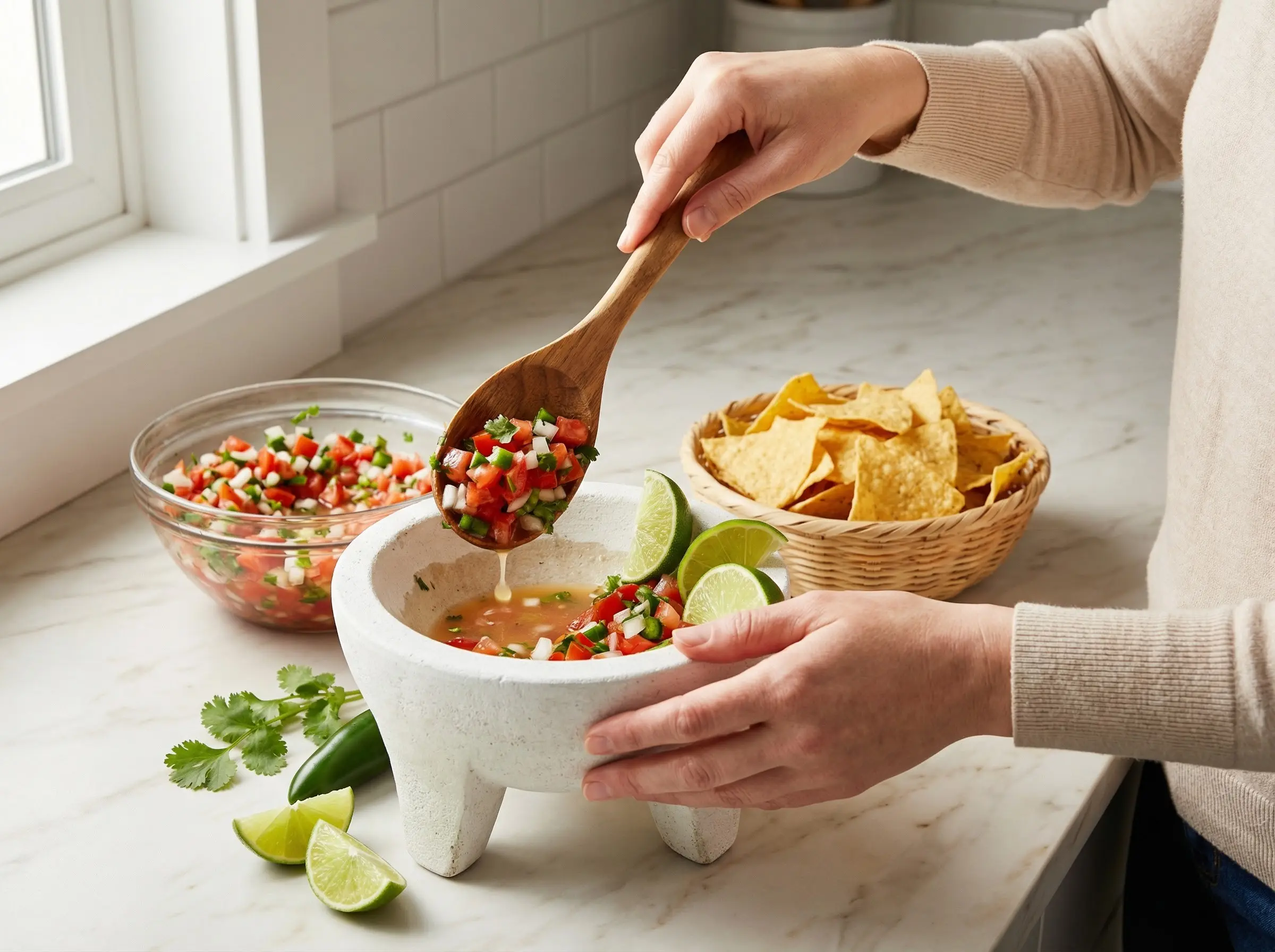
5Let the flavors meld. While pico de gallo can be served immediately, allowing it to rest for 15-30 minutes at room temperature lets the flavors marry beautifully. The salt draws out some tomato juice, the lime juice gently softens the onion''s raw edge, and all the components come together into a harmonious whole. During this time, the pico will release some liquid - this is normal and desirable, as this flavorful juice is perfect for drizzling or scooping.
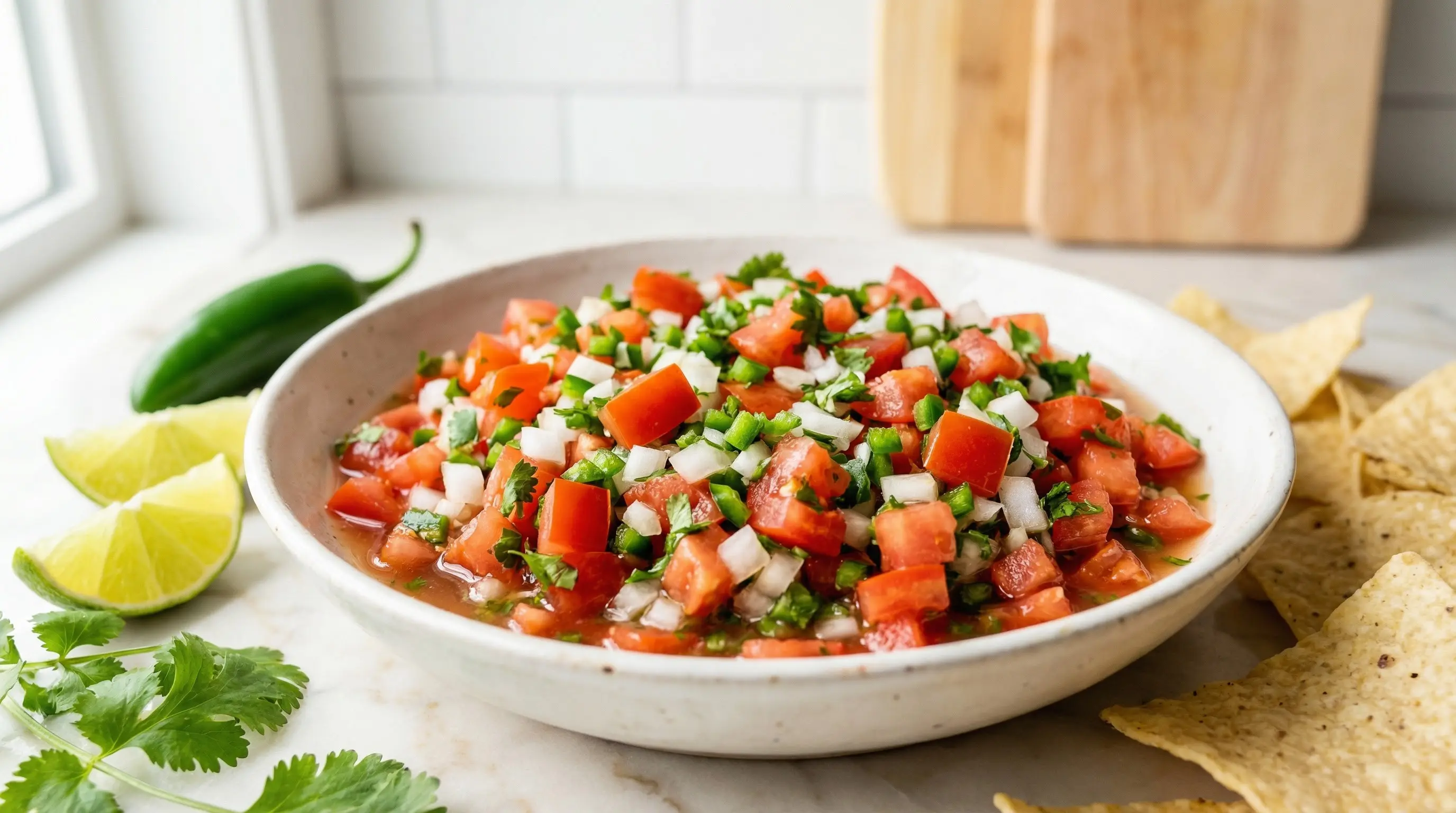
6Serve fresh. Transfer the pico de gallo to a serving bowl and present with tortilla chips for scooping. Pico de gallo is also the perfect topping for tacos, burritos, quesadillas, grilled meats, fish, or eggs. It accompanies fajitas, enchiladas, and tostadas beautifully. For best results, serve within a few hours of making - the vegetables will soften and release more liquid over time, losing their fresh crunch. Store any leftovers refrigerated for up to 2 days, but drain excess liquid and know the texture will be softer. Never freeze pico de gallo - the vegetables will become mushy upon thawing. The beauty of this salsa is its freshness, so make it often and enjoy it immediately for the best experience.


 Download