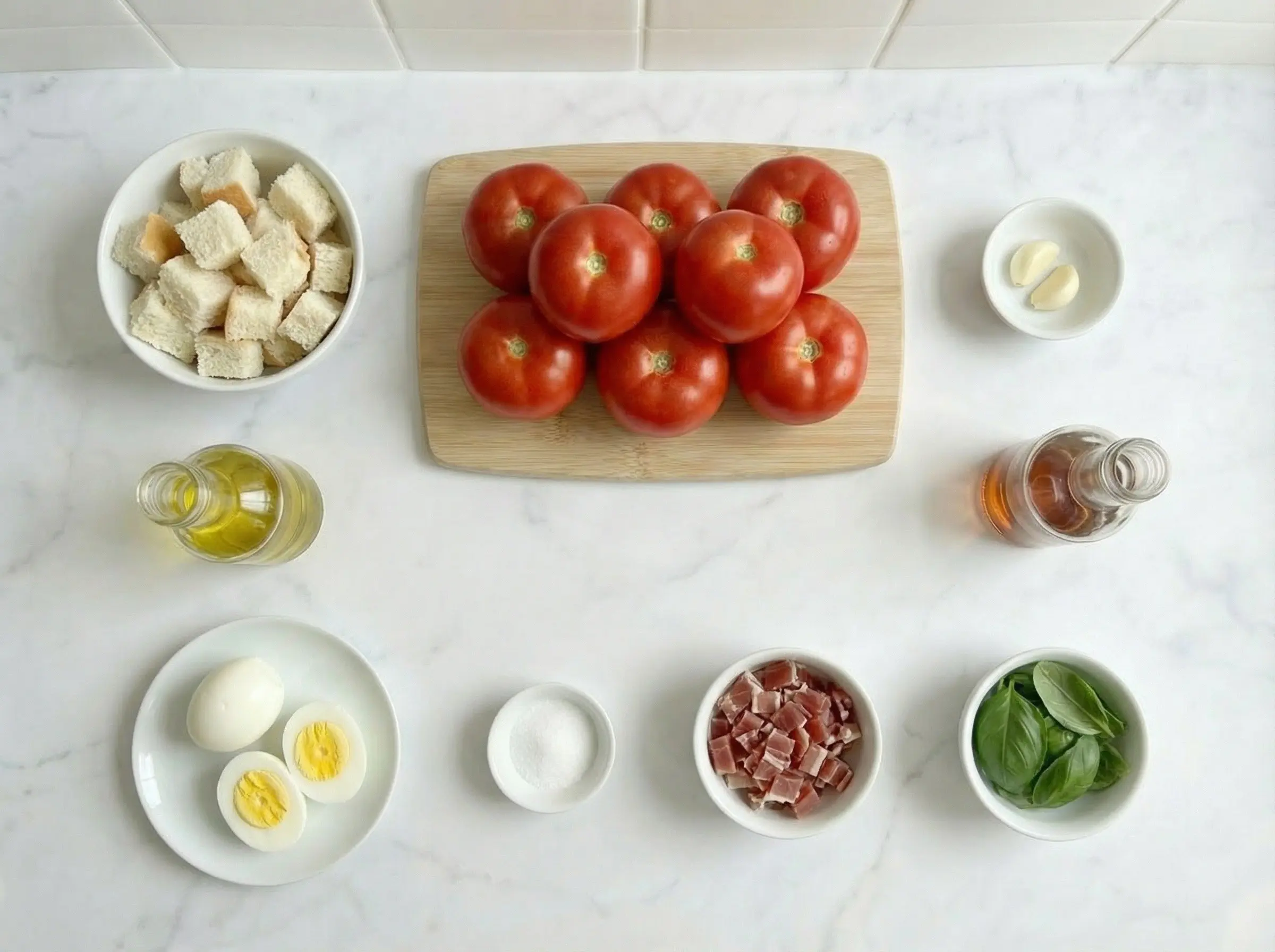
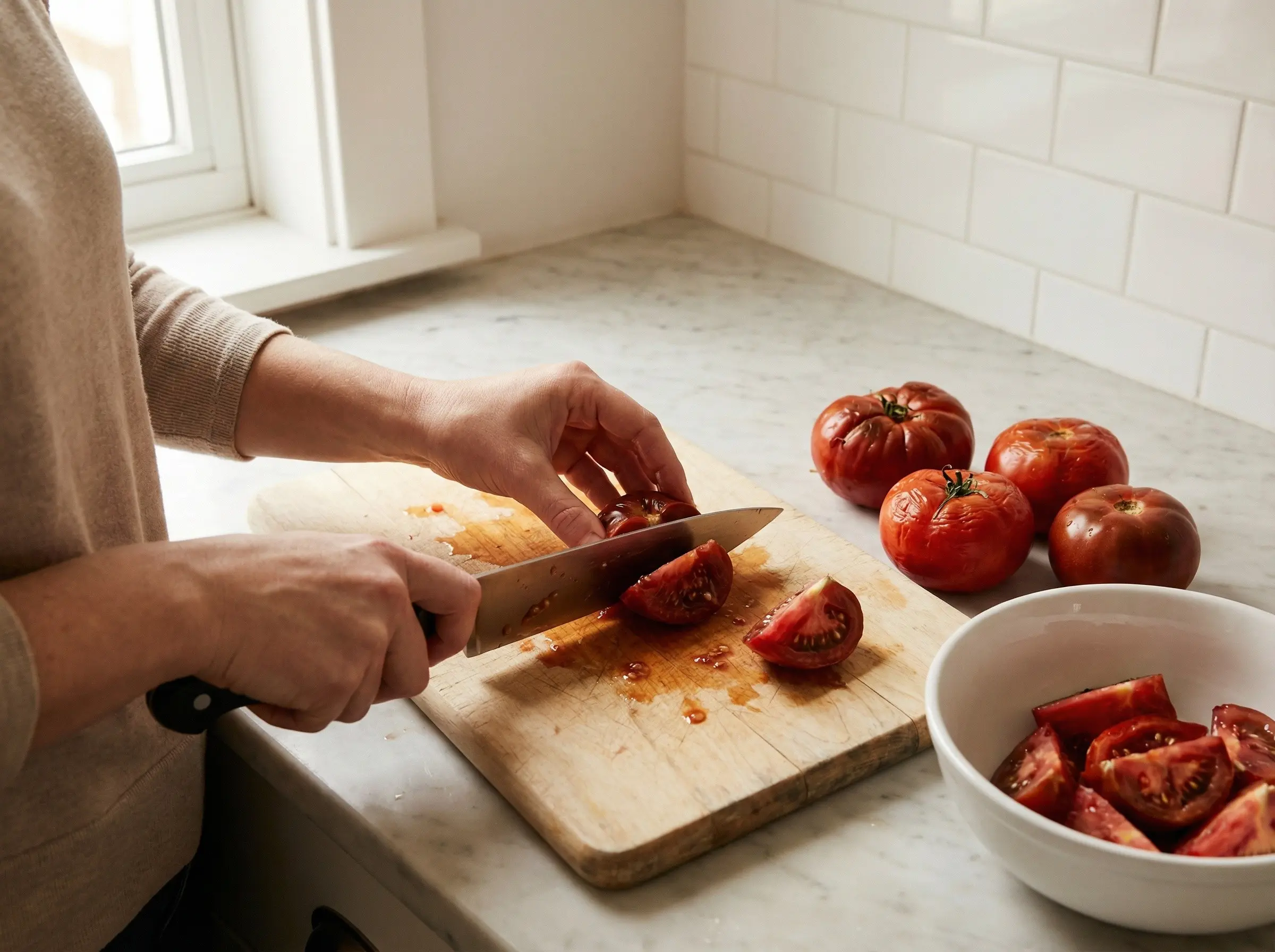
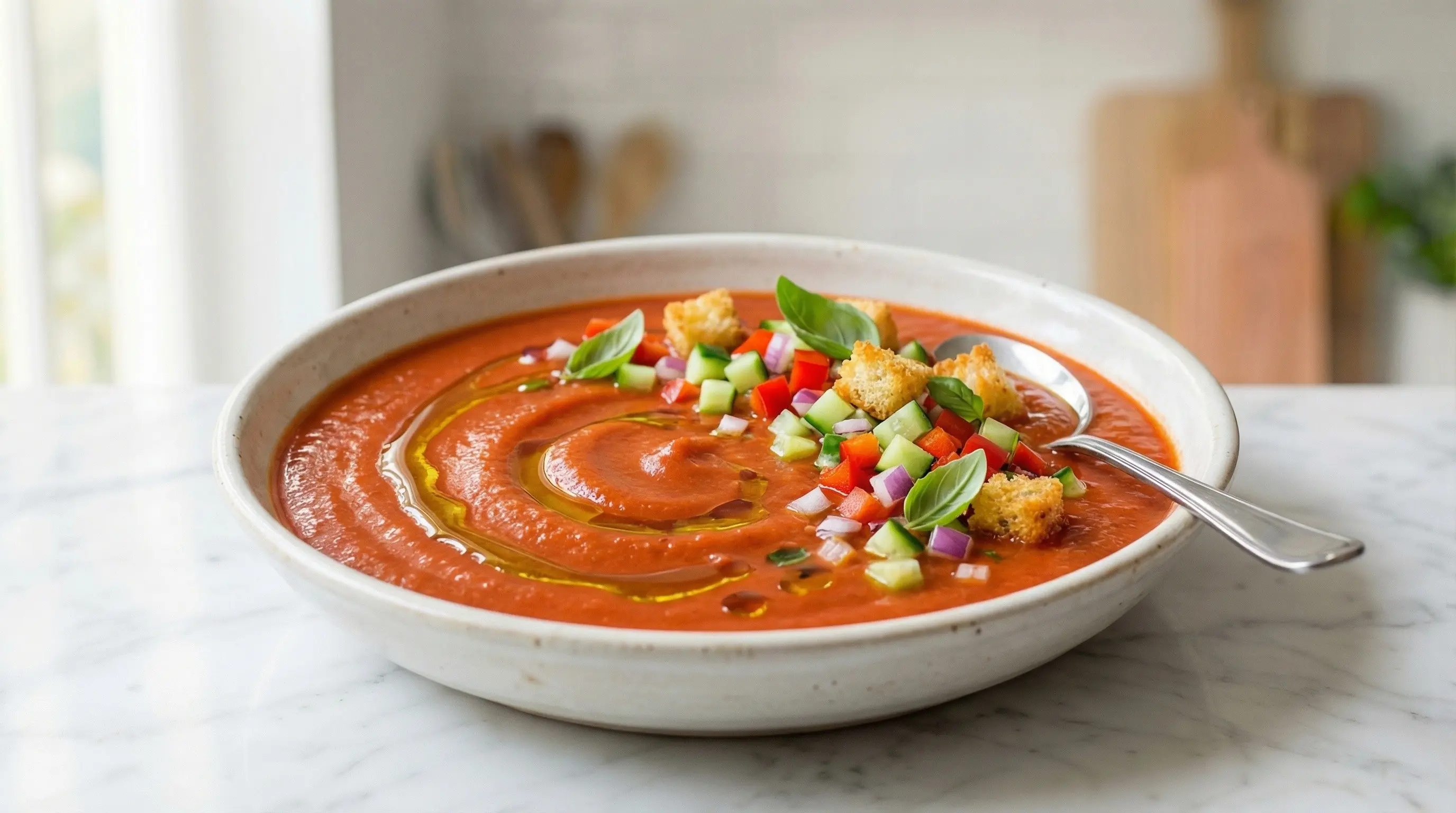
1The quality of your tomatoes is absolutely critical for salmorejo - even more so than gazpacho because the tomato flavor is so concentrated. Select the ripest, reddest, most flavorful tomatoes you can find, ideally at the peak of summer season. Overripe tomatoes that are too soft for salads are actually perfect for salmorejo. Roma or plum tomatoes work well due to their meaty flesh and low water content, but any ripe, flavorful tomato variety will do. Wash the tomatoes and cut them into quarters, removing the cores. You can optionally remove the skins by scoring an X on the bottom of each tomato, blanching in boiling water for 30 seconds, then transferring to ice water - the skins will slip off easily. However, if you have a powerful blender and will strain the soup, peeling is not necessary.
2Prepare the bread, which is essential to salmorejo''s signature thick, creamy texture. Use day-old white bread with a dense crumb - traditional Spanish pan de pueblo or a rustic Italian bread works best. Soft, fluffy sandwich bread will not provide the right texture. Remove all the crusts and tear the bread into rough chunks. You need a higher proportion of bread than gazpacho uses, which is what gives salmorejo its characteristic body. Place the bread chunks in a bowl. The bread does not need to be soaked in advance like some recipes suggest - it will hydrate when blended with the tomatoes. However, if your bread is very stale and hard, you can briefly soak it in a little water for 5 minutes, then squeeze out the excess.
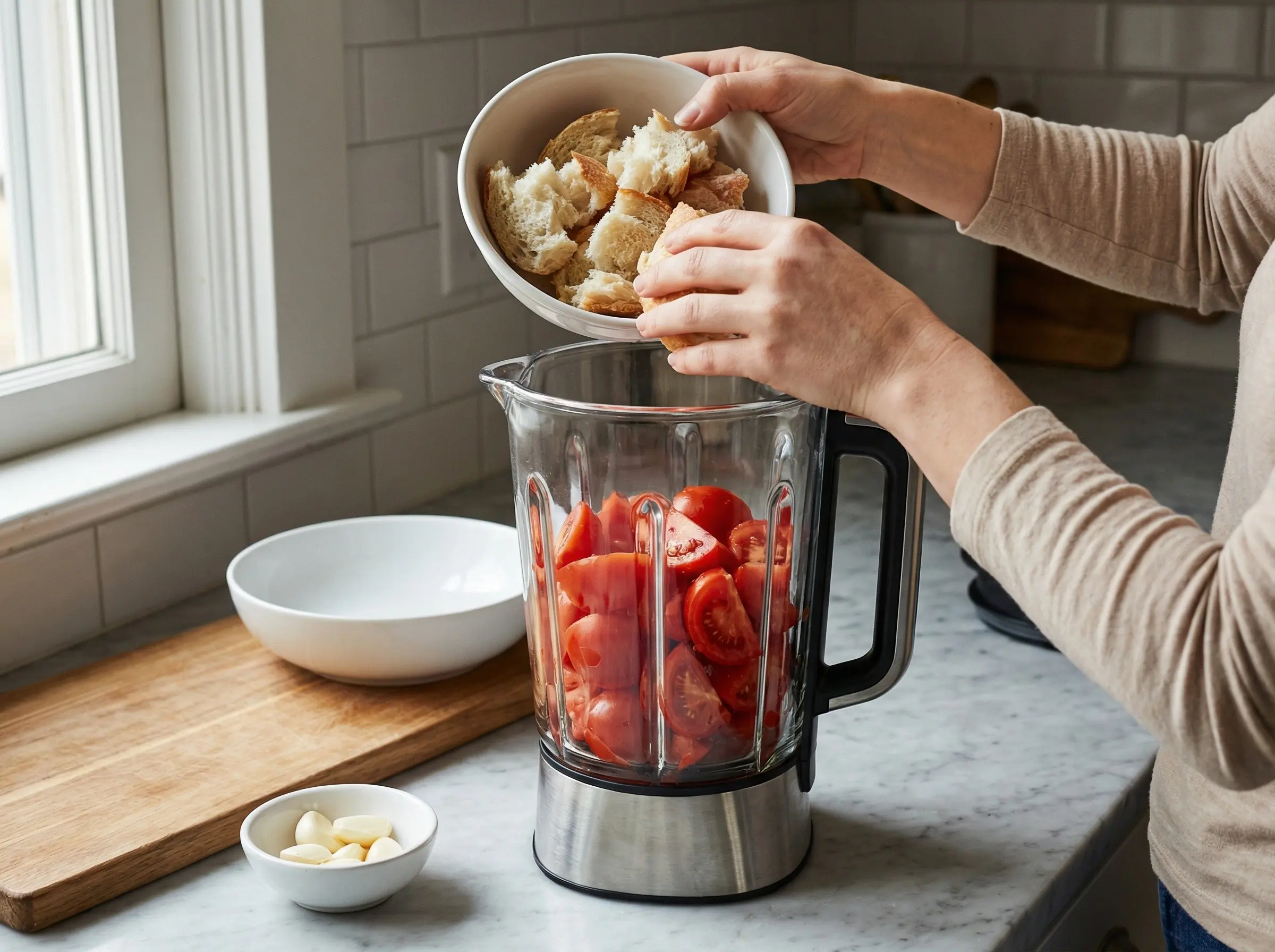
3Add the quartered tomatoes to a high-powered blender or food processor. Add the bread pieces and the peeled garlic cloves. Start blending on medium speed, gradually increasing to high. Blend for 2-3 minutes until completely smooth - you should not see any visible pieces of bread or tomato skin. Scrape down the sides of the blender as needed. The mixture will be thick and slightly chunky at first but will become smoother as you continue blending. If your blender struggles, you may need to add a splash of water to get things moving, but add as little as possible to maintain the thick consistency. A high-powered blender like a Vitamix produces the smoothest results.
4With the blender running on medium speed, slowly drizzle in the extra virgin olive oil in a thin, steady stream - this should take about 1-2 minutes. Do not rush this step. The slow addition of oil allows it to emulsify into the soup, creating the characteristic creamy, almost mayonnaise-like texture that defines salmorejo. Use the best quality extra virgin olive oil you can afford, as its flavor will be prominent in the finished dish. Spanish olive oil is traditional and ideal. After all the oil is incorporated, add the sherry vinegar and salt. Blend for another 30 seconds until everything is completely smooth and homogeneous. The soup should be thick enough to coat the back of a spoon heavily - much thicker than gazpacho.
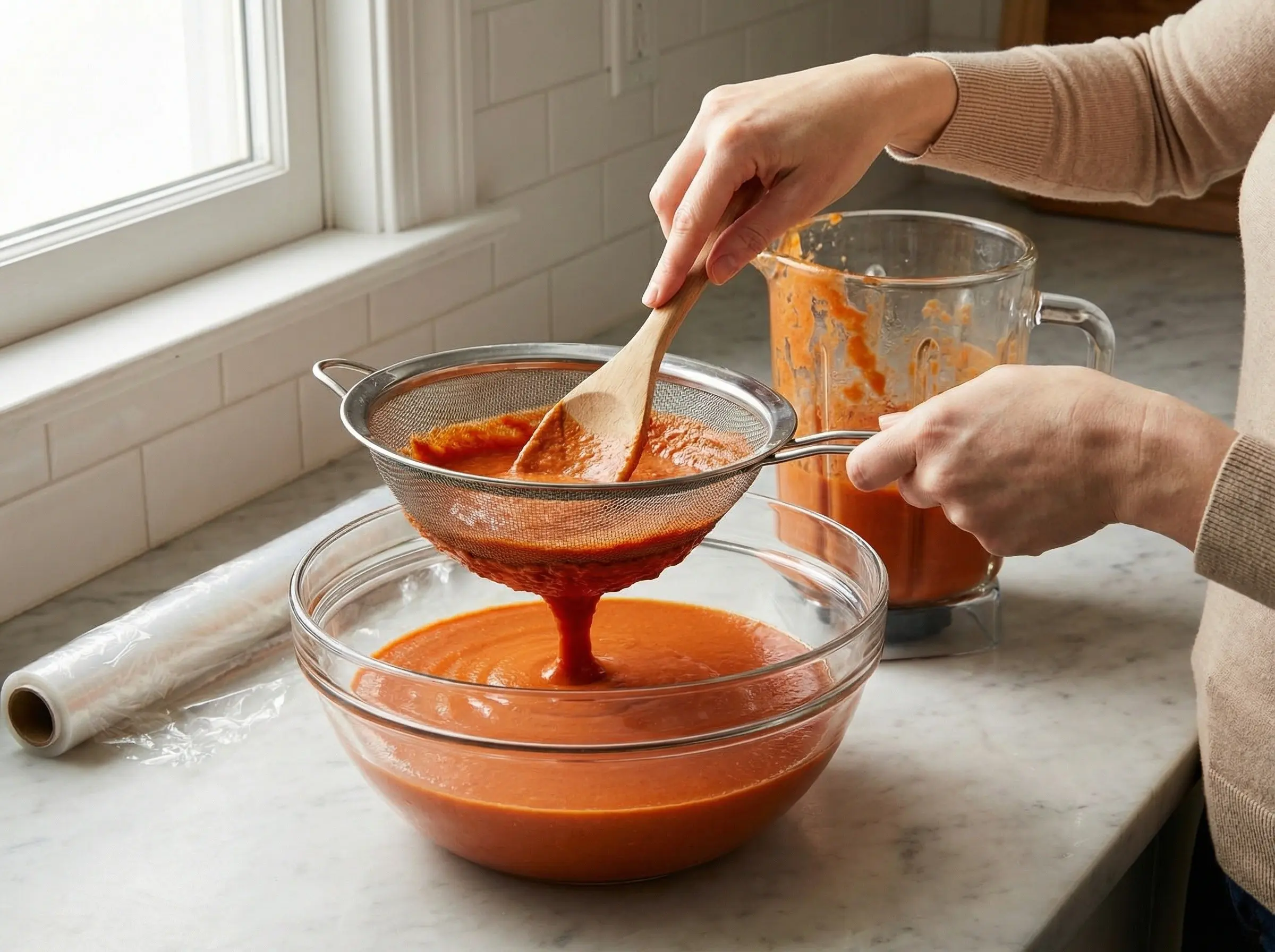
5For the smoothest, most refined texture, strain the salmorejo through a fine-mesh sieve into a large bowl, pressing on the solids with a spatula or the back of a ladle to extract all the liquid. This removes any bits of tomato skin or bread that did not fully puree. While straining is optional, it produces a noticeably silkier result and is standard practice in restaurants. Discard the solids left in the sieve. Taste the strained salmorejo and adjust the seasoning - you may need more salt to bring out the tomato flavor, more vinegar for brightness, or a touch more olive oil for richness. Cover the bowl tightly with plastic wrap and refrigerate for at least 2 hours, preferably 4 hours or overnight. Salmorejo must be served very cold, and the chilling time allows the flavors to meld and deepen.
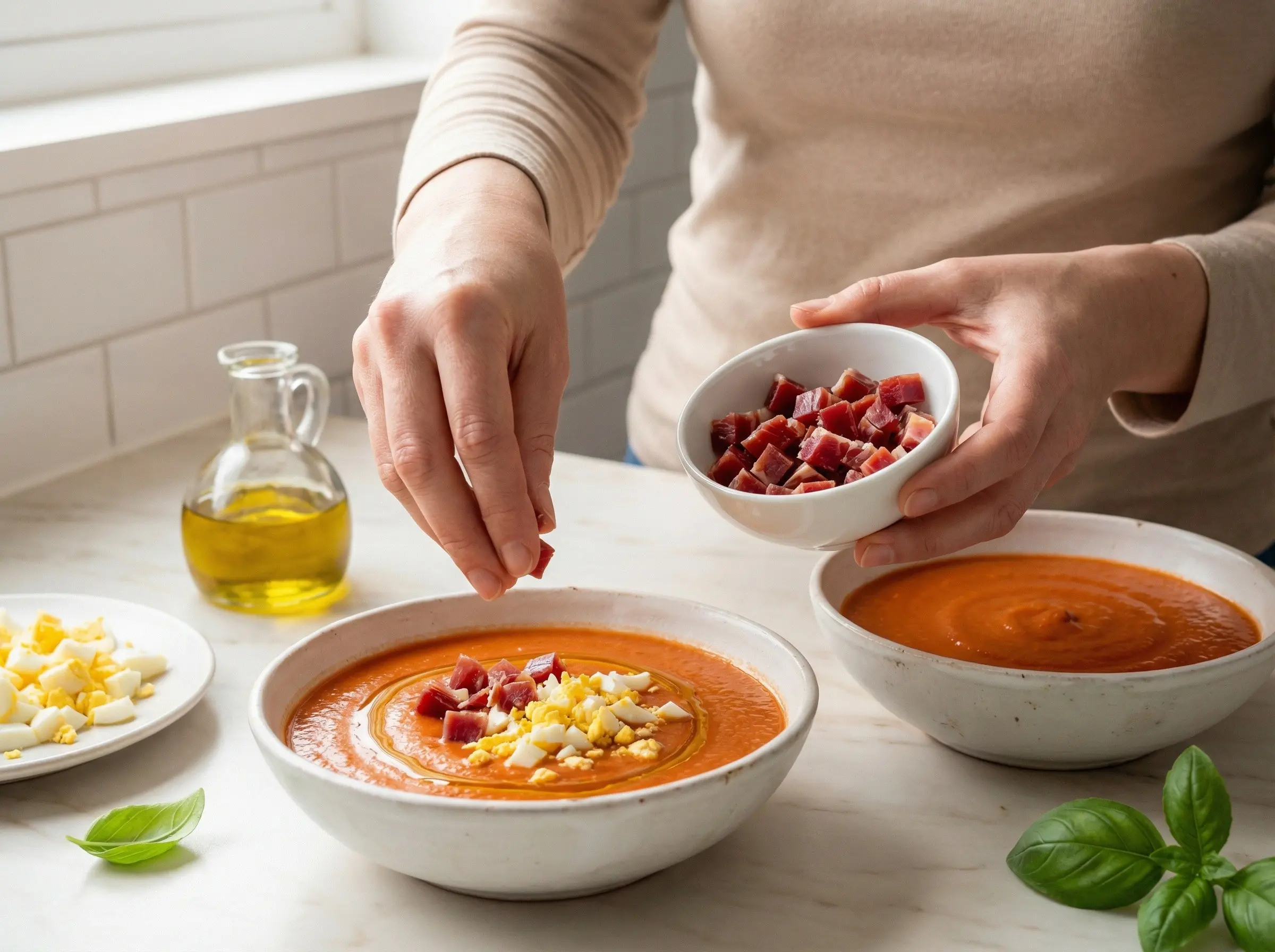
6While the salmorejo chills, prepare the traditional garnishes. Hard-boil the eggs by placing them in a pot, covering with cold water, bringing to a boil, then removing from heat and letting sit covered for 10-12 minutes. Transfer to ice water to stop cooking, then peel and dice finely. Dice the jamón serrano into small cubes - about 1/4 inch pieces. If you cannot find jamón serrano, prosciutto is an acceptable substitute, though the flavor will be slightly different. To serve, taste the chilled salmorejo once more and adjust seasoning if needed. Ladle the soup into shallow bowls or deep plates - salmorejo is traditionally served in smaller portions than gazpacho due to its richness. Garnish each serving generously with the diced hard-boiled egg and jamón serrano. Drizzle with a swirl of high-quality extra virgin olive oil - be generous, as the oil is an integral part of the dish. Optionally add a few fresh basil leaves or a tiny drizzle of sherry vinegar. Serve immediately while ice cold. Salmorejo keeps in the refrigerator for up to 3-4 days; stir well before serving as it may thicken further and can be thinned with a splash of cold water if needed.


 Download